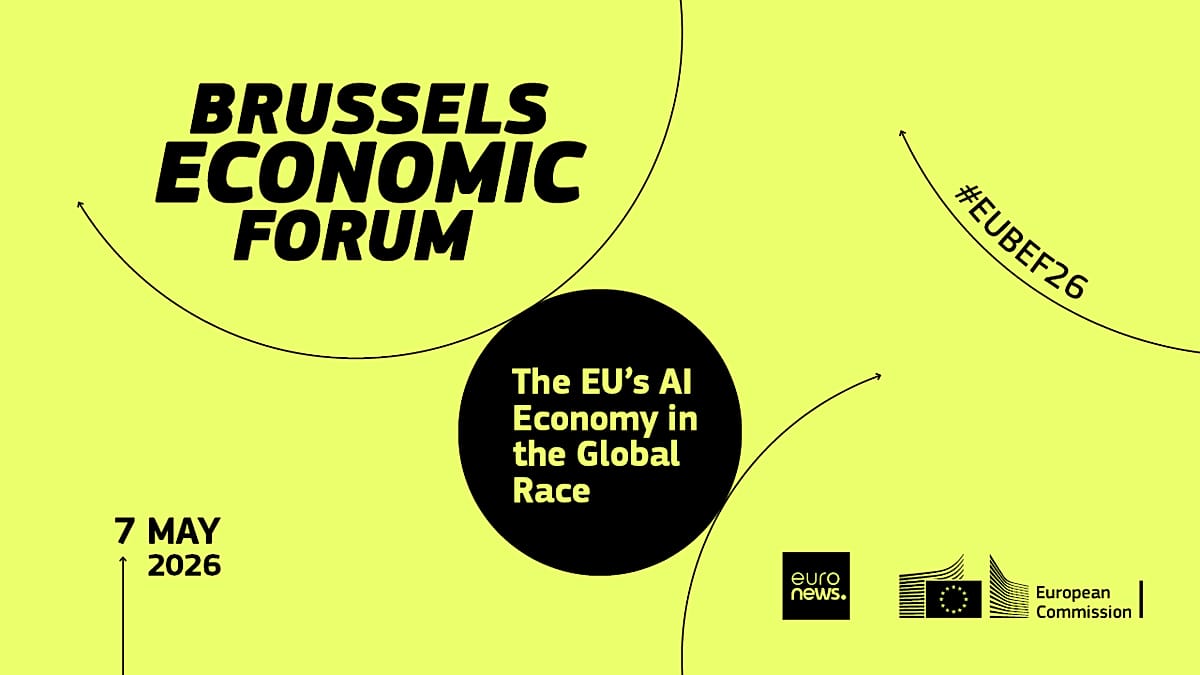
Artificial intelligence has moved beyond the realm of technology policy and is now a central economic concern for the European Union. From labour markets and productivity to regulatory frameworks and global competitiveness, AI is reshaping the continent's economic landscape. This shift is the focus of the 2026 Brussels Economic Forum (BEF), the European Commission's flagship annual economic gathering, which this year dedicates its agenda to examining the EU's position in the global AI race.
Organised by the European Commission and hosted by Euronews journalists Méabh Mc Mahon and Sasha Vakulina, the 26th edition of the BEF will convene economists, members of the European Parliament, business leaders, and AI experts. The central theme is "The EU's AI Economy in the Global Race", a topic that reflects growing anxiety in Brussels about falling behind the United States and China in the development and deployment of artificial intelligence.
Keynote Speakers and High-Level Debates
The forum will feature a series of keynote speeches and panel discussions with prominent political and economic figures. Among the confirmed speakers are Luxembourg's Prime Minister Luc Frieden, EU Commissioner for Economy Valdis Dombrovskis, economist Philippe Aghion, and Louise Burke, alongside senior representatives from business, trade unions, and academia. Their discussions will explore how the EU can harness AI to boost productivity while maintaining its commitment to ethical standards and worker protections.
The timing of the forum is significant. Europe is grappling with geopolitical tensions, economic uncertainty, and intensifying competition from other major economies. The EU's regulatory approach, particularly the AI Act, has been both praised for its precautionary stance and criticised for potentially stifling innovation. The BEF will provide a platform to debate whether Brussels can strike the right balance between fostering innovation and safeguarding fundamental rights.
One of the key questions on the table is whether the EU can translate its regulatory leadership into economic advantage. The bloc's Digital Markets Act has already reshaped the behaviour of Big Tech in Europe, but the challenge now is to ensure that European startups and established companies can compete in the AI sector. The forum will also address the implications of AI for employment, with trade unions and business leaders expected to clash over the pace of automation and the need for reskilling programmes.
The broader context includes ongoing trade tensions with China, which have implications for technology supply chains and data flows. As Brussels seeks to define its place in the AI era, the BEF promises to be one of the most consequential economic conversations of 2026. The outcomes of these discussions could influence EU policy for years to come, particularly as the bloc prepares to revise its digital strategy and allocate funding for AI research and infrastructure.
For those following the intersection of technology and economics, the Brussels Economic Forum offers a rare opportunity to hear directly from the policymakers and industry leaders shaping Europe's AI future. The event underscores that AI is no longer a niche concern but a central pillar of the continent's economic strategy.