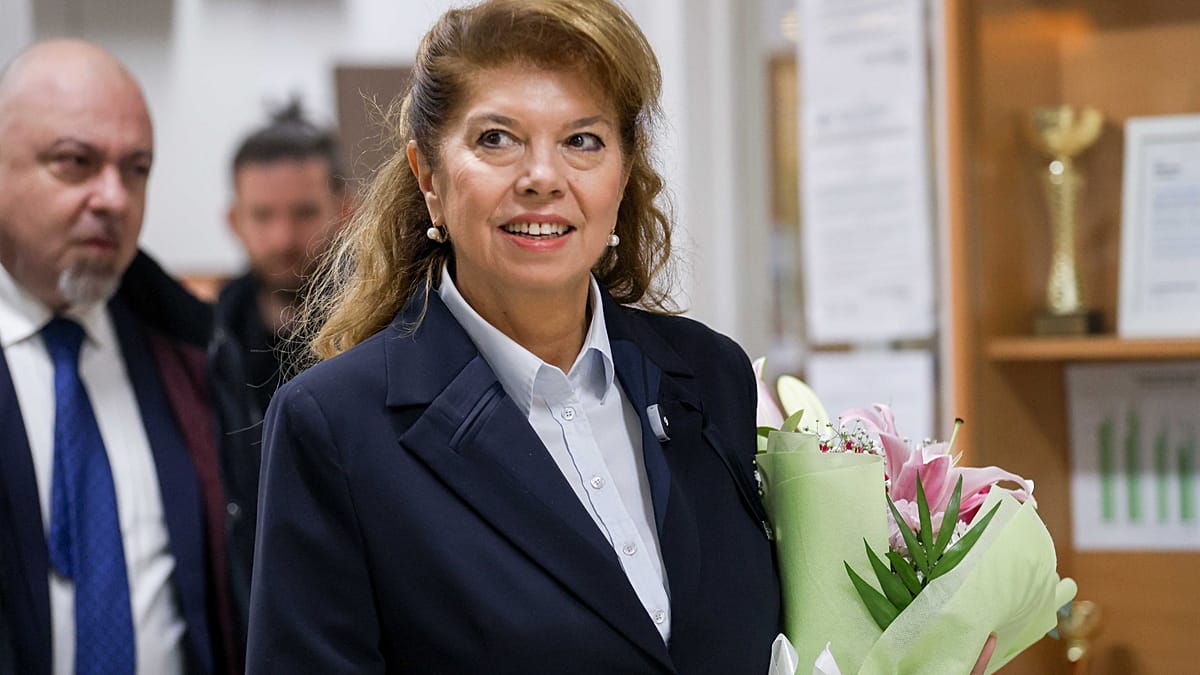
Exit polls in Bulgaria's presidential runoff point to a comfortable victory for acting President Ilijana Yotova, who is projected to take 52% of the vote. Her challenger, Andrey Gyurov, a former interim prime minister backed by reformist pro-Western parties, trails with around 45%. If confirmed by official results, Yotova would become Bulgaria's first elected female head of state.
The election, held on Sunday, was the first major test for the ruling centre-left coalition Progressive Bulgaria, which endorsed Yotova after Prime Minister Rumen Radev stepped down in January to run for parliament. Yotova, 62, took over the presidency at that point and has since positioned herself as a continuity candidate.
A campaign shaped by the war in Ukraine
The conflict in Ukraine, which borders Bulgaria's Black Sea coast, dominated the campaign. Yotova repeatedly called for a peaceful resolution through negotiations with Russia, describing her ambition to be a Bulgarian "President of Peace." Gyurov, by contrast, signalled a closer alignment with NATO and the European Union, and pledged stronger support for Ukraine against Russia's aggression.
Observers expect Yotova to maintain Radev's balancing act: keeping Bulgaria on its European path while advocating for better relations with Moscow and the lifting of sanctions. That stance has drawn criticism from pro-Western voters, but appears to have resonated with a electorate weary of instability.
The vote took place against a backdrop of heightened security concerns in the Black Sea region. In recent weeks, drone attacks on merchant ships have become more frequent in Bulgaria's and neighbouring Romania's economic zones, underscoring the proximity of the war.
Bulgaria's presidency is largely ceremonial, with no executive powers. However, the direct election gives the office significant political authority: the president leads the armed forces, can veto legislation, signs international treaties, and appoints ambassadors. The result is therefore more than symbolic, especially as the country prepares for a possible early parliamentary election later this year.
Turnout was low, at just 29%, reflecting widespread disillusionment with politics in one of the EU's poorest member states. Analysts note that Yotova's victory, if confirmed, would mark a continuation of Radev's influence, even as his party's popularity wanes.
The outcome is being watched closely in Brussels and other European capitals, given Bulgaria's strategic position on NATO's eastern flank. While Yotova's rhetoric on Russia has raised eyebrows, she has repeatedly affirmed Bulgaria's commitment to EU and NATO membership.
For Gyurov, the defeat is a setback for the pro-Western opposition, which had hoped to capitalise on public anger over corruption and the government's handling of the war. He conceded on Sunday night, congratulating Yotova and urging his supporters to respect the result.
Official results are expected within days. If Yotova's lead holds, she will be sworn in for a full five-year term, becoming the first woman elected to the presidency in Bulgaria's modern history.
Related coverage: the pre-election dynamics and EU enlargement debates.