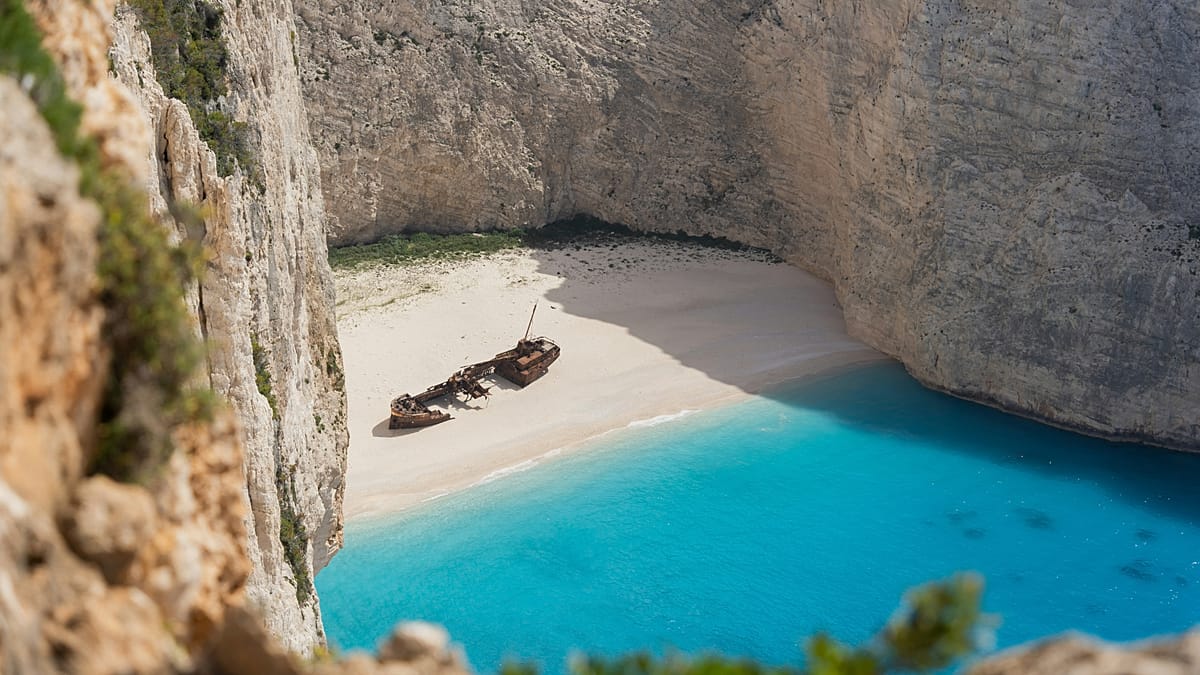
Authorities on the Ionian island of Zakynthos have unveiled a plan to extend the world-famous Navagio Beach — known as Shipwreck Beach — by 30 metres towards the sea, using gravel. The project is designed to protect the rusting hull of the MV Panagiotis, which ran aground in October 1980 and has since become one of the most photographed coastal landmarks in Europe.
The beach has been closed to visitors since 2024 and will remain off-limits through the 2026 summer season, after inspections by Greece's Earthquake Planning and Protection Organisation (OASP) flagged a high risk of extensive landslides. Boats and swimmers are banned from approaching until 31 October 2026, though tourists can still view the cove from the surrounding cliffs — with penalties for anyone attempting to descend.
Erosion and Safety Concerns
The wreck, which gave the beach its nickname, has deteriorated significantly over the decades. Its metal hull is heavily eroded, and the vessel currently sits about 25 metres from the waterline. Under the plan, 45,000 cubic metres of gravel will be deposited to push the shoreline further out, moving the wreck farther from the sea and reducing wave damage.
This is not the first time Navagio has been closed. In 2018, a cliff collapse injured seven people, and in 2022 a magnitude 5.4 earthquake forced a temporary shutdown. Greek authorities now reassess safety conditions at the site twice a year to decide on access rights.
The extension project is part of a broader effort to balance tourism with environmental preservation on Zakynthos, which draws hundreds of thousands of visitors annually. The island is also known for its caretta caretta sea turtle nesting sites, and similar conservation measures have been applied to other beaches in the Ionian Sea. For context, Europe's strict new beach rules have been adopted in several Mediterranean destinations to manage overcrowding and protect fragile ecosystems.
Tourism and Economic Impact
Navagio Beach has long been a major draw for tourism in Greece, which saw a surge in arrivals in 2025. Greece, Italy, and Malta lead the 2026 surge in European tourism growth, and Zakynthos remains a key contributor. However, the prolonged closure has raised concerns among local businesses that depend on beach access for boat tours and water sports.
Greek authorities have not yet set a timeline for the extension work, but the project is expected to begin after the current closure period ends. The hope is that by moving the wreck further from the water, its structural integrity can be preserved for future generations, even as the beach remains a no-go zone for now.
The shipwreck's story is a classic tale of maritime misfortune: the MV Panagiotis, smuggling contraband, ran aground in a storm and was abandoned. Over the years, the rusting hulk became an accidental icon, featured on postcards and social media feeds worldwide. Its preservation is now a priority for Greek cultural heritage authorities, who see it as a unique piece of modern history.
While the beach is closed, the surrounding area remains accessible, and visitors can still take in the panoramic view from the cliffs above. The extension project, if successful, could eventually allow the beach to reopen with improved safety measures, though no date has been announced.