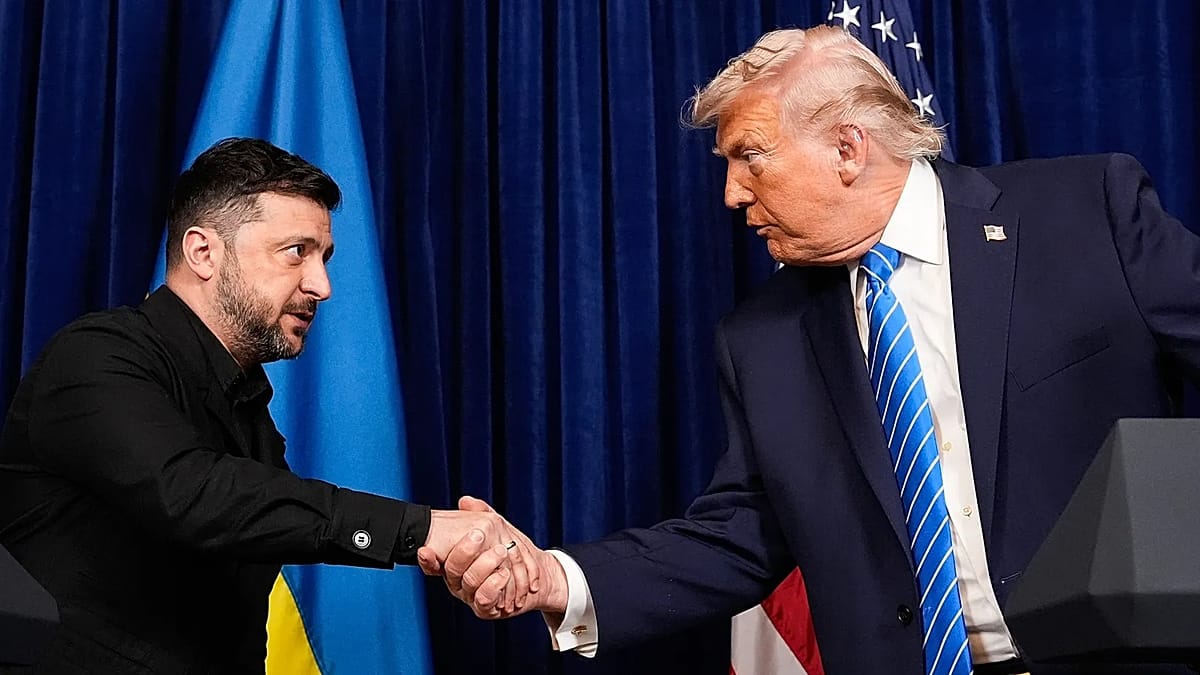
Ukrainian President Volodymyr Zelenskyy held closed-door talks with US President Donald Trump at the White House on Tuesday, seeking renewed diplomatic and military support as the war with Russia grinds on. The meeting, which lasted just over an hour, took place amid intensified long-range strikes by both sides and stalled US-led peace efforts.
Zelenskyy described the encounter as productive. “A good meeting with President Trump at the Oval Office. Thank you for everything we do together to protect the lives of Ukrainians and advance peace,” he wrote on X after the talks. He added that they discussed licences for Patriot interceptor production and other ideas, and stressed the need to reinvigorate the diplomatic process.
Relations between the two leaders have improved since Trump began his second term. Earlier this month, Trump offered Kyiv licences to produce Patriot air defence missiles and suggested that Ukrainian strikes inside Russia could help bring the war to an end. This marks a shift from Trump’s earlier policy of halting direct US arms deliveries to Ukraine in favour of a programme that lets European countries buy weapons for Kyiv.
Deadliest month for civilians
Last month was the deadliest for Ukrainian civilians since April 2022, according to the United Nations, as Russia stepped up its use of hard-to-intercept ballistic missiles. The toll underscores the urgency of Kyiv’s request for more advanced air defence systems. Ukraine has also intensified drone strikes on Russian energy and export hubs, seeking to disrupt Moscow’s war economy.
Zelenskyy also attended a memorial service for Republican Senator Lindsey Graham, a staunch Ukraine supporter who died unexpectedly this month at age 71. “I offered President Trump our condolences on the passing of Lindsey Graham. He was a true friend of Ukraine,” Zelenskyy wrote.
The White House visit comes as European allies continue to bolster Ukraine’s defences. The UK’s Burnham recently met Zelenskyy and pledged a new drone factory and missile interceptors, part of a broader European effort to sustain Kyiv’s war effort without direct US arms deliveries.
Trump is also set to host Israeli Prime Minister Benjamin Netanyahu later this week, as the two leaders seek to overcome recent public disagreements over the war with Iran. Their relationship came under strain during ceasefire negotiations earlier this year, when Trump publicly criticised Netanyahu, though both have since played down their differences. Netanyahu said before departing Israel: “We will discuss all the issues on the agenda, first and foremost Iran. Naturally, our goal is to safeguard our security and also to expand the circle of peace around us.”
The dual diplomatic push at the White House highlights the complex geopolitical landscape facing Trump’s second term. For European capitals, the outcome of these talks carries significant implications: continued US support for Ukraine is crucial for the continent’s security architecture, while any shift in Washington’s stance on Iran could reshape Middle Eastern dynamics that affect European energy markets and migration flows.
As the war in Ukraine enters its fourth year, the need for a coordinated Western response remains acute. European leaders are watching closely whether Trump’s willingness to offer Patriot licences and endorse Ukrainian strikes inside Russia translates into a more robust US commitment, or whether it signals a desire to offload responsibility onto European allies.