Archaeologists working on Salisbury Plain in Wiltshire have uncovered what may be a direct predecessor to Stonehenge: a 5,000-year-old wooden structure whose posts were precisely aligned with the summer sunrise and winter sunset. The discovery, made by the British firm Wessex Archaeology, suggests that ancient Britons were tracking the Sun’s movements centuries before the famous stone circle was erected.
Wooden Posts That Marked the Solstices
The structure consisted of two wooden poles set 120 metres apart. Based on the depth of the postholes, researchers estimate the timbers stood between three and four metres high. Their alignment points directly at the rising sun during the summer solstice and the setting sun at the winter solstice — the same solar axis that later defined Stonehenge itself.
“Opportunities like this probably only come once in a career, in a lifetime,” said Phil Harding, the lead archaeologist on the project, who is well known to British audiences from his decades of work on the Channel 4 series Time Team. “I’m probably towards the end of my career now, but thank God I’m still in archaeology long enough to be part of this discovery, because it’s certainly the highlight of my career.”
The site, located near the village of Bulford — home to a military barracks — was excavated between 2015 and 2017 as part of a broader archaeological survey tied to the Ministry of Defence’s programme to rehouse troops returning from Germany. Years of analysis followed before the results could be published, just ahead of the summer solstice, which this year falls on Sunday.
A Ritual Centre Predating Stonehenge
Harding said the wooden structure was likely a focus for major religious gatherings, predating Stonehenge by around 500 years. Among the finds were pottery, animal bones, and tools, including a rare disc-shaped flint knife that researchers believe may have held symbolic meaning linked to the Sun.
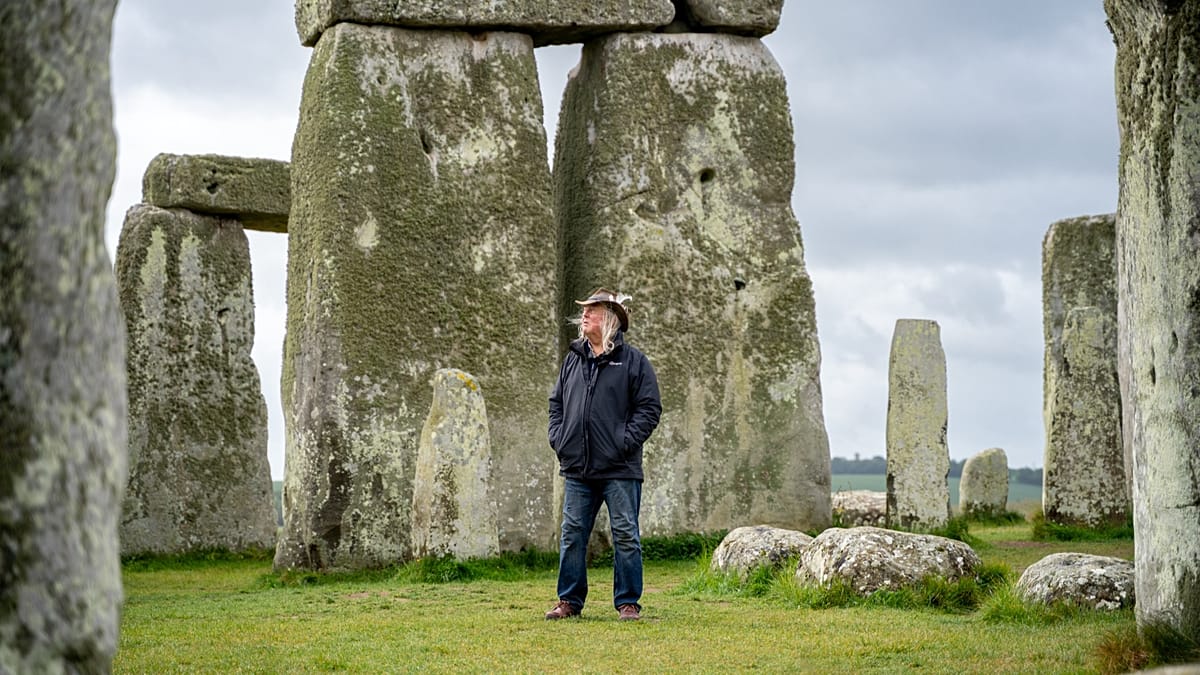
Stonehenge itself was built in stages from around 3000 BC on the flat expanse of Salisbury Plain. It remains one of Britain’s most visited sites and a UNESCO World Heritage Site. Its exact purpose is still debated — theories range from solar temple to healing sanctuary to astronomical calculator — though its alignment with the solstices is the most widely accepted interpretation.
The Bulford discovery adds weight to the idea that the region was a centre of ritual and astronomical observation long before the first stones were raised. It also echoes other recent archaeological work across Europe, such as the excavations beneath Notre-Dame in Paris that uncovered Roman Lutetia and medieval layers — a reminder that the continent’s prehistoric and classical pasts are still being unearthed beneath modern infrastructure. Beneath Notre-Dame: Archaeologists Unearth Roman Lutetia and Medieval Paris.
Broader Implications for European Prehistory
The discovery fits into a wider pattern of Neolithic solar observatories across Europe, from the Goseck circle in Germany to the megalithic alignments at Carnac in Brittany. It suggests that the drive to mark the solstices — and to gather large communities for seasonal ceremonies — was not unique to the builders of Stonehenge but was part of a shared cultural impulse across the continent.
“This is a rare glimpse into the minds of Neolithic people,” said a spokesperson for Wessex Archaeology. “They were not just farmers; they were astronomers, engineers, and organisers of large-scale communal events.”
The findings also highlight how military infrastructure projects can inadvertently yield archaeological treasures. The survey tied to the MoD’s troop rehousing programme from Germany — a legacy of the Cold War — has now produced one of the most significant prehistoric discoveries in southern England in decades. For comparison, similar synergies between infrastructure and archaeology have been seen elsewhere, such as in the 70 km Nazi-era autobahn ruin in Germany, which remains a monument to propaganda and engineering.
Thousands of people are expected to gather at Stonehenge this Sunday to celebrate the summer solstice. They will be standing in a landscape that, as this discovery shows, has been a place of solar worship for at least five millennia.