Israeli Prime Minister Benjamin Netanyahu has publicly rejected the terms of a US-backed proposal for Gaza, insisting that Israeli forces will not pull back from the territory until Hamas has completely disarmed. The statement, delivered on Tuesday, casts fresh doubt on a deal that Washington had presented as a potential breakthrough in the long-running conflict.
The plan, announced by US President Donald Trump, called for Hamas to begin handing over its weapons while Israel would halt military operations and start withdrawing from the roughly 60 percent of Gaza it currently controls. It was built on the October ceasefire agreement that ended major combat and secured the release of most remaining hostages, but which has since stalled over disagreements on implementation.
Netanyahu, facing a tough re-election battle in October, reiterated his long-standing position that disarmament must come first. In a video posted on social media, he said Israeli forces would continue to “do whatever is necessary to protect themselves, our territory, and our citizens.”
The prime minister’s remarks mark a rare public display of friction with the Trump administration, which had been pushing both sides to accept the framework. “The Trump administration sent us a draft. We did not agree. It is not our draft. We sent our comments,” Netanyahu said. “President Trump and his team think they can get Hamas to disarm and demilitarize Gaza, we are examining this.”
He added that Israel’s comments were submitted before any media campaign on the matter, stressing that “this is our position. We stand firm on our interests, I believe both wisely and firmly.”
Sticking points remain
The US-backed agreement from October envisioned a phased process: Hamas would disarm, Israel would withdraw, an International Stabilization Force would be deployed, and an independent Palestinian administration would take over governance and reconstruction. But the details have proven contentious, particularly the sequencing of disarmament and withdrawal.
Netanyahu’s insistence on full disarmament before any pullback is likely to complicate efforts by Washington to broker a lasting ceasefire. It also raises questions about the viability of the proposed stabilization force, which would need both Israeli and Palestinian consent to operate effectively.
The standoff comes as regional tensions remain high. Iran has rejected a deal over the Strait of Hormuz and launched a missile strike on US forces in Jordan, adding another layer of instability to the Middle East. Meanwhile, Trump is preparing to host both Netanyahu and Ukrainian President Volodymyr Zelenskyy in what is being seen as a dual diplomatic test for the US president.
For European observers, the developments in Gaza carry significant implications. The EU has long advocated for a two-state solution and has pledged substantial aid for Gaza’s reconstruction, but progress has been hampered by the lack of a political framework. European capitals are watching closely whether the US-brokered plan can overcome the current impasse, or whether the conflict will continue to destabilise the region.
Netanyahu’s stance also resonates in European domestic politics, where leaders face pressure from pro-Israeli and pro-Palestinian constituencies. The prime minister’s refusal to accept the US draft may embolden hardliners in Israel, but it could also undermine efforts to build a broader international coalition for peace.
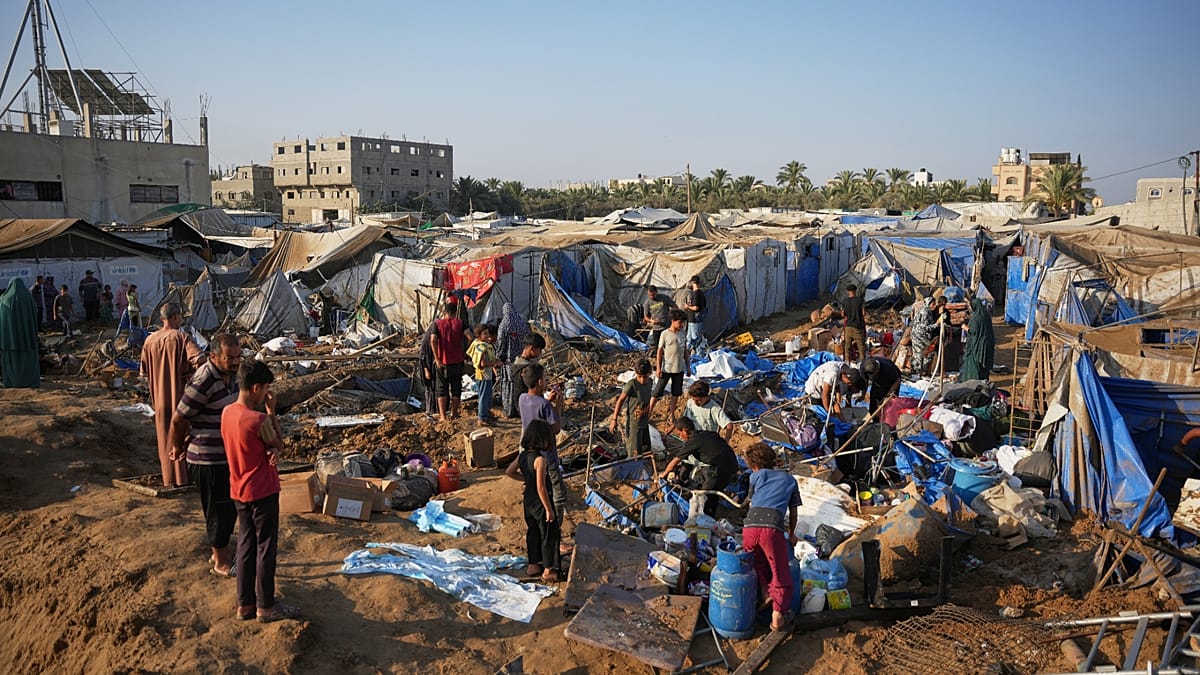
As the diplomatic wrangling continues, the humanitarian situation in Gaza remains dire. Reconstruction needs are immense, and any delay in implementing a ceasefire agreement prolongs the suffering of civilians. The coming weeks will be critical in determining whether the US-brokered plan can be salvaged or whether the region slides back into full-scale conflict.