Iran has escalated its confrontation with the United States on two fronts, rejecting a diplomatic proposal to manage the Strait of Hormuz and launching a ballistic missile attack on American forces stationed in Jordan. The developments mark the most serious deterioration in relations since the interim agreement between Washington and Tehran collapsed earlier this month.
Deputy Foreign Minister Kazem Gharibabadi told Iranian state television that Oman had proposed dividing the strait into two equal shipping lanes, each handling 50 percent of traffic. Tehran dismissed the plan and instead offered a temporary arrangement under which all vessels would transit exclusively through Iranian territorial waters. “Iran's policy is for the strait never to return to its prewar situation,” Gharibabadi said.
Rear Admiral Habibollah Sayyari, the army's deputy chief, reinforced the position. “No movement will take place in the Strait of Hormuz without Iran's permission,” he said. “The Iranian Navy has full control over the eastern part of the Strait of Hormuz, the northern Indian Ocean and the Gulf of Oman.” The Islamic Revolutionary Guard Corps separately announced it had stopped and boarded three tankers in the strait, asserting full control over the waterway.
Missile strike and immediate response
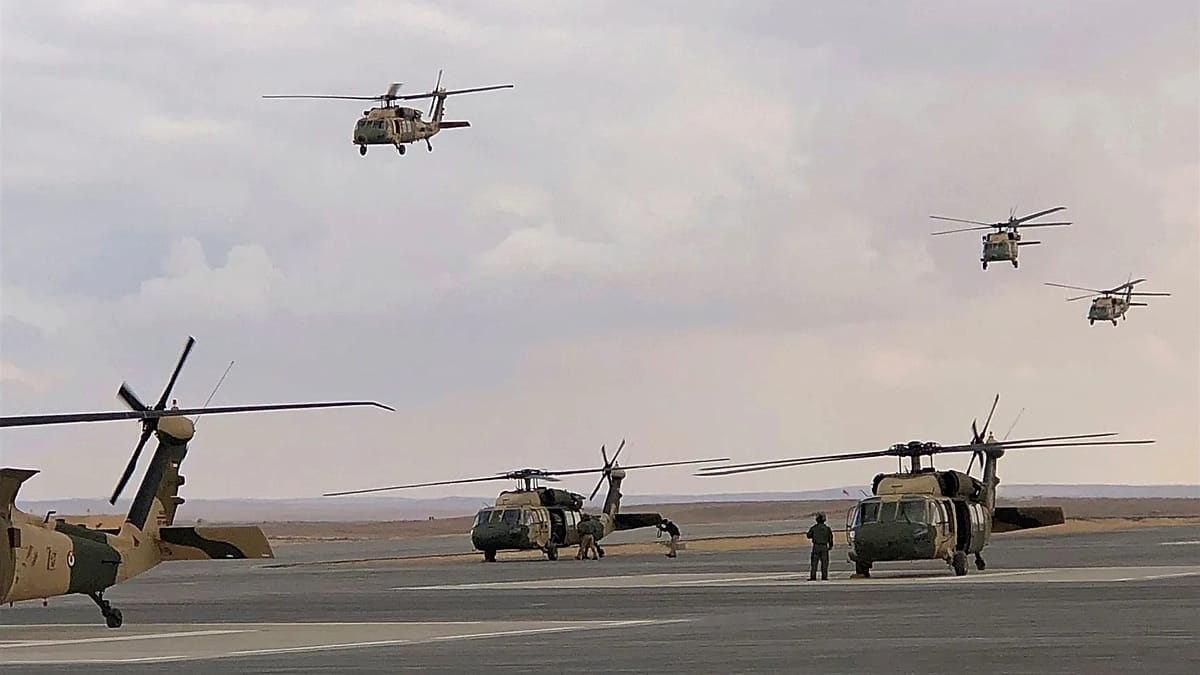
Hours after the Hormuz statements, the IRGC launched multiple ballistic missiles at US forces in Jordan. US Central Command described the attack as an attempted surprise strike. “At 5:45pm ET today, IRGC forces launched multiple ballistic missiles from Iran in an attempted surprise attack on US forces based in the Middle East,” CENTCOM said. “All Iranian missiles were successfully intercepted.” Jordan's army confirmed it had intercepted five Iranian missiles.
The IRGC said the strike was part of Operation Nasr 2, targeting an airbase and CENTCOM's headquarters in Jordan. US President Donald Trump, speaking to Fox News, vowed a forceful response. “We'll be hitting them hard. They're going to get a beating,” he said, adding that Washington would deliver “a hard lesson” to Iran. Oil markets reacted immediately, with prices jumping 5 percent on fears of supply disruptions.
In a coordinated response, US and Saudi fighter aircraft struck multiple logistics and weapons sites linked to Iran-backed groups across eastern Iraq. CENTCOM said the strikes were retaliation for more than 30 IRGC-directed drone attacks over the previous 72 hours. Saudi Arabia reported intercepting drones targeting crude facilities and blamed Iraq-based groups allied with Tehran.
The Hashd al-Shaabi, the Popular Mobilisation Forces, said at least 20 of its members were killed across seven provinces including Baghdad. It denounced “a dangerous escalation” against what it described as “an official security institution.” Trump said the strikes had been coordinated with Baghdad in advance, but the Iraqi presidency condemned them as “an unacceptable attack and a blatant violation of Iraq's sovereignty,” without naming the US or Saudi Arabia.
Tehran-aligned factions reacted sharply. Saraya Awliya al-Dam called for the expulsion of the Saudi ambassador and the severance of diplomatic ties, while Harakat al-Nujaba warned that Washington and Riyadh would “pay a heavy price.” Iran's Foreign Ministry accused both countries of violating Iraqi sovereignty. A planned visit by Prime Minister Ali al-Zaidi to Saudi Arabia was postponed.
The Islamic Resistance in Iraq, an umbrella for the most active pro-Tehran factions, has claimed hundreds of attacks on US bases across the region since the war began but has not publicly claimed responsibility for any strikes since fighting resumed earlier this month. Saudi analyst Hesham Alghannam described the dynamic: “Tehran is now using its proxy network to sustain leverage while the diplomatic track absorbs international attention. The proxy war is the continuation of the direct war by other means, and it is being run with considerable strategic coherence.”
Meanwhile, Israel accused Hezbollah of launching an explosive drone at an Israeli engineering vehicle inside Lebanese territory, calling it a blatant violation of the ceasefire. Israel fought alongside the US during the first weeks of the war against Iran but has not joined the latest round of strikes. In Yemen, a minister in the internationally recognised government accused the Tehran-backed Houthis of operating under Iranian guidance to establish a fee system for ships transiting the Red Sea and the Bab al-Mandeb Strait.
For European readers, the crisis carries direct implications. The Strait of Hormuz disruption has already reignited fuel prices across Europe, and the latest escalation threatens further volatility. The US has also launched a review of European troop deployments, pushing NATO allies to take on more responsibility. As the situation unfolds, European capitals are watching closely, aware that the conflict's ripple effects extend far beyond the Gulf.