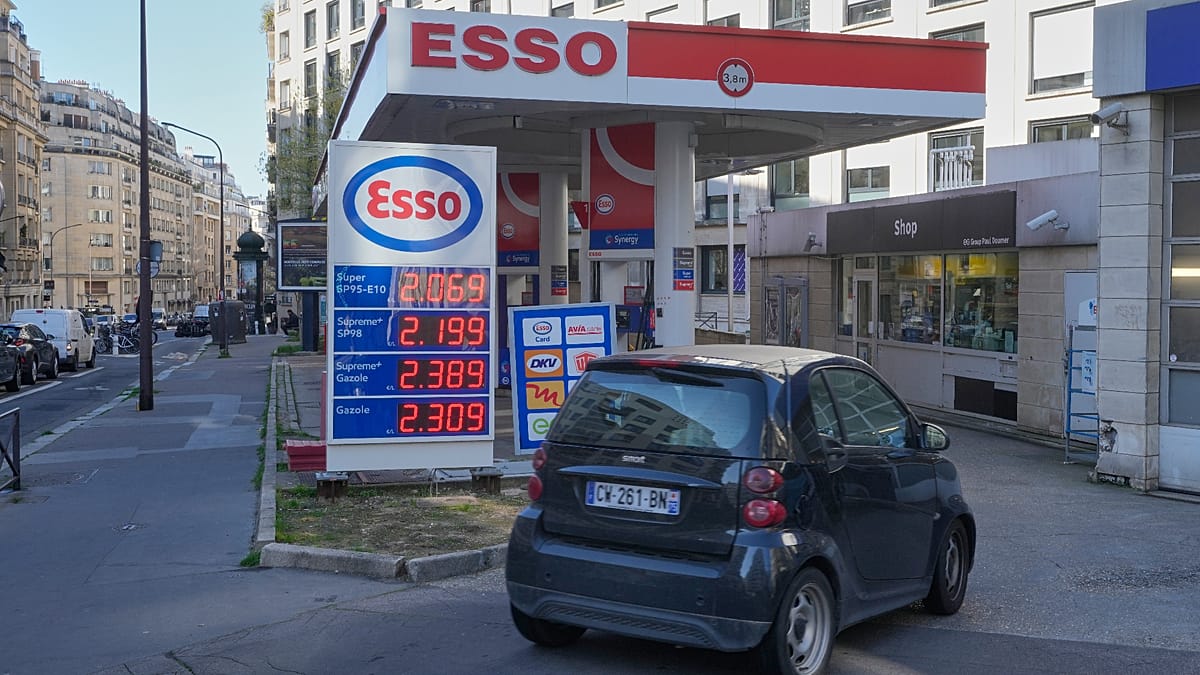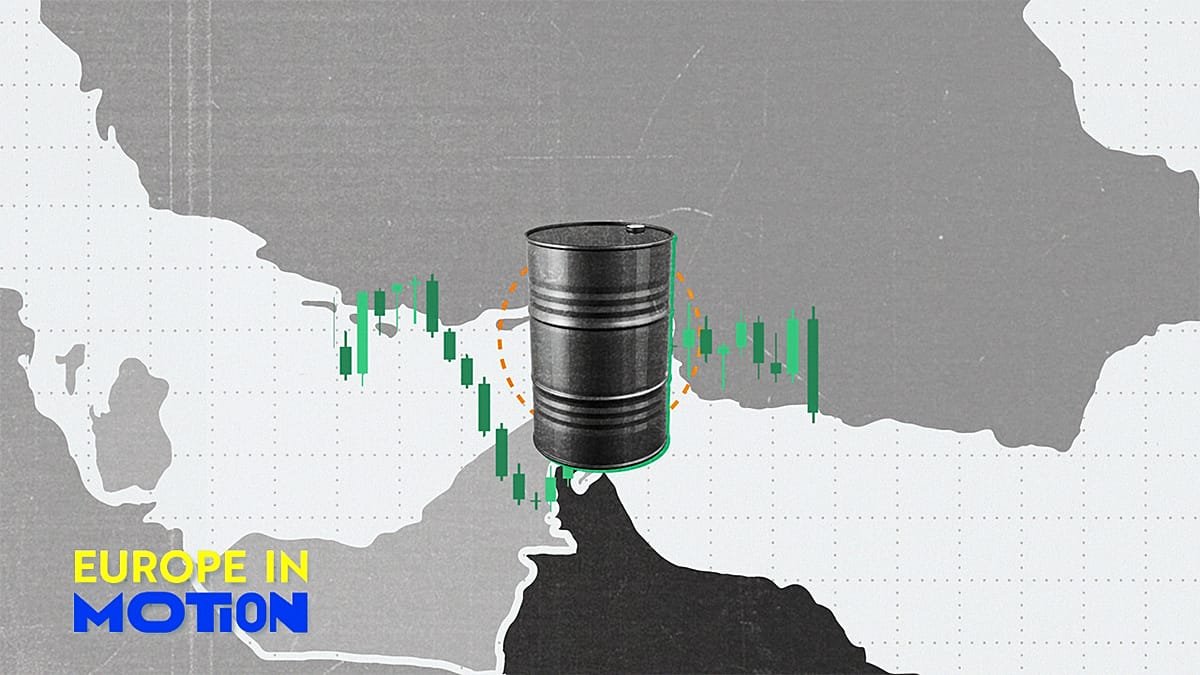
The brief calm in European fuel markets that followed the US-Iran ceasefire in June has evaporated. Renewed attacks on oil tankers in the Strait of Hormuz — the narrow waterway between Iran and Oman through which roughly a fifth of the world's petroleum passes — have driven crude prices back above $100 a barrel, the highest level since early June.
According to Eurostat data, diesel prices across the European Union fell by 6.4% in June compared to May, and petrol dropped by 4.2%. The largest declines were recorded in the Czech Republic (-11.3%), Poland (-9.7%), and Bulgaria (-9.4%). But those gains have been wiped out as the crisis in the Gulf escalates once more.
In recent days, Iran and Yemen's Iran-backed Houthi rebels have targeted several large international merchant vessels, according to shipping and security sources. The United States has insisted the passage remains open, but has also threatened to strike Iranian bridges and power plants if the attacks continue. The Trump administration's rhetoric has added to the volatility, with the president warning of bombing Tehran's infrastructure for each new attack — a threat that has further unnerved markets.
Eastern Europe bears the brunt
On a year-on-year basis (June 2025 to June 2026), the steepest fuel price increases have hit Eastern European member states. Bulgaria, Lithuania, and Romania all recorded jumps of more than 23%. Non-EU countries in the region have fared even worse: Turkey saw a nearly 32% rise, and Georgia almost 30%.
These disparities reflect varying levels of dependence on imported crude and refined products, as well as different tax regimes. While the EU has recommended that member states cut excise duties to cushion the blow, several governments have opted for alternative measures.
How Spain, Hungary, and Poland keep prices lower
Malta aside, the lowest year-on-year fuel price increases in the EU were recorded in Hungary (2.3%), Poland (5.8%), and Spain (7.9%). Hungary imposed a cap on fuel prices, a move that has drawn criticism from Brussels for distorting the single market. Spain and Poland, meanwhile, have reduced VAT on petrol and diesel — a policy that the European Commission has questioned, arguing that excise duty cuts are more effective at targeting consumption without undermining national budgets.
Spain benefits from an additional structural advantage: a large network of oil refineries that makes it less dependent on imported finished fuels. Despite being heavily reliant on crude oil imports, Madrid's downstream capacity allows it to absorb supply cost fluctuations more easily than many of its peers.
Italy and Cyprus were the only EU countries where petrol prices actually rose between May and June 2026, by 0.5% and 0.7% respectively. The overall trend, however, has now reversed across the continent as the Hormuz crisis deepens.
Gulf states and Iraq are racing to develop alternative export routes to bypass the Strait of Hormuz, but these projects remain years away from completion. In the meantime, European consumers and businesses face renewed uncertainty. The post-ceasefire relief proved short-lived, and the underlying geopolitical tensions show no sign of abating.
For a broader perspective on how the crisis is reshaping energy security, see our analysis of efforts to bypass the Strait of Hormuz. The impact on Russia's economy, already strained by sanctions, is also significant — the central bank recently slashed its 2026 GDP forecast to zero amid the fuel crisis, as we reported in our coverage of Moscow's economic outlook.