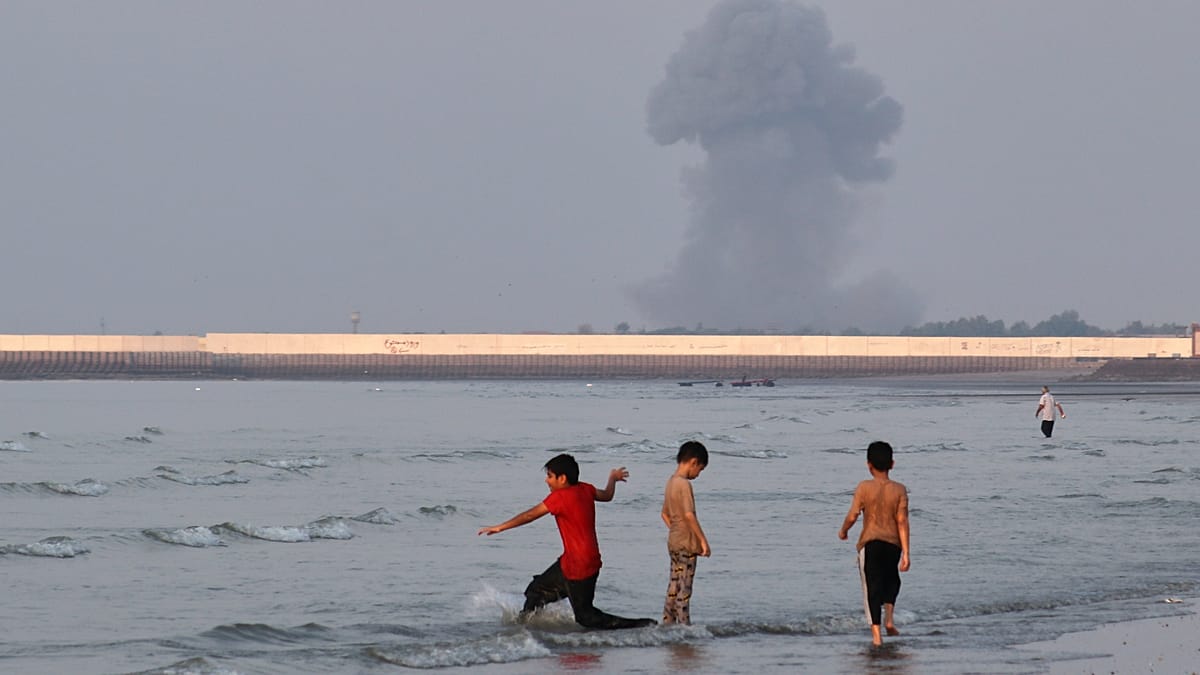
For decades, the Strait of Hormuz has been the world's most critical oil chokepoint, carrying roughly a fifth of globally traded crude in peacetime. But with the waterway now largely closed due to the escalating US-Iran conflict, Gulf producers are racing to build alternative export routes that bypass the strait entirely.
Before the war, some 15 million barrels of Gulf oil passed through the strait daily. Today, Brent crude trades at around $93 a barrel, well above the $72 it fetched after a short-lived truce in June, and the US benchmark WTI has risen to roughly $90. The disruption has forced a strategic rethink across the region.
“Depending so heavily on the Strait of Hormuz is no longer a prudent long-term strategy,” said Victoria Grabenwöger, a senior researcher at the data firm Kpler.
Existing escape valves reach capacity
Two alternative routes already exist, but both are running near their limits. Saudi Arabia's East-West pipeline, built in the 1980s during the Iran-Iraq war, carries crude from the Abqaiq complex to Yanbu on the Red Sea. From there, tankers head south toward the Arabian Sea or north to the Suez Canal. The UAE has also been channelling more oil to its port at Fujairah on the Gulf of Oman, about 145 kilometres south of the Strait of Hormuz.
Together, these two links had a spare capacity of 3.5 to 5.5 million barrels a day before the war, according to the US Energy Information Administration. Both now run close to full, handling around 6.5 million barrels a day.
Abu Dhabi's state oil company is racing to finish a $3 billion (€2.6 billion) pipeline to Fujairah, laid alongside an existing line, designed to lift deliveries by over 1.2 million barrels a day. The project is roughly half built, according to Kpler, which expects the official early-2027 completion target to slip to mid-2027 because the port itself must be expanded. Even that timetable, the firm argues, only became conceivable because of the blockade.
Red Sea route faces its own threats
The Red Sea alternative is not without vulnerabilities. This week, Yemen's Iran-backed Houthi rebels claimed they attacked two Saudi tankers, the Encelia and the Layla, setting both on fire. Saudi state media reported a blaze at the bow of the Encelia with no casualties, while the UK Maritime Trade Operations centre reported a tanker struck by “an unknown projectile” southwest of Al Shuqaiq.
The Houthis have disrupted the Bab el-Mandeb Strait before, a maritime chokepoint carrying about 12% of world trade. A Houthi drone strike forced the East-West pipeline itself to shut back in 2019. The threat to the Bab el-Mandeb Strait remains a persistent risk for global shipping and European trade.
Iraq's $60 billion bet on Washington
Nowhere is the scramble more urgent than in Iraq, which draws about 90% of state revenues from oil exports and has had to cut output because of its dependence on the Strait of Hormuz. Prime Minister Ali al-Zaidi returned from Washington last week with 48 agreements signed with American firms, spanning energy, healthcare and technology and worth more than $60 billion, according to Reuters. The deals involve ExxonMobil, Shell, Halliburton, KBR and GE Vernova.
The centrepiece is a deal with Syria to rebuild the long-dormant pipeline running from the Kirkuk fields to the Mediterranean port of Baniyas. Iraqi state media says Chevron will execute the project, and the US State Department welcomed it as “a critical energy corridor” with an initial capacity of 2 million barrels a day. Baghdad is also weighing a line from Basra to Jordan's Aqaba.
Washington's ambassador to Turkey, Tom Barrack, predicted the agreements would render the Strait of Hormuz “an afterthought.” The developments come as US strikes on Iran continue and the strait remains effectively closed to normal traffic.
For European energy markets, which rely heavily on Gulf crude and refined products, the shift toward alternative routes offers some relief but also introduces new vulnerabilities. The Red Sea and Mediterranean corridors are longer and more exposed to regional conflicts, from Yemen to Syria. As Gulf producers invest billions in bypassing Hormuz, the question for Europe is whether these new arteries will prove more reliable than the old one.