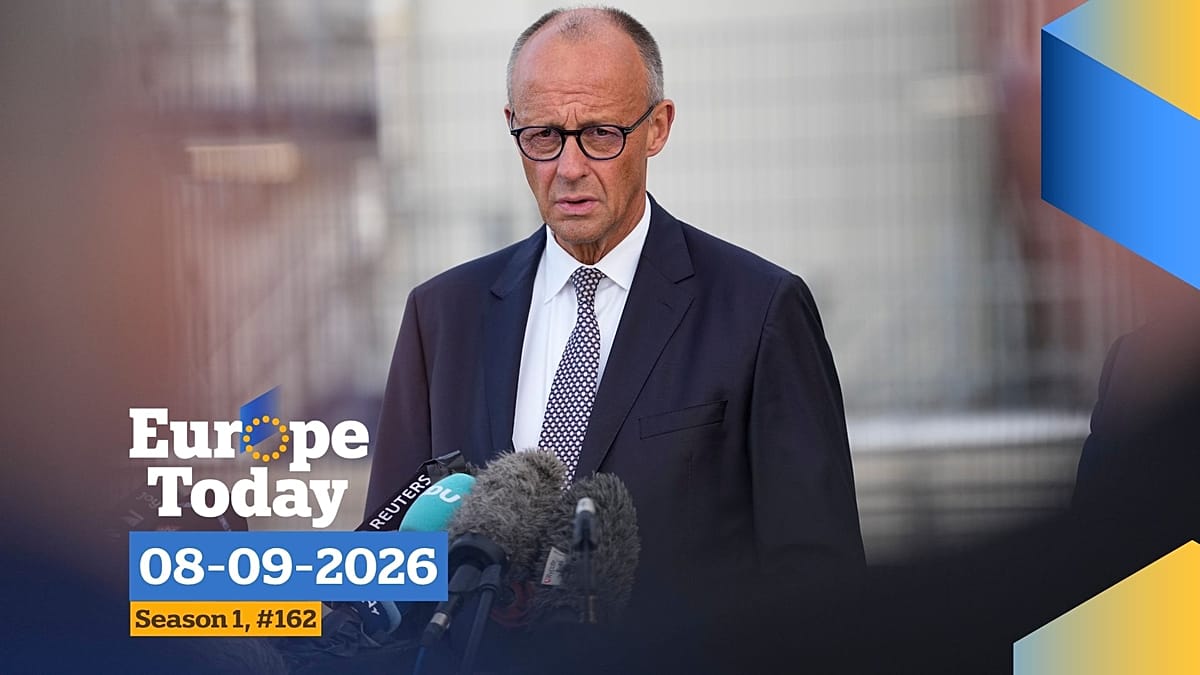
BERLIN — A day after the far-right Alternative for Germany (AfD) secured a landmark victory in the Saxony-Anhalt state election, Chancellor Friedrich Merz is facing mounting political pressure from both the opposition and within his own coalition. The result, which saw the AfD become the strongest party in the eastern state, has reignited debates over migration policy and the government's handling of public discontent.
Laura Fleischmann, reporting from Berlin, notes that the AfD's success is not merely a regional blip but a signal of deeper frustrations across eastern Germany. "The party has capitalised on anger over energy costs, inflation, and a perceived neglect of rural areas," she says. "For Merz, this is a wake-up call that his coalition's agenda is not resonating with a significant portion of the electorate."
Political communications expert Béla Anda, a former German government spokesperson, argues that the Chancellor's room for manoeuvre is shrinking. "Merz must now decide whether to shift further right on migration to win back voters, or hold his ground and risk further erosion," Anda explains. "Either way, his authority is weakened, and coalition partners will be harder to manage."
The pressure comes at a critical time for Germany, which has been a key supporter of Ukraine. As Berlin grapples with domestic challenges, Kyiv is facing its own urgent crisis: how to sustain its war effort against Russia amid dwindling financial resources. Tymofiy Mylovanov, former Ukrainian Economy Minister, warns that without immediate international support, Ukraine's ability to defend itself could be severely compromised. "We are running out of money for ammunition, salaries, and basic logistics," Mylovanov says. "Every week of delay on the battlefield costs lives and territory."
Ukraine's funding crunch
Today, the Ukraine Defence Contact Group meets to coordinate military aid, with air defence systems at the top of the agenda. Shona Murray reports that the meeting comes as Ukrainian cities endure relentless Russian missile strikes, and as Western stockpiles strain under the demand. "The urgency is palpable," Murray says. "Ukraine needs Patriot systems and other advanced interceptors now, not in months."
Financial support is equally pressing. An EU custodian plan could unlock frozen Russian assets for Ukraine, but implementation remains slow. Meanwhile, the United States has demanded that European allies repay military aid, a move that has complicated transatlantic coordination. As Trump's demands echo through NATO corridors, European leaders are scrambling to find alternative funding mechanisms.
Deputy Prime Minister of Ukraine has cautioned that frontloading EU loans alone won't fix the budget gap. Structural reforms and long-term commitments are needed, but time is short. The coming weeks will be decisive, as Ukraine's ability to sustain its defence hinges on concrete pledges from its allies.
Serbia's EU ambitions under strain
In a separate development, Serbia's European integration path faces a new test following the funeral of convicted war criminal Ratko Mladić in Belgrade on Monday. The ceremony, which included military honours, drew thousands of mourners and drew sharp condemnation from the European Union, which called it incompatible with EU values.
Mared Gwyn reports that the event has put Serbia's government in an awkward position. "The EU has made clear that such displays are unacceptable for a candidate country," she says. "This is an important test of Serbia's commitment to the rule of law and reconciliation in the Western Balkans."
Serbian officials have defended the funeral as a private matter, but critics argue that the state's involvement sends a dangerous signal. The incident could complicate Serbia's EU accession talks, which have already been stalled over issues of judicial reform and normalisation with Kosovo.
As Europe grapples with these intertwined challenges — from the rise of the far right in Germany to Ukraine's existential struggle and the fragility of Balkan reconciliation — the continent's leaders face a stark reminder that unity and resolve are more critical than ever.