US President Donald Trump has said he will ask European nations to reimburse Washington for the military aid provided to Ukraine under his predecessor Joe Biden. The demand, posted on his Truth Social platform on Thursday, reignites a long-running transatlantic dispute over burden-sharing in the war against Russia.
Trump wrote that “hundreds of billions of dollars” had been given to Ukraine and NATO “free of charge,” arguing that Europe would have paid if asked. “We will be asking for that money, though somewhat belatedly!” he added, without specifying which countries he expects to foot the bill.
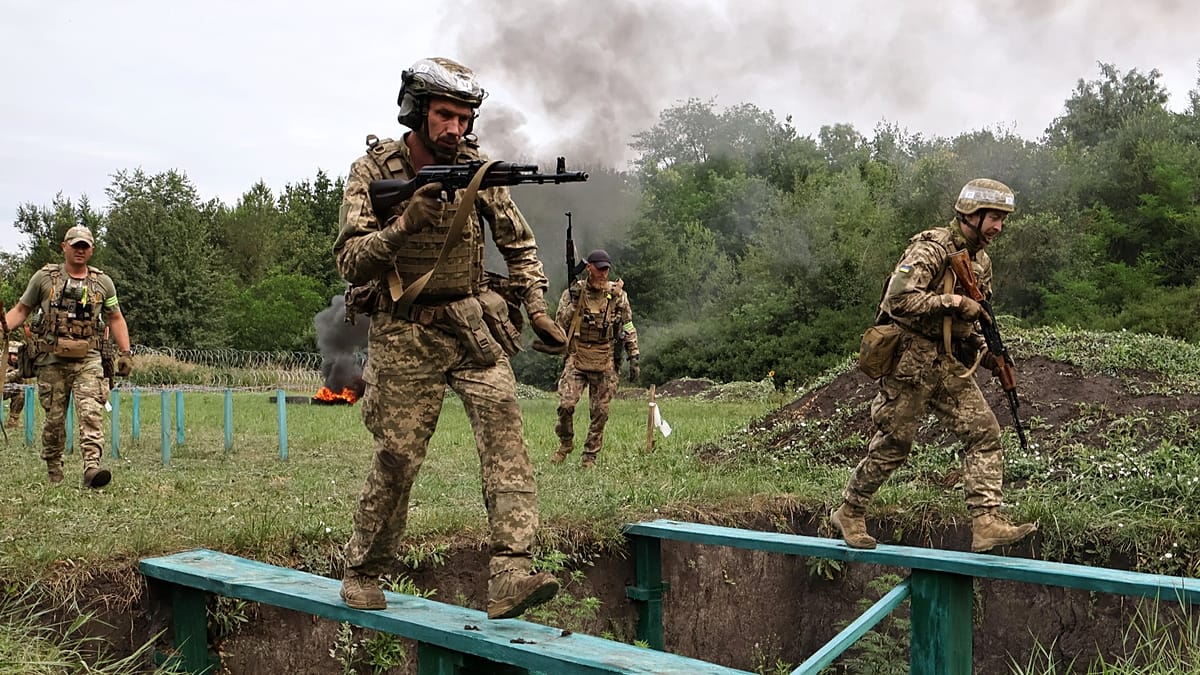
The statement comes as European governments have significantly increased their own aid allocations to Ukraine this year, yet still depend heavily on US weaponry for their military support, according to the Kiel Institute for the World Economy’s Ukraine Support Tracker. The institute’s data shows that while European commitments have risen, the continent’s ability to deliver arms remains constrained by its reliance on American-made systems.
US munitions stockpile and arms sales
In the same social media post, Trump dismissed reports that the US military was running low on ammunition in its conflict with Iran. He claimed the United States has “virtually unlimited amounts of Mid to High Grade Ammunition” and that production is running at “levels never seen before.”
Washington has temporarily suspended overseas arms sales to build up its own stockpiles and prepare for contingencies, Trump said. “We are taking (munitions) for ourselves, the U.S.A., rather than selling them to others, but the sales to Allies will soon again begin.”
The US State Department reported in March last year that Washington had provided approximately $66.9 billion in military assistance since Russia’s full-scale invasion of Ukraine began on 24 February 2022, and about $69.7 billion since the initial Russian incursion in 2014. The department also noted that the emergency Presidential Drawdown Authority had been used 55 times since August 2021, delivering roughly $31.7 billion worth of equipment from Pentagon stocks.
Trump’s demand for repayment is likely to unsettle European capitals, where officials have already voiced concerns about the sustainability of US support. The issue is expected to dominate discussions at the next NATO summit, with several EU member states, including Germany and France, under pressure to increase their defence spending further.
Meanwhile, Ukraine’s finance minister has warned of the toughest budget since 2022 as winter approaches, with the country facing a significant financing gap. The EU has proposed frontloading loans, but as Ukraine’s deputy prime minister noted, that alone won’t solve the budget shortfall.
WHO warehouse hit in Kyiv Oblast
Separately, the World Health Organisation reported on Friday that one of its main warehouses in Ukraine had been affected by an overnight air attack – the third such incident in three months. The strike, which occurred in Kyiv Oblast, damaged a facility storing medical supplies and equipment.
“Access to the site remains restricted due to heavy smoke and safety concerns, while assessments of possible damage and stock losses are ongoing,” said WHO spokesman Christian Lindmeier in Geneva. No WHO personnel were harmed.
Lindmeier described the attack as part of a “broader pattern affecting humanitarian operations across the country.” He noted that in 2026, at least 20 attacks have hit warehouses storing humanitarian supplies, including 15 that held health-related materials.
Two weeks ago, an airstrike destroyed a humanitarian warehouse in Dnipro, destroying half of the medical supplies intended for an estimated 225,000 people. Another WHO warehouse in Kyiv Oblast was damaged during a large-scale wave of attacks in July.
The WHO verifies and records attacks on healthcare but does not attribute blame, as it is not an investigation agency. The UN body has confirmed more than 3,000 attacks on healthcare in Ukraine since the start of Russia’s full-scale invasion in February 2022. Health facilities and systems are protected under international humanitarian and human rights law.
The repeated strikes on medical infrastructure have raised alarms among humanitarian groups, which say the targeting of warehouses and hospitals is making it increasingly difficult to deliver aid to frontline areas. The attacks also underscore the broader human cost of the war, now in its fifth year, as both sides prepare for a difficult winter.