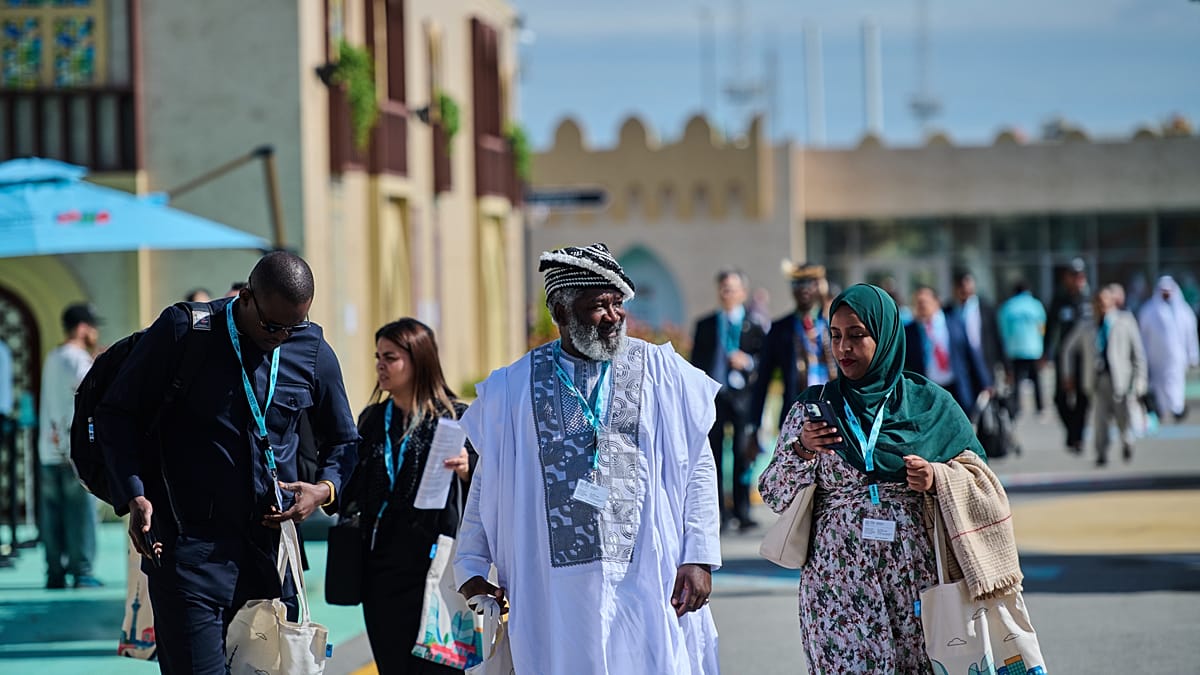
African cities are confronting a convergence of climate change, rapid urbanisation, and chronic housing shortages that their governments cannot finance at scale. At the 13th World Urban Forum (WUF13) in Baku, policymakers from across the continent argued that traditional funding models are insufficient and that housing must be reframed as a core economic and infrastructure priority.
Carlos Alberto Gregório dos Santos, Angola's Minister of Public Works, Urban Planning and Housing, told delegates that his country allocates roughly 7.5% of its gross domestic product to the residential sector — one of the largest public investment areas in the nation. The Angolan state has built approximately 350,000 housing units in recent years to address a deficit in cities expanding faster than construction can keep pace. Dos Santos emphasised that forums like WUF13 allow developing countries to exchange practical solutions on housing, transport, and infrastructure. "Africa, Europe and Asia must work together," he said.
Lessons from Reconstruction
Azerbaijan's own post-conflict reconstruction experience became a reference point for delegates dealing with recovery or crumbling infrastructure. Hamat Ngai Kumba Bah, Gambia's Minister of Lands, Regional Government and Religious Affairs, noted that Baku's decision to convert a sports arena into the summit venue demonstrated adaptive urban development over costly new construction. On financing, Bah was blunt: "In this world today, nobody has enough finances." He argued that governments with limited budgets must move toward innovative mechanisms rather than relying solely on traditional multilateral funding.
This call for new approaches echoes discussions at the forum from other regions. For instance, Latin America pushes for new housing finance and climate resilience at WUF13, highlighting a global shift in thinking.
Trees Versus Floods
Climate resilience dominated the debate, particularly for cities already living with the consequences. Moges Tadesse, chief resilience officer for Addis Ababa, warned that seasonal flooding destroys homes, damages infrastructure, and displaces residents from riverbanks and flood-prone zones, with cascading effects on public health and livelihoods. Ethiopia's response has leaned heavily on nature-based solutions: Addis Ababa has planted more than 90 million trees over the last five years, while nationwide, Ethiopia has planted around 47 billion trees as part of a broader land restoration programme.
Tadesse pressed wealthy nations to do more, arguing that countries contributing least to global carbon emissions bear the greatest environmental and economic costs. This sentiment aligns with broader European concerns about climate justice, as seen in Spain unveils €9 billion climate social plan for energy transition, which underscores the need for equitable climate action.
For many delegates in Baku, the message was clear: African cities cannot afford to treat housing, climate, and economic development as separate problems. The question remains whether the financing will follow. As the forum concluded, WUF13 in Baku concludes with urgent call for global urban action, reinforcing the need for coordinated international efforts.