From the forests of Finland to the waters off the Azores, scientists are increasingly turning to artificial intelligence to make sense of the sounds animals make. Machine learning systems are now being trained on vast collections of recordings, from birdsong to whale calls, in the hope of uncovering patterns that could reveal how different species communicate.
One of the leading efforts is the Earth Species Project, a US-based non-profit that develops AI models specifically for analyzing animal vocalizations. Its latest tool, NatureLM-audio, can recognize and classify sounds, identify different types of calls, and process large audio datasets in a fraction of the time it would take a human researcher.
In a test using recordings from Australia's FrogID project, the model distinguished frog sounds from other audio with 99% accuracy and identified selected frog species with 82% accuracy. But recognizing sounds is only the first step. The harder question is what those sounds actually mean.
From recognition to interaction
The Earth Species Project is collaborating with researchers studying killer whales, crows, and zebra finches. With scientists at McGill University in Canada, it has developed ZF-AIM, a model that generates bird-like vocalizations in real time. This allows researchers to observe how zebra finches respond to AI-produced sounds, moving beyond passive analysis to interactive experiments.
These experiments are intriguing, but they do not mean that scientists can translate what the birds are saying or that a genuine conversation has been established between animals and machines. The technology is a tool for probing behavior, not a universal translator.
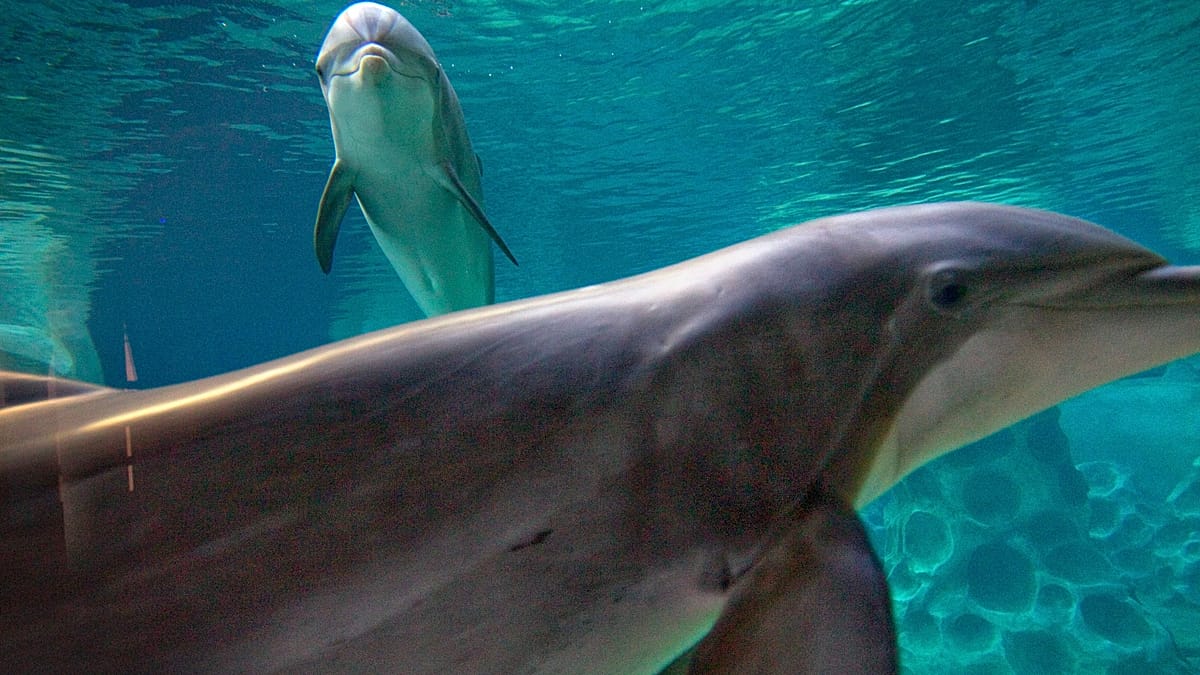
Similar work is underway with marine mammals. Google DeepMind has created DolphinGemma, trained on decades of recordings of wild Atlantic spotted dolphins collected by the Wild Dolphin Project. The model analyzes sequences of dolphin vocalizations to identify recurring patterns and predict which sounds are likely to follow. Researchers hope this could eventually lead to a shared vocabulary between humans and dolphins, though for now it remains a research instrument rather than a communication bridge.
Decoding whale codas
Project CETI, an international initiative combining AI, robotics, linguistics, and underwater recording, is focusing on sperm whales. The project studies sequences of clicks known as codas, which the whales use to communicate. A 2024 study in Nature Communications analyzed more than 8,700 codas and found features involving rhythm, tempo, and variations in timing and arrangement, suggesting that sperm whale communication is more complex than previously thought.
Yet identifying patterns does not equal understanding meaning. Researchers still need to determine whether specific vocalizations carry specific messages and how context—such as social setting or environmental conditions—alters their significance. A repeated sound might be linked to a particular activity, but that does not automatically reveal what the animal is trying to convey.
Ethical and practical hurdles
The potential applications extend beyond satisfying human curiosity. If scientists learn to identify and reproduce animal signals associated with mating, distress, or social interactions, the same technology could be used to attract animals, disrupt their behavior, or make them easier to capture. Researchers have also raised concerns about broadcasting AI-generated vocalizations into wildlife populations, especially if the signals are misunderstood or interfere with existing communication systems.
There is also the risk of over-interpretation. AI can spot patterns, but it cannot tell us what those patterns mean. Humans might project intentions or emotions onto animals that they have not actually expressed. As the field advances, the challenge is not just to build better technology, but to ensure it is used in ways that protect the animals being studied.
For now, the dream of talking with animals remains distant. But with each new model and each new dataset, scientists are edging closer to understanding the rich acoustic world that surrounds us—a world that, until recently, was largely closed to human comprehension.