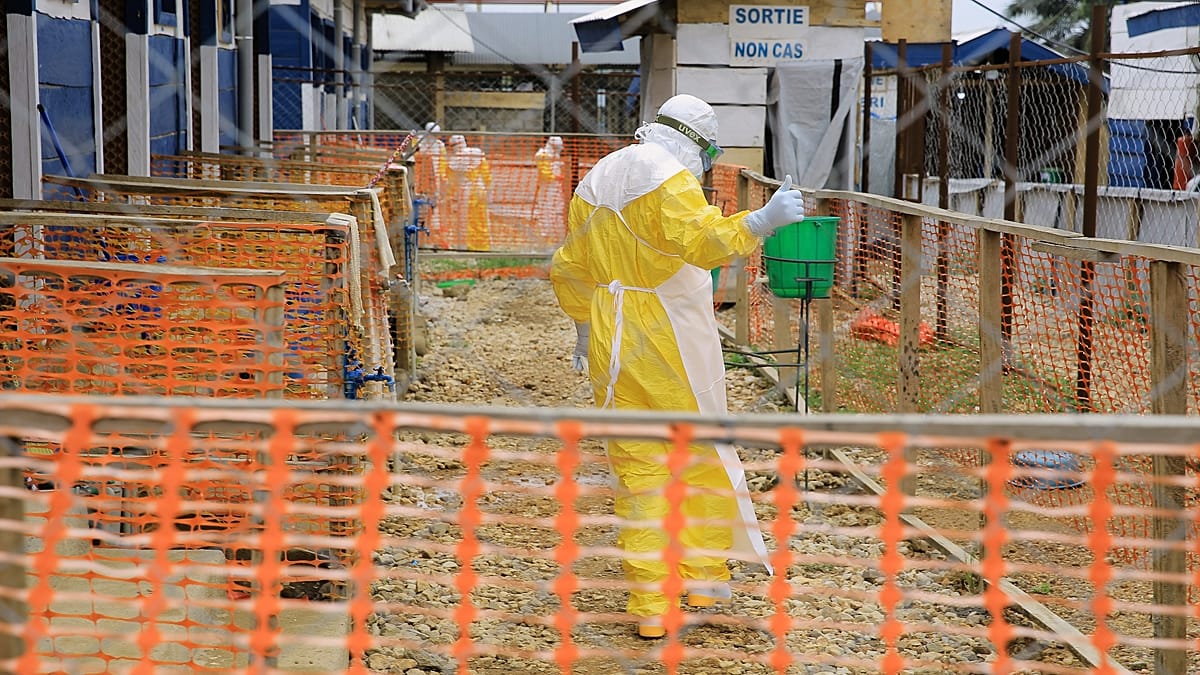
Since May, health workers in the Democratic Republic of Congo (DRC) have been on the front line against a new outbreak of the Bundibugyo strain of Ebola. Going door-to-door, they record recoveries, deaths, and refer suspected cases to clinics. Their notebooks capture the health of entire communities—and now, that data is being digitised and analysed with the help of Anthropic's Claude AI model, in a collaboration involving CEPI, the WHO Regional Office for Africa, and the national biomedical research institute INRB.
The result, according to Dr Marie Roseline Darnycka Belizaire, WHO Regional Director for Emergency Preparedness and Response, is that a situation report that used to take a full working day is now produced in under an hour. Speaking at the World Health Summit in Berlin, she explained how AI helps assess the spread of epidemics more quickly and target medical assistance more precisely. The system has already flagged potential outbreak hotspots, allowing authorities to pre-position medical supplies in high-risk areas.
This is a compelling example of AI's low-risk potential in healthcare. But experts argue the technology could do far more—from improving diagnostics to easing the administrative burden on overstretched medical staff. The question is whether it can be trusted.
AI as a support for overstretched healthcare staff
Across Europe, from Berlin to Lisbon, health systems are struggling with staff shortages and rising demand. Dr Thomas Zapata, Director of the WHO Academy in Lyon, sees AI as a way to bridge that gap—but only if it is integrated thoughtfully. "AI is an enabler, a means to an end," he said at the summit. "We are very fascinated by technology, but we need to place it in the right context within the health system."
Zapata believes AI can transform how care is organised and how health workers are trained. It can streamline administrative tasks, support clinical decisions, and improve diagnostics—freeing up time for what matters most: patient interaction. "We have more health professionals than ever before, and unprecedented technologies," he noted, "yet demand keeps rising."
Dr Cecilia Mbaka, Senior Technical Adviser for Health and Emergencies at CARE, echoes that view. With over 15 years of front-line experience, she knows the pressure of working with limited resources. For her, AI's value lies in three areas: supporting clinical decisions, handling repetitive tasks, and tailoring care to individual needs. "If AI does this work well, that leaves more time for the personal aspects of care—asking questions, listening, examining patients," she explained.
But in epidemics, trust is as critical as data. In the DRC, an estimated 50 percent of deaths in villages occur outside medical facilities, according to epidemiologist Maximilian Gertler. The local health system was unprepared for the Ebola outbreak, and thousands of protective suits are needed daily. Germany recently increased its aid by €21 million. AI can help organise care, but it cannot build the trust that convinces people to seek help in time.
The transparency problem remains a major hurdle. Modern AI systems can analyse vast datasets, but the path to a diagnosis is often opaque. As AI experts themselves admit, clinicians and patients need to understand how decisions are made. Without that, adoption will stall—especially in Europe, where data protection and patient rights are paramount.
Still, the potential is undeniable. From prevention-focused reforms to innovations like Edinburgh's pioneering fertility treatment, AI is already reshaping European healthcare. The challenge is to ensure it serves both the system and the patient—transparently and ethically.