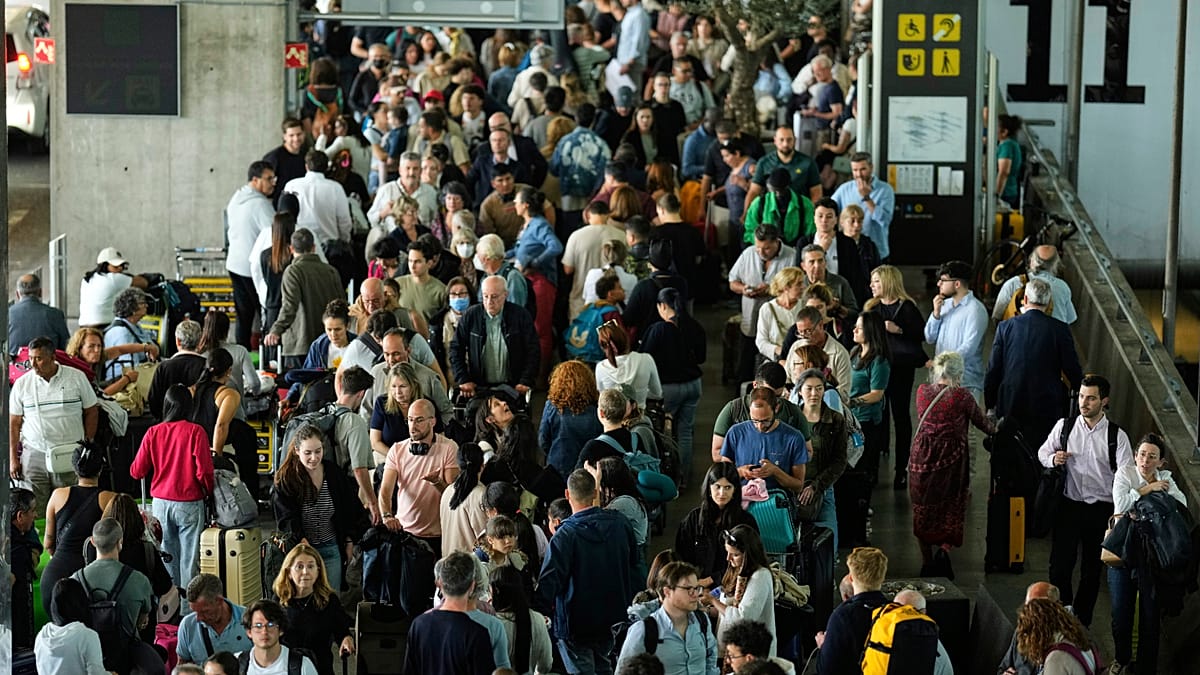
A new study commissioned by the European Federation for Transport and Environment (T&E) and conducted by the New Economics Foundation (NEF) has quantified the link between air travel and housing costs in seven European countries, with Spain bearing the brunt. The analysis, which covers the period from 2019 to 2025, shows that a 12.8% increase in air tourists in Spain has pushed up average rents by €236 per month (1.7%) and house purchase prices by €3,800.
The study, which has already drawn support from anti-speculation platforms, argues that the correlation is clear: in countries where air tourism has grown—Spain, Portugal, Italy, and Greece—rents and house prices have risen. Conversely, in Belgium, Denmark, Germany, the Netherlands, and Poland, where such tourism has declined, property prices have fallen moderately. However, the authors caution that the figures are averages and that local conditions vary significantly. As the Bank of Spain has noted, the impact in central Valencia will differ from that in Lugo.
Regional Disparities and Airport Expansion
The study highlights that both Madrid-Barajas and Barcelona-El Prat airports are projected to surpass Amsterdam's Schiphol in tourist arrivals in the coming years. Barcelona's planned terminal expansion, which has sparked controversy over its potential impact on the La Ricarda wetlands, is a key part of this growth. The Catalan government insists the project has been redesigned to avoid environmental damage.
Using Eurostat data, the analysts found that over the past five years, the Balearic Islands hosted 9.2 tourists per resident, the Canary Islands 4.9, and Catalonia 2.0, compared to a European average of 0.9. Spain has invested €12.9 billion in airport infrastructure at Barajas and El Prat, underscoring the scale of its reliance on air tourism.
The study also notes that in 2025, Spain and Italy exceeded their pre-COVID aviation emissions by 14% and 10%, respectively. The tourism sector was already responsible for 8.8% of global carbon emissions in 2019, raising questions about the sustainability of continued airport expansion.
Wages and Productivity Lag Behind
Despite the surge in tourist numbers, wages in Spain's hospitality sector have not kept pace. In 2023, the sector accounted for 10% of all hours worked in Spain but only 5% of national gross value added, indicating low productivity. Between 2008 and 2024, real wages in hospitality declined slightly, even as foreign tourist arrivals soared and the minimum wage rose progressively over the past eight years.
The study projects that rents could increase by an additional €217 by 2031 due to air tourism alone. However, it acknowledges that the housing crisis in Spain is multifaceted. The Bank of Spain has pointed to the role of short-term rentals (around 400,000 properties) and second-home purchases by nationals and foreigners (an average of 50,000 homes per year). Bureaucratic hurdles, overlapping regulations, inadequate urban planning, and labour shortages also contribute to rising prices.
Spain's housing affordability has become the biggest barrier to maintaining purchasing power, a problem echoed in other parts of Europe. The T&E study adds a new dimension to the debate, linking it directly to aviation policy and emissions. As Spain extends its anti-crisis measures and launches its 2027 budget process, policymakers face the challenge of balancing tourism revenue with housing affordability and environmental goals.