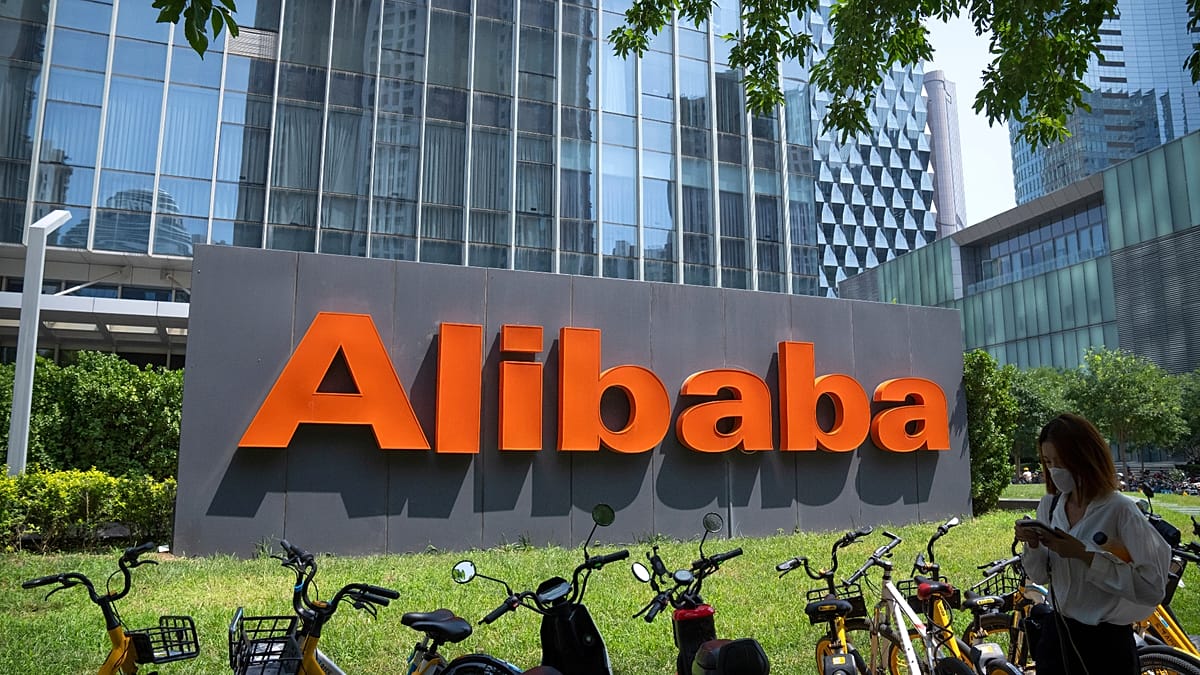
Alibaba Cloud, the cloud computing arm of the Chinese technology group, has announced a significant expansion of its European infrastructure. At its annual flagship conference on Wednesday, the company revealed plans to establish its first cloud regions in Finland, the Netherlands, and Turkey, while also expanding its data centre footprint in Germany, France, the United Arab Emirates, Malaysia, and Hong Kong over the next 12 months.
The move underscores Alibaba's ambition to become a major player in Europe's rapidly growing cloud and artificial intelligence (AI) market. With data centres already operating in Germany and the UK, the new regions will bring Alibaba's cloud services closer to European businesses and developers, offering lower latency and better compliance with local data regulations.
Machine thinking on the rise
Eddie Wu, CEO of Alibaba Group, framed the expansion in grand terms. "Today, the total volume of Machine Thinking is less than 3% of all Human Thinking," he said, suggesting that machine thinking could eventually grow to 1,000 times human capacity. "With this in mind, our target is that by 2032, the global data centre capacity operated by Alibaba Cloud will surpass 20GW, fueling the industry's exponentially rising demand for AI," Wu added.
This ambitious target reflects the broader trend of hyperscale cloud providers racing to build out AI-ready infrastructure. Alibaba's expansion comes at a time when European demand for cloud services is surging, driven by the adoption of AI, data analytics, and the EU's push for digital sovereignty.
New AI chip and larger models
In addition to the infrastructure expansion, Alibaba unveiled its latest AI chip, the Zhenwu V900, which Wu called "the most powerful AI chip in China today." The chip is widely believed to be twice as powerful as Nvidia's H20, a chip designed specifically for the Chinese market. This development is part of China's broader effort to reduce its reliance on US technology amid ongoing export controls.
Washington's restrictions on advanced semiconductor exports have prompted Beijing to encourage domestic companies to adopt homegrown alternatives. Alibaba's new chip is a direct response to these constraints, and it positions the company to compete more effectively in the AI hardware space.
Alibaba also announced plans to expand its Qwen AI models, which are among the most downloaded AI models globally. The company said it will develop models with five to ten trillion parameters, making them several times larger than the current largest Chinese model. This move is likely to intensify competition with US-based AI leaders such as OpenAI and Google.
European implications
Alibaba's expansion into Europe is not just a business decision; it has strategic implications for the continent's digital landscape. European businesses and governments are increasingly looking for alternatives to US-dominated cloud providers, and Alibaba's presence offers a new option. However, it also raises questions about data security and geopolitical tensions, particularly given the EU's ongoing scrutiny of Chinese technology investments.
The new cloud regions in Finland, the Netherlands, and Turkey will provide local businesses with access to Alibaba's suite of cloud services, including AI, data analytics, and the Internet of Things. Finland, with its strong tech ecosystem and renewable energy resources, is an attractive location for data centres, while the Netherlands serves as a key digital gateway to Europe. Turkey, though not an EU member, is a strategic market with growing digital ambitions.
Alibaba's expansion also comes at a time when the EU is tightening regulations on digital infrastructure and data flows. The recent EU plans for new laws on online marketplaces and the ongoing debate over renewables and grid bottlenecks highlight the regulatory environment that Alibaba will need to navigate.
For European businesses, the arrival of a new cloud provider could mean more competitive pricing and innovative AI services. But it also underscores the need for robust data protection and cybersecurity measures, especially as AI becomes more integrated into critical infrastructure.
Alibaba's move is part of a broader trend of Chinese tech companies expanding their global footprint. As the US and China compete for technological supremacy, Europe is becoming a key battleground. The continent's regulatory framework, combined with its diverse markets, makes it an attractive but complex region for foreign tech giants.
In the coming months, Alibaba will need to demonstrate that it can meet European standards on data privacy and security, while also delivering the cutting-edge AI capabilities that businesses demand. The company's success in Europe will depend on its ability to build trust and forge local partnerships.