The European Commission is preparing a new legislative proposal to close enforcement gaps that allow illegal products sold through e-commerce platforms to reach EU consumers, according to a leaked draft seen by Euronews. The bill, named the European Product Act, is expected to be published on 6 October and aims to overhaul how the bloc polices product safety and compliance in the single market.
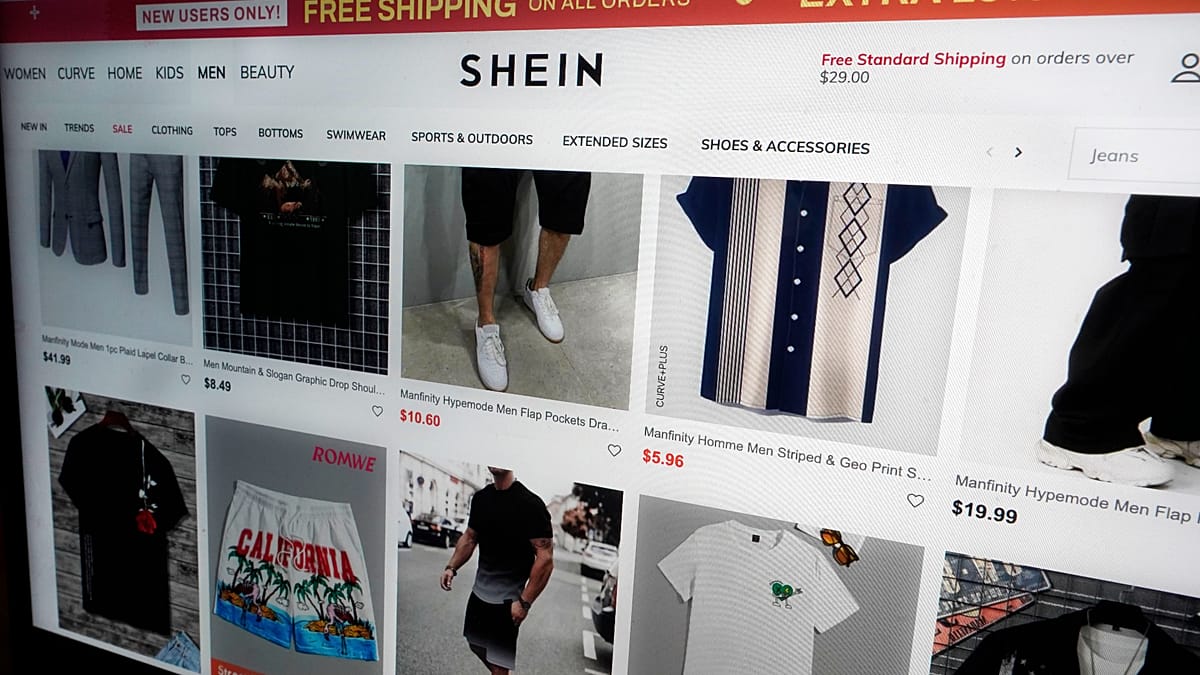
While the draft does not explicitly mention China, it comes as Brussels intensifies efforts to tackle the surge of low-value e-commerce imports, particularly from Chinese platforms such as Temu and Shein. Senior EU officials have repeatedly voiced concern over the growing trade deficit with Beijing, which they consider unsustainable, having reached a striking €1 billion a day in 2025.
“Significant weaknesses remain in ensuring that non-compliant products, particularly those sold online or imported directly from third countries, are effectively identified and removed from the single market,” the document states.
Closing the liability gap
A central element of the proposal is to ensure that an economic operator established in the EU is always legally responsible for non-compliance. If the manufacturer is based outside the bloc, the responsibility would fall on an importer or an authorised representative with a mandate from the manufacturer. This mechanism is designed to make it much harder for sellers based outside the EU to sell directly to European consumers while evading enforcement.
“In the digital environment in particular, market surveillance authorities should be able to bring non-compliance to an end quickly and effectively, notably where the economic operator selling the product conceals its identity or relocates within the Union or to a third country in order to avoid enforcement,” the document continues.
The move follows recent enforcement actions against major Chinese e-commerce players. In May, the Commission fined Temu €200 million for shortcomings related to dangerous baby toys and faulty chargers. Brussels is also investigating Shein over illegal products, including child-like sex dolls.
Obligations for online marketplaces
The draft would require online marketplaces to verify that each product they place on the EU market has a so-called “Digital Product Passport” containing key information on its identity and compliance, or a responsibility record created by the manufacturer. Upon receiving a notification, the marketplace would be obliged to remove the product and prevent its reappearance.
If a marketplace fails those verification and removal obligations, and the product is placed on the EU market without an EU-established responsible economic operator, the marketplace would have to fulfil the obligations of an authorised representative for that product. This would make platforms directly liable for non-compliant goods sold through their services.
New market surveillance fee
The draft also introduces a new Union market surveillance fee on products entering the EU market from third countries. The fee would be proportionate to the estimated cost to market surveillance authorities of performing their tasks. Importers would bear the fee, which is intended to cover additional costs associated with imported products and reduce the burden on the EU budget.
The fee would be lower for products imported in bulk rather than as individual parcels shipped directly to consumers. How exactly it would be calculated has been left to secondary legislation. This new fee would be separate from the customs “handling fee” proposed as part of the EU's parallel customs reform, which is intended to cover customs processing costs.
Centralisation of enforcement
The Commission is proposing what is bound to be viewed as a significant power grab, expanding its enforcement powers over an area — product market surveillance — that has traditionally sat at national level. Specifically, the draft would empower the Commission to carry out investigations and enforcement actions if non-compliant products are likely to have been placed in at least two-thirds of member states and no national authority has opened a market surveillance investigation after being notified.
This centralisation could shift the balance of power between Brussels and national capitals, particularly in countries like Germany and France that have strong domestic enforcement systems. The proposal is part of a broader effort to modernise the EU's product safety framework, which has struggled to keep pace with the growth of cross-border e-commerce.
The European Product Act is expected to face intense scrutiny from industry groups and member states, who may push back against the new fees and the expansion of Commission powers. The debate over how to balance consumer protection with the free movement of goods will be a key test for the EU's single market in the coming months.