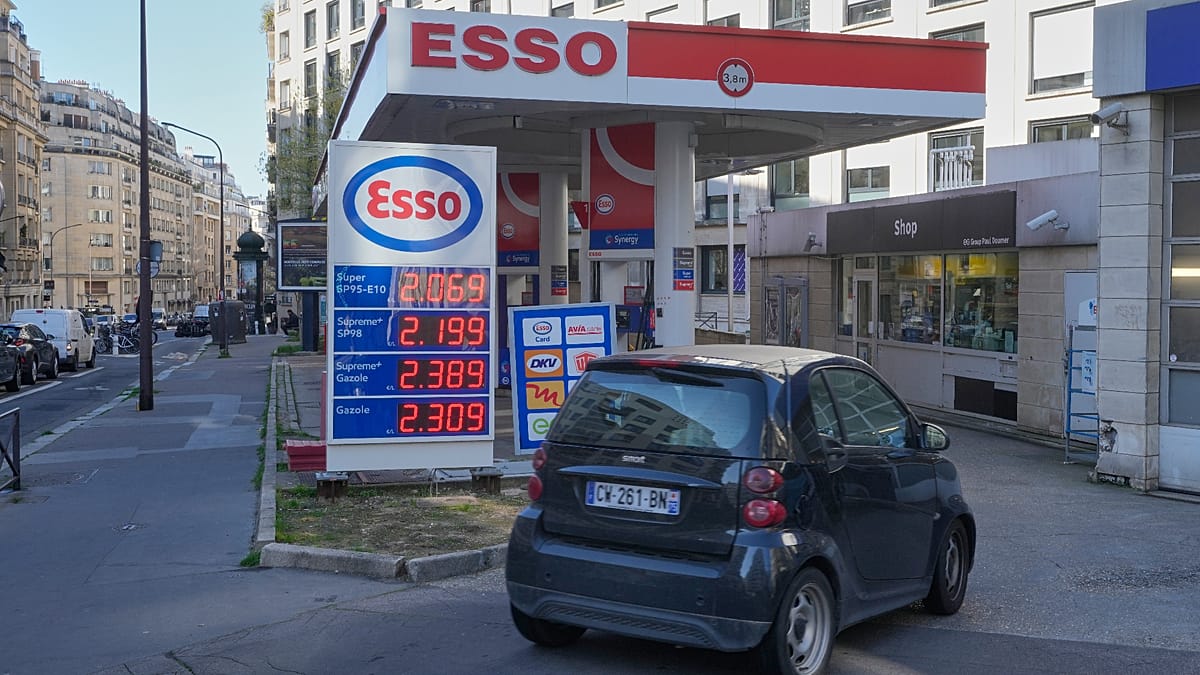
Italy's government has approved a decree-law extending the temporary cut in diesel excise duties for another week, keeping the pump discount of around 17 cents per litre until Thursday 17 September. The measure, adopted by the Council of Ministers, is the fifteenth in a series of interventions aimed at curbing fuel price rises since March.
The reduction in excise duty amounts to 14 cents per litre, which, after accounting for the lower VAT impact, translates into a saving of roughly 17 cents at the pump. The extension will cost the state around €80 million, according to government sources.
End of the road for blanket cuts
Officials have indicated that this is likely to be the last generalised intervention benefiting all consumers. If the government steps in again after 17 September, it will do so with a package of targeted measures aimed at supporting low-income households and those who rely on fuel for their work, such as hauliers and agricultural workers.
According to Italy's Corriere della Sera, since March the government has spent approximately €2.6 billion on repeated excise cuts and on support for road haulage, including a tax credit on fuel purchases. The latest decree adds to that tally, bringing the total closer to €2.7 billion.
The decision comes as Italy's economy shows signs of resilience, with growth nearing 1%, though structural challenges persist. The fuel relief has been a key part of the government's effort to cushion households from energy inflation, but the fiscal cost is becoming harder to justify as the global energy market stabilises.
Within the governing coalition, the approach to future measures is already a point of contention. The League, led by Matteo Salvini, has proposed funding any further relief through a windfall tax on oil companies' excess profits. Forza Italia, however, opposes such a levy, arguing it would discourage investment and penalise the energy sector.
The debate mirrors broader tensions within Italy's right-wing alliance, which have been exposed by recent political developments, including the AfD's gains in Germany and their ripple effects on European conservative parties. Prime Minister Giorgia Meloni, who marked her government's longevity at a rally in Bari, faces the challenge of balancing fiscal prudence with the demands of her coalition partners.
For motorists, the immediate impact is clear: diesel will remain cheaper for another week. But the signal from Rome is that the era of across-the-board fuel subsidies is ending. Future support, if any, will be narrower and more focused on those who need it most.
The extension also comes as Spain has decided to keep border checks on arrivals from Italy until 22 September, a reminder that cross-border travel and transport remain sensitive issues in the post-pandemic era. While fuel prices have eased from their peaks, the cost of living remains a top concern for European households, and governments are watching closely how voters respond.
As the 17 September deadline approaches, all eyes will be on Rome to see whether the government can deliver a credible transition from blanket relief to targeted aid, and whether the coalition can agree on a funding mechanism that satisfies both the League and Forza Italia.