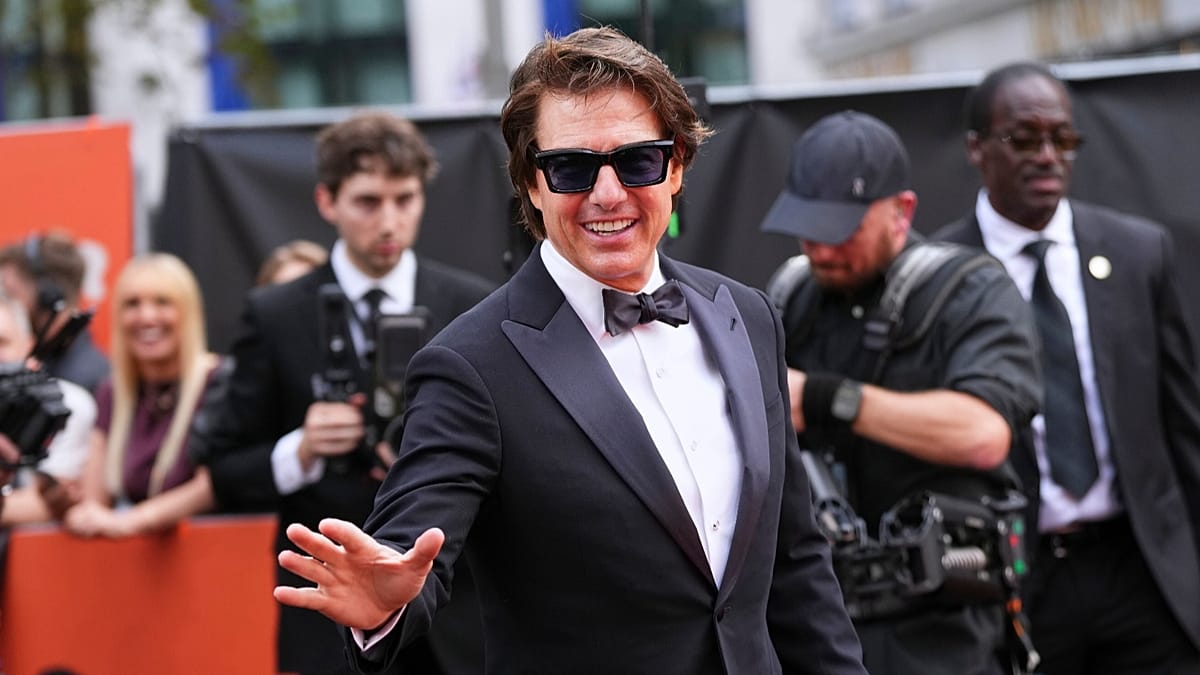
LONDON — As world leaders at the United Nations debated the future of artificial intelligence, one of Hollywood's most enduring stars used a London stage to deliver a more humanist counterpoint. Speaking at a BAFTA career retrospective on Monday, Tom Cruise offered a passionate defence of cinema as a communal art form, insisting that no matter how sophisticated AI becomes, it cannot replicate the pull of a darkened theatre filled with strangers.
Cruise, in London ahead of the world premiere of his new film Digger, was asked how AI might disrupt the medium he has helped define for four decades. His response was a six-minute monologue that touched on the essence of storytelling, the resilience of theatrical exhibition, and the irreplaceable value of human imperfection.
“Here's the thing: There is nothing like human,” Cruise said. He acknowledged that AI's integration into filmmaking “is coming, and it's going to happen,” but he pushed back against the notion that it would spell the end of cinema as we know it. “People want to see real things. People want that experience. They're going to movie theaters. I always believe in humanity.”
The actor, known for performing his own stunts with minimal CGI, pointed to this summer's box office as evidence that younger audiences are still drawn to the big screen. “The theatrical experience needs to be kept alive because it brings people together,” he argued. While he said he has “nothing against streaming or anything like that,” he described watching a film in a cinema as “a different art form” — one that deserves protection.
Cruise's comments arrive as Hollywood grapples with the existential questions posed by generative AI. The technology has become a fault line in the industry, with figures like Martin Scorsese and George Lucas facing criticism for their cautious endorsements, while directors such as Christopher Nolan, Steven Spielberg, and Guillermo del Toro remain firmly opposed to its use in creative workflows.
The debate extends beyond auteurs. Gal Gadot recently discussed her upcoming film Bitcoin, which has drawn controversy for using AI to generate sets and lighting. “I am afraid of AI, but I am going to be afraid and look away? No,” she said on the Happy Sad Confused podcast. “I am afraid but I am playing with it and learning it and trying to educate myself. The train has left the station. You're going to work with it or be out of the game completely.” Her remarks prompted backlash from those who see AI as a threat to jobs on film sets.
Cruise's stance is rooted in a career built on practical effects and physical commitment. His insistence on doing his own stunts — from scaling the Burj Khalifa to hanging off a flying plane — has become a signature, and he has often spoken about the value of authenticity in an increasingly digital age. “Keep creating,” he urged fellow artists, even as the tools of creation evolve.
The BAFTA event coincided with the rollout of Digger, directed by Alejandro González Iñárritu, in which Cruise plays an eccentric billionaire on a frantic mission to prove he is the saviour of humanity. The film is already generating awards buzz, and its themes — wealth, delusion, and the search for meaning — resonate with the broader conversation about technology's role in our lives.
For European audiences, the debate over AI in cinema is not merely academic. The continent's film industry, from France's Cinquième République subsidies to the vibrant production hubs in London, Berlin, and Prague, has long championed cinema as a cultural good rather than just a commodity. The European Parliament has been wrestling with AI regulation, and the creative sector has been vocal about protecting human authorship. Cruise's message, delivered from a London stage, echoes those concerns: technology may change how films are made, but it cannot replace the shared experience of watching a story unfold together.
As the industry navigates this uncertain terrain, Cruise's optimism offers a counterpoint to the anxiety that dominates much of the discourse. “People want that experience,” he repeated. “I always believe in humanity.”