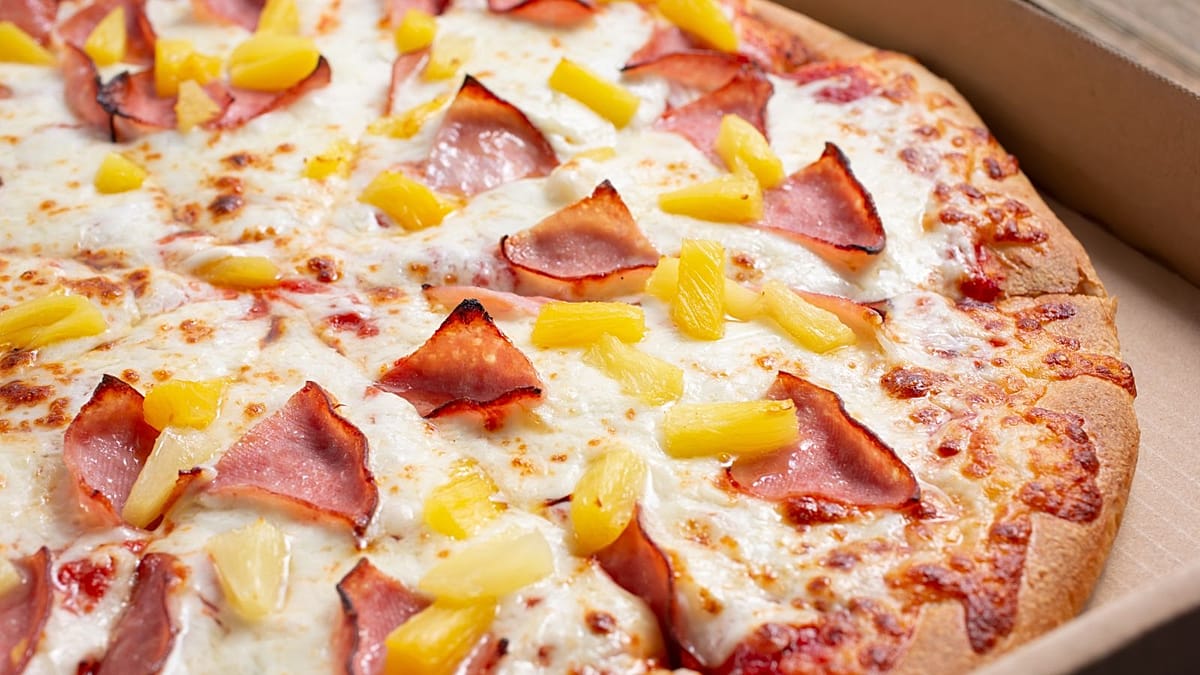
Few culinary debates are as polarising as the question of pineapple on pizza. For some, the sweet-and-savoury combination is a guilty pleasure; for others, it is a sacrilege against Italian gastronomy. The dispute recently spilled from the dinner table into an Australian courtroom, where an Italian chef lost his job and his legal battle over the controversial topping.
Davide Tamburella, a chef originally from Italy, was working at La Costa Restaurant and Bar in Brisbane when he refused to prepare a Hawaiian pizza. According to documents from Australia's Fair Work Commission, Tamburella described the request as "an insult to his culture." It was the third time in four years that he had declined to make the dish, and he had previously urged his employer to understand "how important it is for Italians not to put pineapple on a pizza."
The refusal led to his dismissal in May, with management also citing concerns about his use of foul language, an "escalation of frustration in the workplace," and his communication style. Tamburella subsequently lodged an unfair dismissal claim with the national workplace tribunal, but the commission has now thrown out the case. The decision was based on procedural grounds: the claim did not meet the criteria, and it had been filed too late.
A topping with a contested history
The Hawaiian pizza, despite its name, has no connection to the US state of Hawaii. It was invented in 1962 by Sam Panopoulos, a Greek-born restaurateur in Ontario, Canada, who decided to experiment with canned pineapple from the Hawaiian Pineapple Company. The creation quickly became a global staple, but it has always been viewed with suspicion in Italy, where traditionalists argue that fruit has no place on a Neapolitan base.
This cultural friction is not new. In 2017, a French pizzeria owner made headlines for refusing to serve a Hawaiian pizza to a customer, and Italian chefs have long been vocal about their disdain for the topping. The debate even reached the European Parliament in 2019, when an Italian MEP called for a ban on pineapple pizza, though the proposal was widely mocked.
For Tamburella, the issue was deeply personal. In his testimony, he stressed that his refusal was not about being difficult but about preserving the integrity of Italian cuisine. "It's not just a pizza topping," he reportedly said. "It's about respect for a tradition that goes back centuries."
His former boss, Elliot Ingram, offered a more pragmatic view. In an interview with the British tabloid Daily Mail, Ingram admitted that pineapple on pizza was not his "absolute" favourite, but he was not "going to turn (his) nose up at it, that's for sure." He also hinted that there was "more to this story than a pizza topping," suggesting that the dismissal was not solely about the fruit.
La Costa Restaurant and Bar closed in July when its lease expired, with Ingram citing the high cost of doing business in Fortitude Valley. Tamburella, meanwhile, has moved on. According to his LinkedIn profile, he is now working as head chef at Don Gino, a restaurant in Brisbane's West End.
The case has resonated far beyond Australia, touching on broader questions of cultural identity and workplace expectations. In Europe, where food traditions are often fiercely protected, the story has been widely shared. It also comes at a time when Italy's labour disputes are making headlines, though the pineapple pizza affair is a lighter footnote to those economic struggles.
For Italians, the pineapple on pizza debate is not just about taste; it is about authenticity. As one food critic put it, "Pizza is a cultural artefact, and tampering with it is like rewriting a classic novel." Yet, as the global popularity of Hawaiian pizza shows, culinary boundaries are often meant to be crossed.
Whether Tamburella's stand was principled or stubborn, his case highlights the challenges of maintaining cultural traditions in a globalised world. And while he lost his legal battle, he may have won a different kind of victory: becoming a symbol for those who believe that some things should remain sacred, even if it costs them their job.