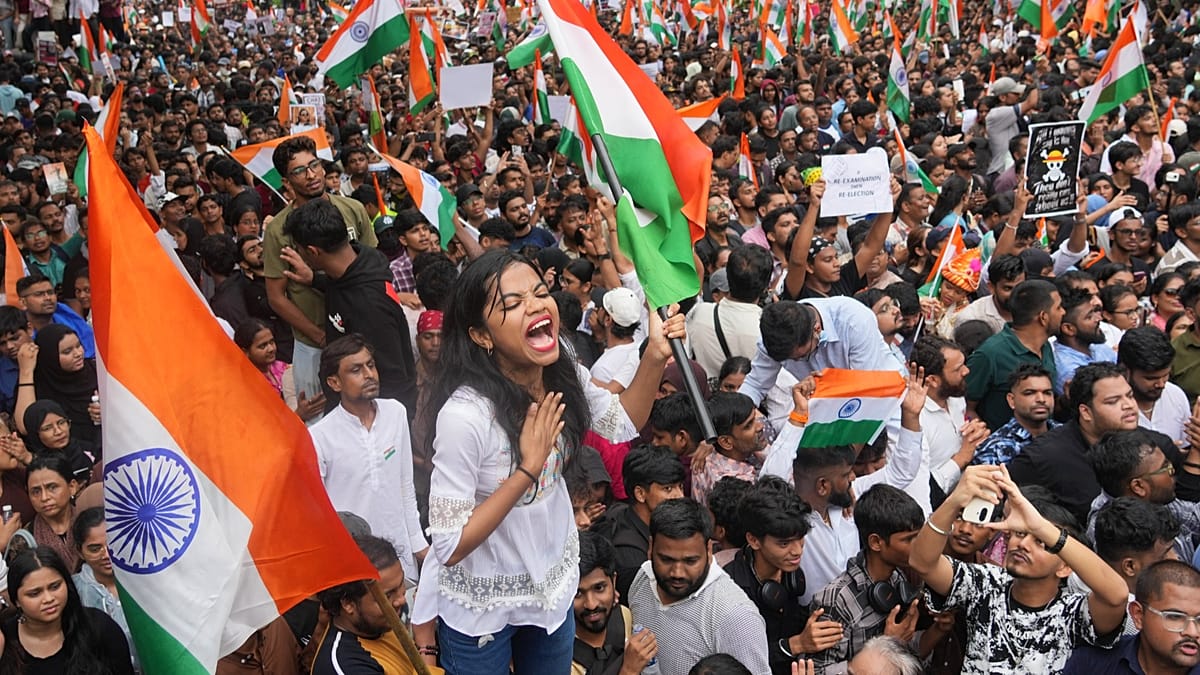
Amnesty International has released a report accusing Indian police of using excessive force, including electric shock devices and pellet guns, against youth-led protests that led to the resignation of the education minister last month. The rights group says the response was "state-sanctioned violence masked as crowd control," contradicting police accounts that force was only used after protesters turned violent.
The demonstrations, which began in the capital New Delhi, were triggered by the leak of the national medical entrance test. On 20 July, thousands of protesters attempted to march towards parliament, and the situation escalated into violence. Amnesty says it has verified witness testimony and visual evidence confirming the use of "pellet-firing shotguns, tear gas launchers, grenades, batons and electric shock devices against protesters" in Delhi and the eastern state of Bihar.
The report also documents two instances in Bihar's Siwan district where a police officer "unlawfully used lethal force against a crowd." No fatalities were reported, but the injuries have sparked outrage. Amnesty argues that the weapons were deployed "in a manner that breached international law and standards and domestic policing guidelines."
Police defend their actions
Delhi Police, in a Supreme Court hearing last week, maintained that force was used only after protesters "resorted to violence." They claimed that "anti-social elements masquerading as aggrieved students" caused "grievous injuries" to security forces. The Supreme Court has since set up a panel to investigate the violence by both police and demonstrators.
Amnesty acknowledges that there were "isolated incidents of protesters throwing stones," but insists that the heavy-handed response was disproportionate. The group's findings have added to mounting criticism of the government's handling of the protests, which have broadened from anger over exam irregularities into a wider movement over unemployment, opportunities for young people, and what critics describe as Prime Minister Narendra Modi's increasingly authoritarian rule.
On Friday, opposition leader Rahul Gandhi staged a sit-in outside a Delhi police station with a 19-year-old protester who said he was injured by pellets during the July demonstration. Gandhi demanded a police investigation into the shooting, and officers later registered a case over the complaint.
The protests, led by the online Cockroach Janta Party, have become the biggest challenge Modi has faced since winning a third term in 2024. The movement has resonated with young Indians frustrated by a lack of jobs and systemic corruption in education.
Amnesty's report is likely to intensify scrutiny of India's law enforcement practices, which have been criticized by international human rights groups for years. The organization has called for an independent investigation and for police to adhere to international standards on the use of force.
As the situation develops, the European Union and other international actors may face pressure to respond. The EU has previously raised concerns about human rights in India, but has maintained strong economic and strategic ties with New Delhi. The bloc's foreign policy chief has yet to comment on the latest report.
The Indian government has dismissed Amnesty's allegations as baseless, with officials pointing to the Supreme Court's investigation as proof of due process. However, the court's panel is expected to examine both police conduct and protester violence, and its findings could have significant implications for the government.
For now, the protests show no signs of abating, and the issue has become a flashpoint in Indian politics. The coming weeks will be crucial in determining whether the government can restore public trust or whether the movement will continue to grow.