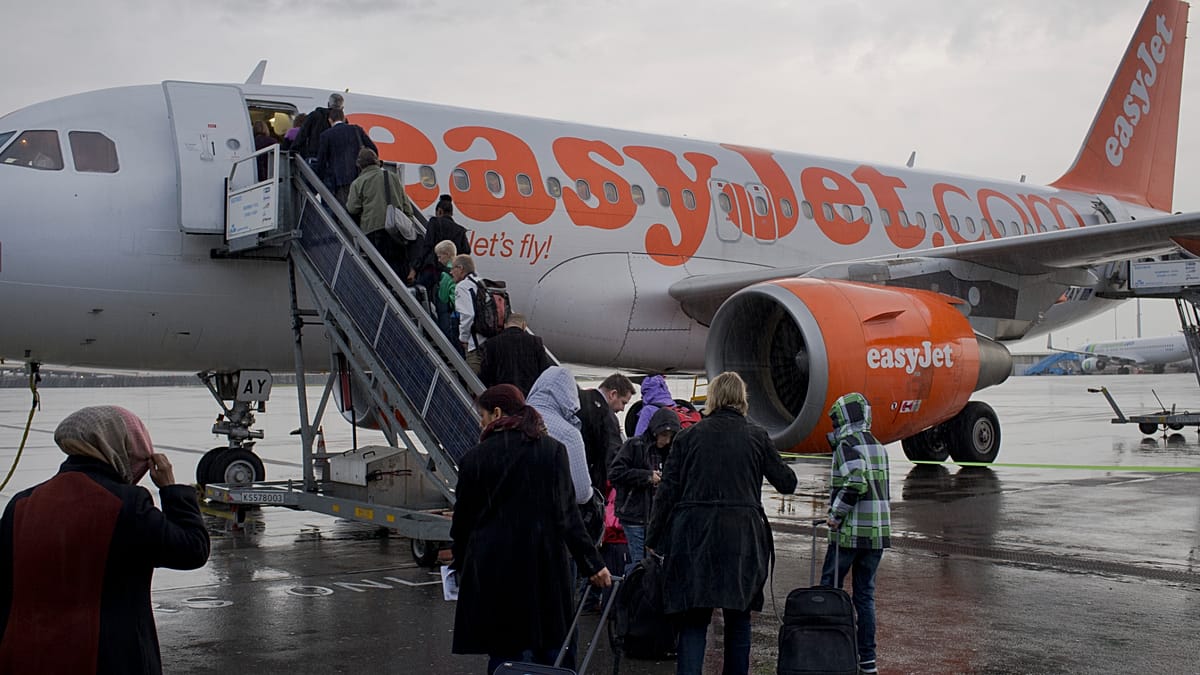
The battle for control of EasyJet has escalated, with US private equity giant Apollo Global Management hijacking a rival bid from Castlelake. EasyJet's board announced on Friday that it has agreed in principle to Apollo's cash offer of £7.15 per share, valuing the Luton-based carrier at approximately £5.7 billion (€6.6 billion). This proposal, which the board considers a "superior outcome" for shareholders, supersedes the £6.90 per share offer from Castlelake that the airline had accepted just last Sunday.
Investors responded positively, sending EasyJet shares up around 15% to roughly £6.75 on Friday morning, their highest level since early 2022. However, the stock still trades below Apollo's offer price, reflecting lingering uncertainty over regulatory and shareholder approvals. The bid represents an 81% premium to EasyJet's closing price of £3.94 on 28 May, the last trading day before Castlelake's interest became public—a stark indicator of how severely the airline had been devalued.
Financial Pressures and Industry Headwinds
EasyJet's vulnerability stems from a punishing operating environment. The conflict between the US and Iran sent jet fuel prices soaring and disrupted travel patterns, causing the airline's shares to lose more than a third of their value before takeover interest emerged. The financial damage was laid bare in May, when EasyJet reported a headline loss after tax of £377 million (€442 million) for the six months to the end of March—27% deeper than the same period a year earlier—despite revenue growing 12% to £3.95 billion (€4.6 billion). The company warned that higher fuel costs and reduced booking visibility would also weigh on the second half of the financial year, though CEO Kenton Jarvis expressed confidence that EasyJet was "well placed" to weather the turbulence.
Industry-wide, the International Air Transport Association warned last month that global airline profits are on course to halve this year. For EasyJet, the takeover battle comes amid a broader wave of foreign acquisitions of British companies, with the airline set to leave the London Stock Exchange if a deal succeeds.
The Brussels Problem: EU Ownership Rules
The most significant obstacle facing both bidders is European Union law, which requires airlines flying within the bloc to be majority-owned and effectively controlled by EU member states or qualifying European nationals. This regulation, designed to protect the EU's aviation market, complicates any takeover by a non-European entity.
Castlelake had proposed to satisfy the rule by partnering with two Irish aviation executives, Peter Bellew and Mark Breen, who would have held a controlling stake through an EU-based company. Apollo, for its part, has stated it will take "all necessary steps" to win merger clearance and any approvals relating to the EU's Foreign Subsidies Regulation. The regulatory uncertainty helps explain why EasyJet's shares have lagged the bid prices on offer.
Apollo has also pledged to retain the EasyJet name by extending the existing licence with easyGroup, the vehicle of founder Sir Stelios Haji-Ioannou. Sir Stelios and his family own roughly 15% of the airline and collect a royalty on its revenue, making their support potentially decisive. Neither offer is yet firm: under British takeover rules, Castlelake must decide by 3 August whether to bid or withdraw, while Apollo faces a deadline of 7 August.
The outcome will have implications for European aviation, particularly as airlines expand their networks—as seen in recent route announcements for autumn and winter 2026. For now, EasyJet's board has made its preference clear, but the final decision rests on regulatory and shareholder approval.