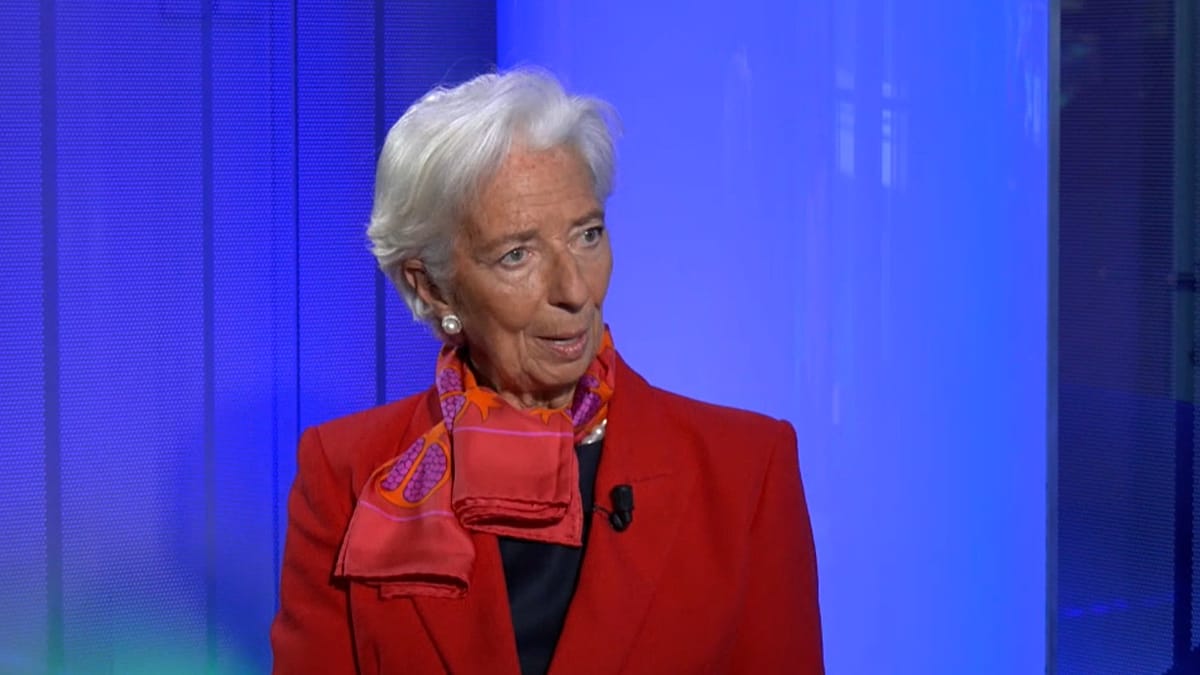
European Central Bank President Christine Lagarde has called on the European Union to take a hard look at its own vulnerabilities while simultaneously capitalising on its inherent advantages in an increasingly unstable world. In an exclusive interview with Euronews, Lagarde stressed that the bloc cannot afford to ignore its internal shortcomings as it navigates a period of heightened geopolitical and economic turbulence.
“Europe must look at its own weaknesses, but also leverage them in a very turbulent global scenario,” Lagarde said, underscoring the need for a dual approach that combines self-criticism with strategic confidence. Her remarks come as EU leaders and finance ministers grapple with a series of interconnected crises, from the war in Ukraine to inflationary pressures and the green transition.
A Call for Strategic Self-Assessment
Lagarde’s comments reflect a growing consensus among European policymakers that the continent must move beyond reactive crisis management. Instead, they argue, the EU should proactively identify areas where it lags behind global competitors—such as digital innovation, energy independence, and defence spending—and turn those weaknesses into opportunities for reform.
The ECB president’s intervention is particularly timely as the bloc prepares for a series of high-stakes meetings, including the upcoming Eurogroup and Ecofin councils. Lagarde has previously endorsed Spain’s €850 billion joint borrowing plan, which she described as a useful “debate starter” for deeper fiscal integration.
“We have the tools, we have the talent, and we have the political will—but we need to act with urgency and coherence,” Lagarde added, emphasising that the EU’s strength lies in its ability to coordinate across twenty-seven member states, each with distinct economic profiles and political priorities.
Leveraging Europe’s Strengths
Among the strengths Lagarde highlighted are the EU’s robust social safety nets, its commitment to multilateralism, and its leadership in climate policy. She argued that these assets can serve as a foundation for a more resilient economic model, one that is less dependent on external shocks and more capable of fostering inclusive growth.
The ECB chief also pointed to the potential of the digital euro, a project that has sparked debate across the continent. Lagarde has insisted that the digital euro will complement cash, not replace it, as EU talks advance on the technical and regulatory framework.
“We cannot afford to be complacent,” Lagarde warned. “The world is changing fast, and Europe must change with it—not by copying others, but by playing to our own strengths.”
A Broader Economic Crossroads
Lagarde’s interview comes at a moment when the European economy is facing headwinds from multiple directions. Inflation, though easing, remains above the ECB’s 2% target, while growth forecasts have been revised downward for several key economies, including Germany and France. At the same time, the bloc is grappling with the long-term implications of an ageing population, labour shortages, and the need for massive investment in green and digital infrastructure.
Europe faces an economic crossroads, and Lagarde’s call for action is a reminder that the window for decisive reform may be narrowing. The ECB president’s message is clear: the EU must address its weaknesses not as a sign of failure, but as a prerequisite for building a stronger, more competitive continent.
As the bloc prepares for a new legislative cycle and the appointment of the next European Commission, Lagarde’s words are likely to resonate in capitals from Berlin to Lisbon. Whether they translate into concrete policy action remains to be seen, but the debate has been firmly set in motion.