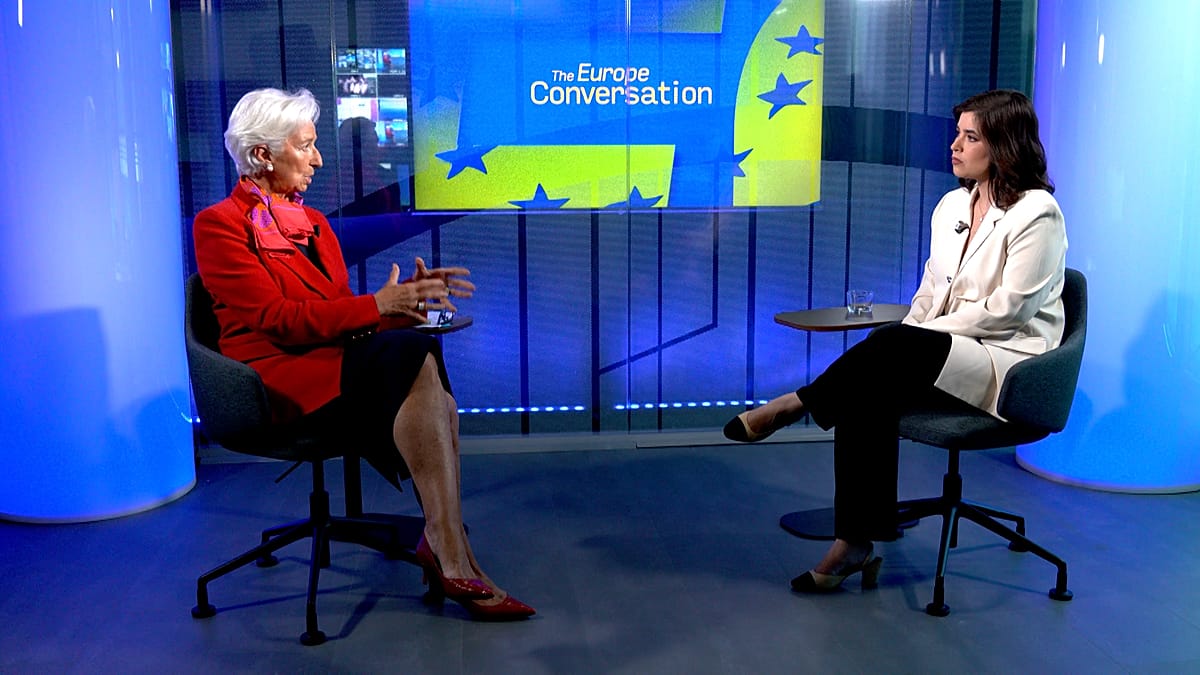
European Central Bank President Christine Lagarde has firmly dismissed concerns that the proposed digital euro is designed to replace physical cash or enable state surveillance of transactions. In an exclusive interview with Euronews, Lagarde stressed that the initiative aims to bring public money into the digital age while preserving the role of banknotes and coins.
“Cash and the digital euro will both be legal tender, which means that nowhere in Europe can someone say, ‘Sorry, I’m not taking your banknotes’,” Lagarde told Euronews’ The Europe Conversation with Maria Tadeo. The ECB president also announced that the central bank will unveil a new banknote design strategy by the end of the year, adding: “Cash will not go away, it will be rejuvenated.”
EU Parliament Approves Negotiating Mandate
The European Parliament voted on Thursday to approve its negotiating mandate for the digital euro legislation, a step that brings the project closer to adoption by December 2026 after months of stalled talks. The proposal initially faced criticism from some MEPs who argued that a digital euro could undermine privacy and eventually diminish the use of cash. Lagarde’s remarks directly address those concerns, emphasizing that the digital euro is not a tool for monitoring citizens’ spending habits.
“Let me celebrate the fact that the Parliament has endorsed massively the mandate for these negotiations that will hopefully be concluded by December,” Lagarde said, expressing optimism about the legislative timeline.
Strategic Autonomy in Payments
Beyond privacy and cash preservation, the digital euro is also intended to strengthen Europe’s strategic autonomy in payment infrastructure. According to Lagarde, around 60% of card payments in the European Union are processed through foreign-owned networks, leaving the bloc dependent on providers based primarily in the United States. As geopolitical tensions highlight the risks of such reliance, EU policymakers are pushing for a home-grown alternative.
“The best thing I know is a European solution. At the moment, we do not have that,” Lagarde said, citing ECB data on card payments. The digital euro would provide a publicly backed payment system that operates across the eurozone, reducing the bloc’s exposure to external shocks and foreign capital.
The push for digital euro legislation comes amid broader efforts to modernise Europe’s financial infrastructure. The European Commission has also been working on related proposals to ensure that the digital euro is accessible to all citizens, including those without bank accounts, and that it can be used for both online and offline transactions.
For more on the legislative process, see our coverage of Digital Euro Negotiations Enter Final Phase as EU Lawmakers and Governments Seek Consensus.
Lagarde’s comments also come as the ECB continues to navigate broader monetary policy challenges. The central bank’s credibility has been tested by debates over the timing of interest rate cuts, as discussed in Central Banks Face Credibility Test as Rate Cut Timing Risks Reigniting Inflation.
The digital euro project is one of several initiatives aimed at enhancing Europe’s technological sovereignty. As the EU seeks to reduce its dependence on non-European tech giants, the digital euro represents a key component of a broader strategy to build resilient, home-grown digital infrastructure.
With the European Parliament’s mandate now in place, negotiations with EU member states will intensify in the coming months. The final legislation is expected to address key issues such as privacy protections, offline functionality, and the distribution model for the digital currency. Lagarde’s insistence that cash will remain a cornerstone of the European payment system is likely to reassure citizens who fear the disappearance of physical money.