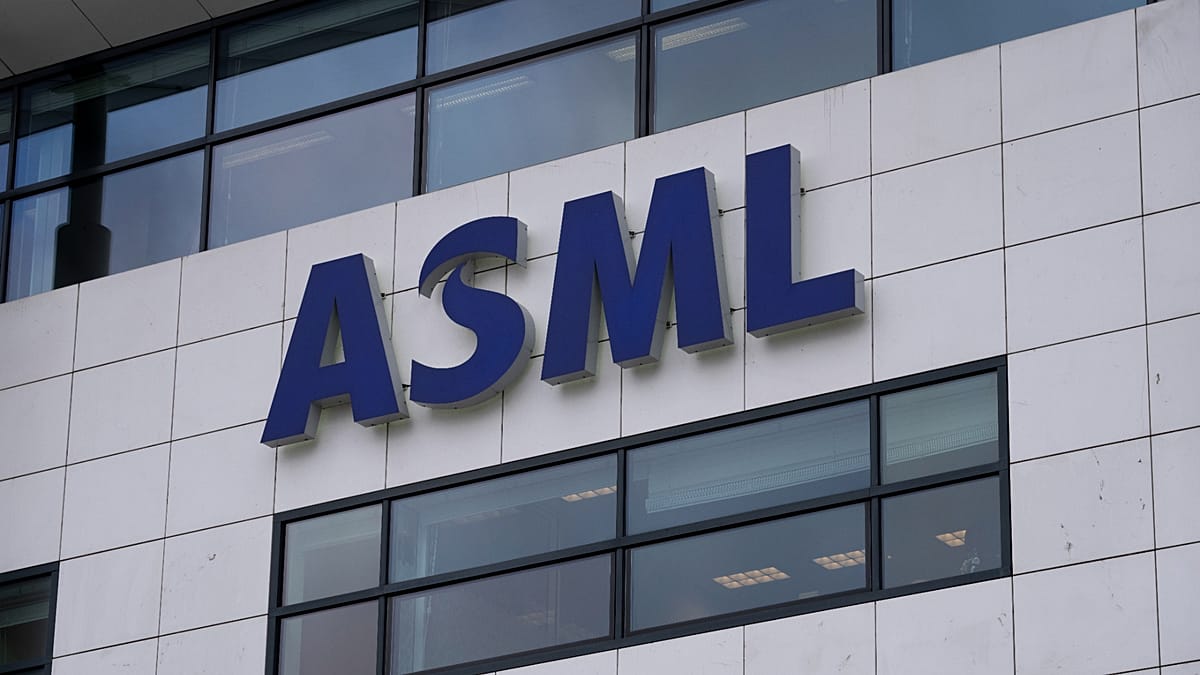
ASML, the Dutch semiconductor equipment maker and Europe's largest company by market capitalisation, has raised its full-year outlook after reporting better-than-expected second-quarter results. The Veldhoven-based firm now expects 2026 total net sales of between €43 billion and €45 billion, up from a previous range of €36 billion to €40 billion, with gross margins improving to between 54% and 56%.
The upgrade, announced on Wednesday, sent ASML's shares up more than 5%, reassuring investors who had grown jittery about a potential overvaluation in the tech sector. For the April-to-June period, ASML posted net sales of €9.3 billion, compared with €7.7 billion a year earlier, and net profits of €2.9 billion, up from €2.3 billion. Both figures exceeded market expectations.
AI Demand Drives Semiconductor Growth
ASML is a critical supplier to the global semiconductor industry, producing the extreme ultraviolet (EUV) lithography machines essential for manufacturing the most advanced chips used in everything from smartphones to military systems. The company's performance is widely seen as a bellwether for the broader tech sector.
“Ongoing AI-related investments and continued progress in AI technologies are driving demand for advanced Logic and Memory chips, further strengthening the semiconductor industry's growth outlook,” said Christophe Fouquet, ASML's President and Chief Executive Officer, in a statement. He added that order intake remained “extremely strong” in the first half of the year, with customers accelerating capacity expansion plans, giving ASML “increased visibility into longer-term demand.”
Ben Barringer, head of technology research at Quilter Cheviot, commented: “ASML's results reinforce just how strong demand remains across the semiconductor sector. The company delivered a solid beat and raise, with particularly strong demand coming from both memory and logic chips, although memory is currently growing faster.”
The strong demand has prompted ASML to plan a roughly 30% increase in production capacity next year for both its EUV machines and older deep ultraviolet (DUV) systems. The company is also considering a further 30% expansion in 2028 while broadening its machine upgrade business.
Geopolitical Tensions and Chinese Sales
ASML has been caught in the crossfire of the US-China technology rivalry. Washington has led efforts to curb high-tech exports to China over concerns they could bolster the country's military. Beijing has denounced these measures as “technological terrorism.”
Chief Financial Officer Roger Dassen said ASML expects China to represent around 20% of its sales in 2026, down from previous levels. “You could say that the Chinese market is moving in sync with the overall behaviour that we see globally,” Dassen noted. The company had previously warned that its Chinese sales would “decline significantly” this year.
In January, ASML announced a reorganisation expected to result in the loss of about 1,700 jobs in the Netherlands and the United States, mainly from leadership roles. Last month, the company denied reports that one of its advanced chipmaking machines had ended up in China, potentially violating export restrictions.
ASML's upgraded forecast comes amid broader economic uncertainty in Europe, where the IMF has trimmed growth forecasts for France and Germany, while Italy's outlook holds steady. The company's performance offers a bright spot for the continent's technology sector, which has been grappling with geopolitical headwinds and regulatory challenges.
For the third quarter of 2026, ASML expects net sales of between €11 billion and €12 billion. The company's ability to sustain its growth trajectory will depend on the durability of AI investment and the resolution of trade tensions with China.