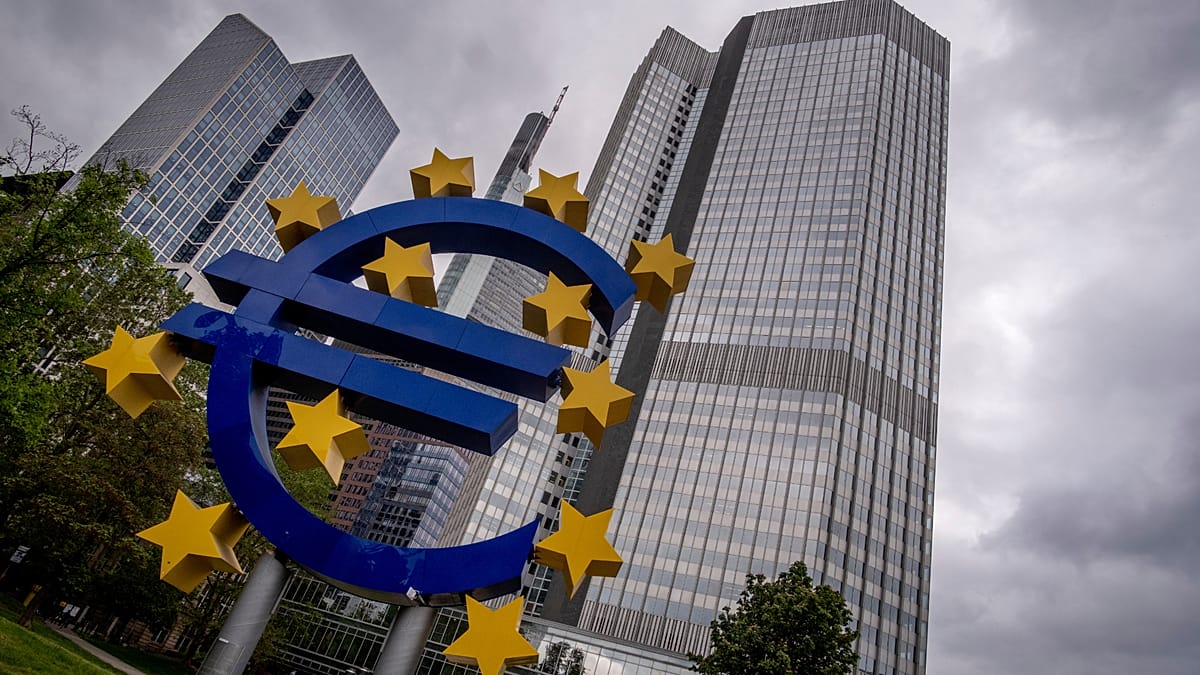
The European Central Bank (ECB) has taken a significant step forward in its digital euro project by selecting 36 payment service providers to participate in a large-scale pilot programme. The announcement, made on Tuesday, marks the transition from planning to practical testing for the proposed digital currency, which aims to modernise Europe's payment systems and reduce reliance on foreign networks.
The selected firms, drawn from more than 50 applicants across the euro area, include major traditional banks such as Deutsche Bank and UniCredit, as well as digital-first players like Revolut and payment giants Adyen and Stripe. They will work alongside the ECB and 19 of the euro area's national central banks—excluding Bulgaria and Malta—during a 12-month testing exercise scheduled to begin in the second half of 2027.
Testing the Infrastructure
The pilot is designed to evaluate the digital euro's technical infrastructure, operational processes, and user experience. It will test person-to-person and person-to-business payments in both online and offline environments, providing critical data before any decision is made on issuing the currency. This phase is one of the project's most important milestones since the ECB launched its preparation phase in late 2023.
ECB Executive Board member Piero Cipollone emphasised the significance of the industry's response. "The strong market interest in the pilot shows the private sector's readiness to engage actively and quickly advance with the digital euro project to strengthen the European payments landscape," he said. "We look forward to deeper engagement as we work with and learn alongside European payment service providers in developing a secure, efficient and inclusive digital euro."
The digital euro is intended to complement, not replace, physical cash. ECB President Christine Lagarde reiterated this point in a recent interview with Euronews, stating that both forms of money would be legal tender. "Cash and the digital euro will both be legal tender, which means that nowhere in Europe can someone say, 'Sorry, I'm not taking your banknotes,'" she said, reaffirming that cash would remain a permanent feature of Europe's monetary system.
Beyond modernising payments, the digital euro is a strategic project to bolster Europe's economic sovereignty. The bloc has long relied on foreign-owned payment networks, and the ECB sees the digital euro as a way to reduce that dependence. Lagarde told Euronews that the initiative is about reinforcing Europe's economic sovereignty as much as updating payment systems.
Legislative approval remains the decisive hurdle. The European Parliament, the Council, and the European Commission are still negotiating the legal framework that would authorise the digital euro's issuance. The ECB has consistently stated that it cannot proceed without this legislation. Current timelines anticipate formal approval in 2027, followed by the completion of the pilot and a possible public launch in 2029, though these dates depend on the legislative process.
The digital euro would be available free of charge to consumers through supervised payment providers. To address concerns about bank disintermediation, it would not pay interest and would likely have a holding cap to prevent large outflows from commercial bank deposits. The ECB has also sought to counter fears that the digital euro could weaken privacy protections, emphasising that it would be designed with strong safeguards.
As the project advances, it remains a key component of the EU's broader digital finance strategy. For more on the legislative progress, see our coverage of Digital Euro Negotiations Enter Final Phase as EU Lawmakers and Governments Seek Consensus. Lagarde's assurances about cash's future are detailed in Digital Euro Will Complement Cash, Not Replace It, Lagarde Insists as EU Talks Advance.