Viral social media posts, viewed millions of times, have falsely claimed that the European Commission intends to introduce an 'internet passport' that would allow Brussels to control or censor internet access. Some posts have even alleged that the Commission plans to ban Virtual Private Networks (VPNs) to prevent users from bypassing the system. These claims are misleading and misrepresent the Commission's actual initiative: a planned age-verification app designed to protect children from harmful online content.
What the Commission Actually Proposed
In late April, European Commission President Ursula von der Leyen announced a forthcoming age-verification app, expected to be rolled out by the end of 2026. The app is intended to help shield minors from age-inappropriate material. To activate it, users will need to verify their age using an official identity document, such as a passport or national ID card. Von der Leyen compared the process to how shops ask for proof of age when selling alcohol.
Once the initial verification is complete, the app will only reveal whether a user meets the required age threshold for a particular online service. It will not disclose personal information such as the user's name, date of birth, or identity. Von der Leyen stated that the app would allow users to prove their ages 'without revealing any other personal information.' The software will be fully open source, allowing anyone to inspect the underlying code.
Critics have argued that requiring identity verification before accessing certain online services could pave the way for greater control over internet use. The European Commission disputes this, maintaining that the system's sole purpose is to prevent under-18s from accessing harmful content while preserving user privacy through age-only verification.
VPN Ban Claims Are Unfounded
Another viral claim is that the EU intends to ban or block VPNs to enforce the age-verification system. This narrative stems from a January briefing by the European Parliamentary Research Service (EPRS), which examined how VPNs can be used to circumvent online age-verification systems. The report prompted speculation on social media that Brussels was preparing to crack down on VPNs, with some users highlighting passages describing them as potential 'loopholes.'
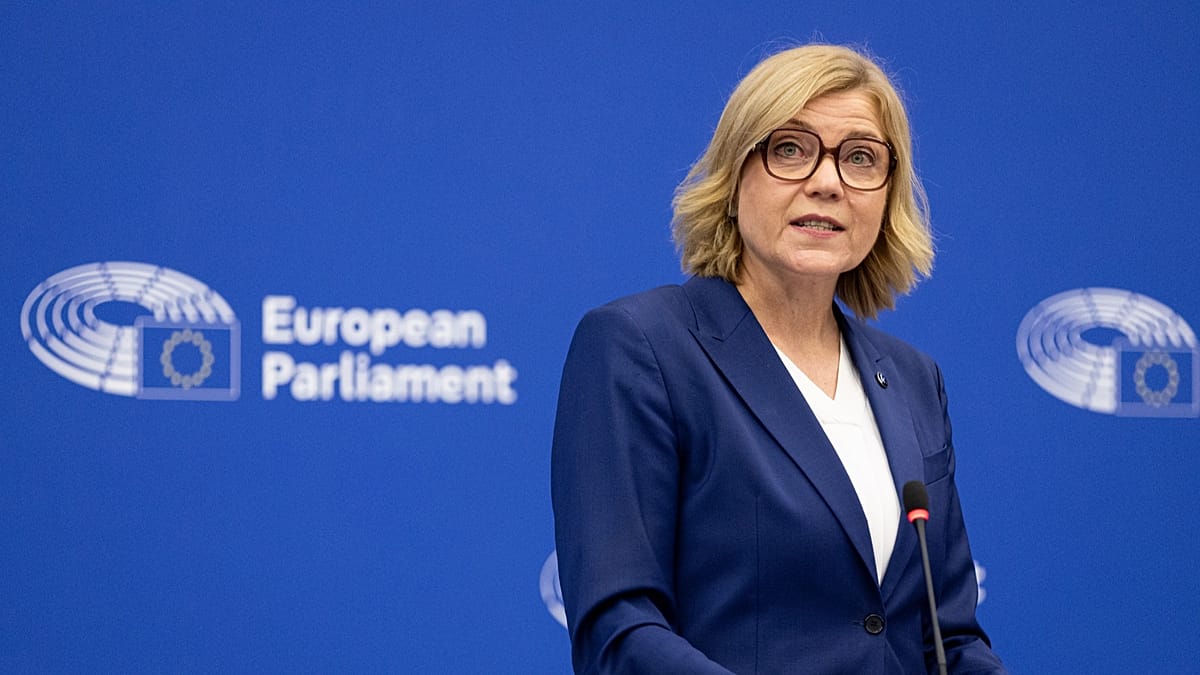
However, the EPRS document is not an expression of official EU policy but a research briefing produced to inform MEPs and European Parliament staff. It neither proposes nor recommends restricting VPN use. During a press conference, Henna Virkkunen, the European Commissioner responsible for Tech Sovereignty, Security and Democracy, acknowledged that no technological solution is entirely foolproof but said the age-verification tool is part of broader efforts to strengthen safeguards for minors. She later clarified in an interview with the Finnish financial news programme Talousaamu that the aim is to make age-verification safeguards harder to circumvent, not to ban VPNs. Her office confirmed to Euronews that there is 'absolutely no crackdown on VPNs.' A European Commission spokesperson also stated that the EU remains committed to preserving a free and open internet while improving protection for children online.
This is not the first time the EU has been the target of viral misinformation. Similar false claims have circulated about other policies, such as those related to HAARP conspiracy theories or false deportation claims. The age-verification app is a targeted measure, not a broad censorship tool, and the EU has no plans to restrict VPN use.