As the lines between work and leisure continue to blur, Astana, the capital of Kazakhstan, is carving out a distinct niche as a destination where business travel extends well beyond the conference hall. With a packed calendar of international forums, exhibitions, and industry events, the city attracts professionals from across the globe—and offers them reasons to linger.
In 2025 alone, Astana welcomed more than 1.6 million visitors, including roughly 380,000 international travellers. The momentum continues: in 2026, the city is set to host over 1,000 cultural, sporting, and business events, reinforcing its reputation as a hub for business travel and event tourism. For those on a short trip, the city provides a range of experiences that can transform a hectic schedule into a more balanced stay.
Architecture That Defines a Skyline
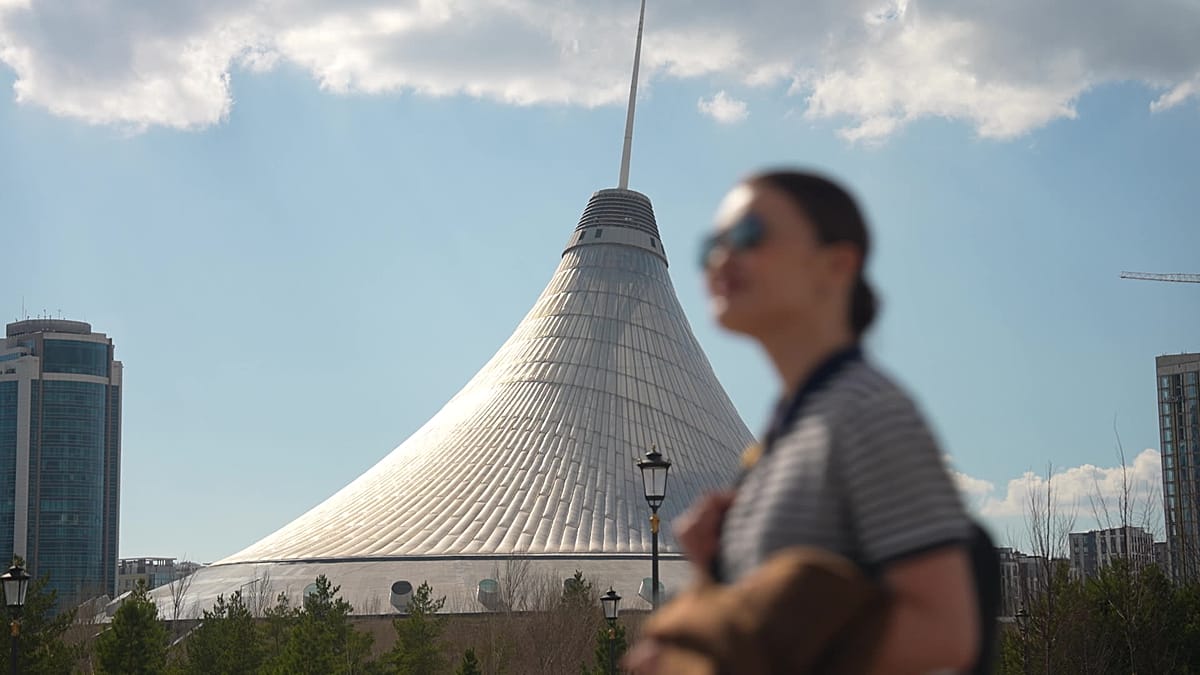
For locals who have grown accustomed to Astana’s futuristic skyline over nearly three decades as the capital, its architecture may seem ordinary. For visitors, however, it remains striking and unexpected. The city is defined by bold forms and distinctive landmarks, from glass skyscrapers to the Khan Shatyr—meaning “the Khan’s tent”—designed by British architect Norman Foster. Shaped like a traditional nomadic tent, it blends into the skyline on cloudy days and glows in shifting colours at night.
Perhaps the most recognisable symbol is the Baiterek Monument, topped with a golden sphere. Inspired by a Turkic legend, it represents the Tree of Life, connecting three worlds—the underworld, the earthly realm, and the sky. According to the story, the mythical bird Samruk lays a golden egg—the sun—in its crown, symbolising life, growth, and the aspirations of a young Kazakhstan.
The Heart of the City
To go beyond the surface, visitors can head to the Ishim Riverbank—the line that divides Astana into two parts while bringing them together. Drawing residents from across the city, it has become one of its main gathering points and a true heartbeat of the capital. Along the river lies Astana’s Arbat, a lively pedestrian promenade near the Kenesary Khan monument. Opened ahead of Expo 2017, it has become a hub for street artists, musicians, and craftsmen, with sculptures and elements of traditional culture—including yurts—adding to its character. Here, local artisans offer a glimpse into heritage, while street performers fill the air with sound. Further along, the riverbank opens into a large central park, with ponds and bridges that echo the atmosphere of New York’s Central Park.
A Nomadic Legacy
Between meetings, the National Museum offers a deeper look into the country’s past. The vast white building rises from the steppe like a glacier, while inside its collections trace Kazakhstan’s history from ancient nomadic civilisations to the present day. At the centre of the exhibition is one of the nation’s most important archaeological discoveries: the Golden Man. More than 4,000 gold items were found in the burial site, challenging assumptions about nomadic cultures. “Many people are surprised that 2,500 years ago, nomadic craftsmen could create such fine and detailed work,” says tour guide Kylyshbek Madi. “These kinds of skills are often associated with settled, urban societies.”
Tradition and Modern Life
Alongside its busy calendar of business forums and international events, Astana also hosts a wide range of cultural and entertainment programmes—from concerts by global stars like Jennifer Lopez and productions by Cirque du Soleil to performances at Astana Opera and major football matches. At the same time, the city reflects Kazakhstan’s deep-rooted connection to horses, a key part of its cultural identity. Across Astana, open-air events showcase traditional practices such as trick riding and horseback archery. Modern horse clubs are evolving alongside these traditions. “At our club, we currently have more than 100 horses across over 20 breeds,” says Prestige Horse Club director Azamat Ermekkali. “They range from ponies for our youngest riders to European sport breeds that represent both the club and Kazakhstan at international competitions.” These spaces reflect a broader shift, where traditional practices are preserved while adapting to contemporary forms of sport and training.
Time to Slow Down
To wrap up a day full of impressions, visitors can step away from the pace of meetings and explore spaces designed for both physical and mental renewal. As Gulnar Yergazina, managing director of Terensai Ethno Spa, explains, “All our treatments are based on engaging the five senses, allowing you to immerse yourself in the atmosphere of ancient cities and nomadic life. Everything around you—the food, the interior, the space—works together to transport you into another reality.” Here, the experience becomes sensory: the scent of hay and clay, the taste of baursaks—traditional Kazakh fried dough—and tea served from a samovar. Interiors echo this atmosphere, with petroglyph-inspired designs, aromatic herbs, and the warmth of live fire. Traditional wellness practices offer a moment to pause, restore balance, and absorb the experience of the journey—turning even a short stay into something more than just a business trip.
For European travellers seeking a destination that combines professional engagement with cultural depth, Astana offers a compelling alternative. The city’s ability to blend a packed business agenda with moments of nature, heritage, and relaxation makes it a standout choice for those who want their work trips to also nourish the spirit. As Kazakhstan continues to strengthen ties with Europe—recently pledging to double trade with Uzbekistan to $10 billion—cities like Astana are becoming increasingly accessible and relevant for European business travellers.