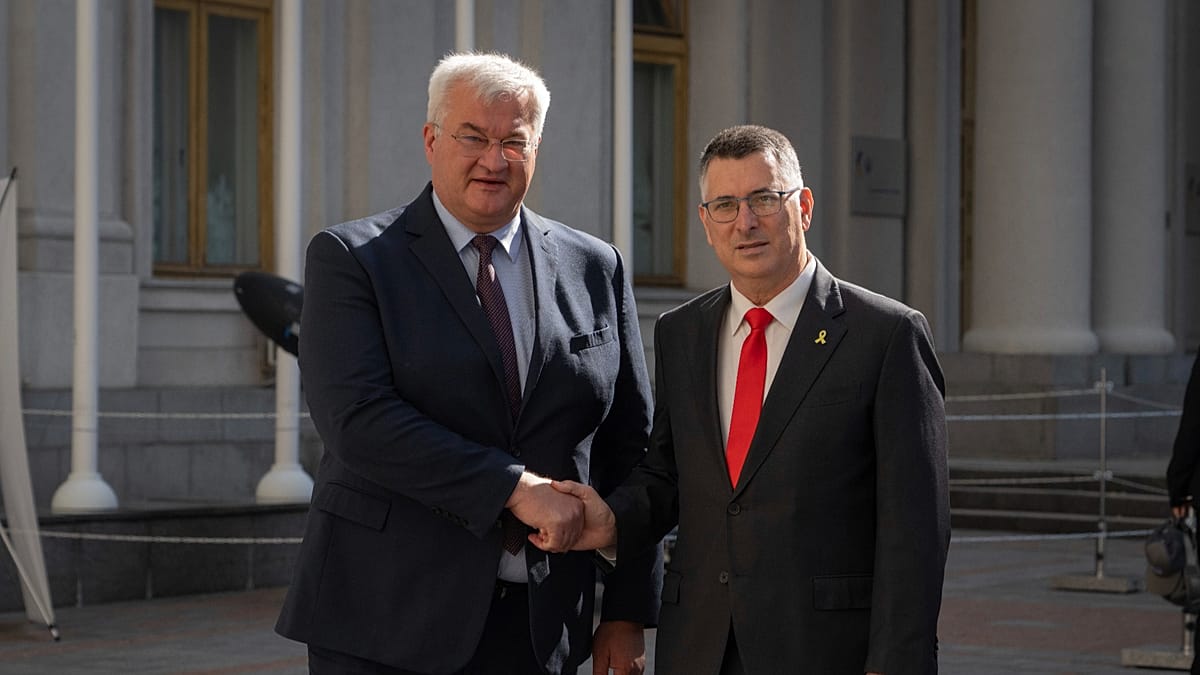
Ukraine has formally requested that Israel arrest a cargo ship carrying what Kyiv alleges is stolen Ukrainian grain, intensifying a diplomatic dispute between the two nations. The Panama-flagged bulk-carrier Panormitis, reportedly carrying over 6,200 tonnes of wheat and 19,000 tonnes of barley, has been waiting near the port of Haifa since 25 April, according to marine traffic monitoring services.
Ukrainian Foreign Minister Andrii Sybiha confirmed on Wednesday that Kyiv had submitted a formal request through diplomatic and legal channels, asking Israel to take action against the vessel. “The Prosecutor General’s Office of Ukraine has submitted a relevant request to the Israeli authorities based on a Ukrainian court ruling to arrest the vessel as part of the ongoing investigation,” Sybiha stated. He reiterated that the cargo is suspected of being illegally transported from a closed port in temporarily occupied Ukrainian territory, in violation of international law and Ukrainian legislation.
Ukraine’s Prosecutor General Ruslan Kravchenko elaborated that the Ukrainian side is asking its Israeli partners to seize the vessel and its cargo, conduct a search, confiscate documentation, take grain samples, and question the crew members. The request follows a similar incident earlier this month when the Russian-flagged bulk carrier Abinsk unloaded nearly 44,000 tonnes of stolen Ukrainian wheat at Haifa without interference.
Diplomatic Tensions Over 'Twitter Diplomacy'
Israel’s Foreign Minister Gideon Sa'ar responded sharply to Sybiha’s public post on X, accusing Kyiv of resorting to “Twitter diplomacy.” Sa'ar claimed that Ukraine submitted the arrest request late on Tuesday night and then followed it up with another tweet. “One would expect the submission of a legal request before tweeting,” he said, adding that the request is now being examined by relevant authorities.
A senior Ukrainian diplomatic source told Euronews that “if Israel responded to other requests via diplomatic channels, there would have been no need for tweets.” According to sources in Kyiv, Ukrainian officials have been urging Israel for at least a month and a half not to purchase grain stolen by Russia from occupied territories. The source noted that Israel had not commented on the vessel or its cargo, focusing instead on how the issue was communicated on social media. “As none of this yielded any results, we decided to go public,” they said.
Ukraine has released a detailed timeline of its diplomatic efforts. The first meeting between Ukraine’s ambassador and Israel’s foreign ministry regarding the Abinsk took place on 23 April, followed by an official note. On 20 April, after the Abinsk had already unloaded and departed, Israel responded that it did not intend to take concrete measures to stop the illegal trade, citing the vessel’s departure and insufficient evidence. Five days later, Ukraine informed Israel about the Panormitis as it approached Haifa. On Tuesday, Kyiv summoned Israel’s Ambassador Michael Brodsky to urge action, but Ukrainian officials say this information was once again ignored.
An investigation by Israeli news outlet Haaretz found that at least four shipments of stolen Ukrainian grain have been unloaded in Israel this year. The European Union has previously warned Israel that it may sanction those involved in the stolen grain trade, as reported by European Pulse. The ongoing dispute underscores broader tensions between Ukraine and Israel over Russian grain shipments, a topic explored in our earlier coverage.
The Panormitis remains at anchor near Haifa as the diplomatic standoff continues. Ukraine has vowed to pursue all legal avenues to prevent the trade of stolen grain, which it views as a direct violation of its sovereignty and international law. The incident also highlights the challenges of enforcing sanctions and trade restrictions in a globalized shipping industry, where vessels often change flags and ownership to obscure their activities.