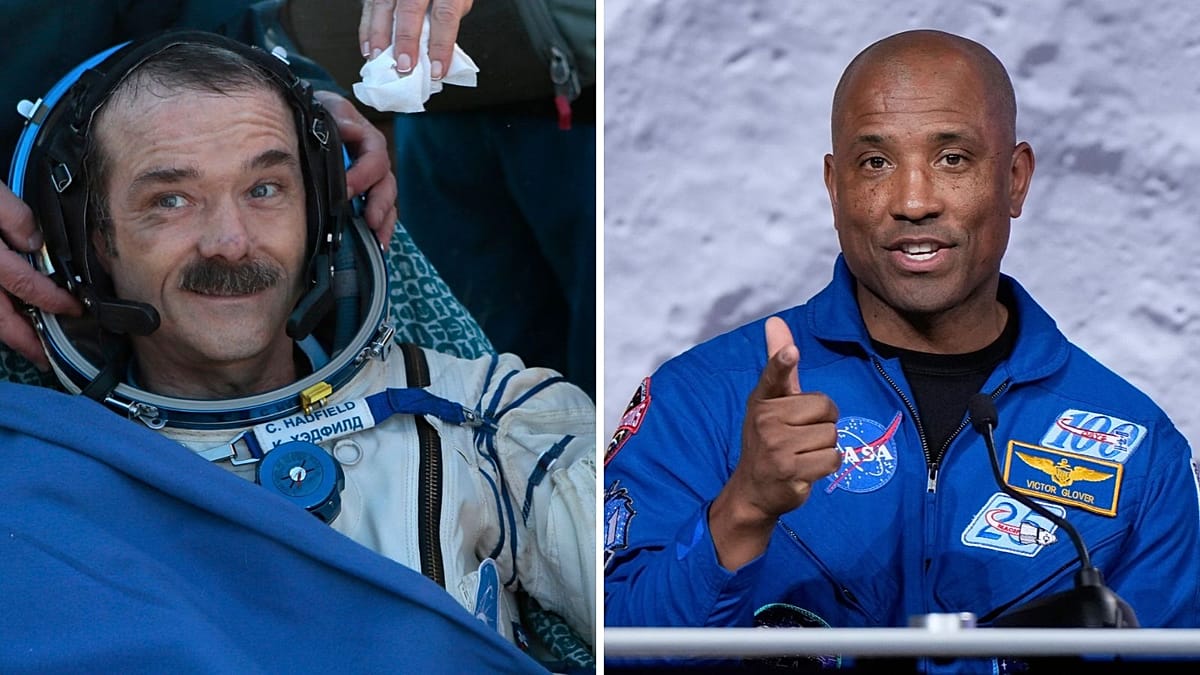
What is it like to float above the Earth, watching continents drift by in a single glance? And how does that perspective reshape your view of the world below? These were among the questions posed to former International Space Station commander Chris Hadfield and Artemis II pilot Victor Glover during a compelling conversation at the Starmus Festival in Tenerife.
The two astronauts, both recipients of the Stephen Hawking Medal for Science Communication, sat down with Euronews Culture to explore the intersection of spaceflight, culture, and the rapidly evolving landscape of space exploration. Their discussion ranged from the visceral experience of launch to the broader implications of the so-called 'New Space Race'—a term that evokes both excitement and concern.
Science and Culture: A Symbiotic Relationship
Hadfield, a Canadian who commanded the ISS in 2013, emphasized that science and culture are not separate realms but deeply intertwined. "Space exploration is a cultural act," he said. "It reflects who we are and who we aspire to be. When we send humans beyond our planet, we carry our stories, our art, and our hopes with them."
Glover, who will pilot NASA's Artemis II mission around the Moon, echoed that sentiment, noting that the images and sounds from space have a unique power to unite people. "When you see Earth from orbit, you don't see borders. You see a fragile, beautiful planet. That image has inspired generations and can inspire us to work together," he explained.
The pair also touched on how pop culture has shaped public expectations of space travel. From 2001: A Space Odyssey to The Martian, films and books have both inspired and misled. "The reality is more profound and more subtle than fiction," Hadfield noted. "But fiction helps us imagine the possibilities, and that's valuable."
The New Space Race: Competition or Collaboration?
As private companies like SpaceX and Blue Origin join national agencies in the race to the Moon and Mars, the question of whether this new era fosters rivalry or partnership is more relevant than ever. Glover argued that the current moment is different from the Cold War space race. "Back then, it was about proving superiority. Today, we have a more complex ecosystem—governments, commercial entities, international partners. The challenge is to channel competition into constructive collaboration."
Hadfield added that the stakes are higher now. "We're not just planting flags; we're building infrastructure for long-term presence. That requires trust and shared goals. The Starmus Festival itself is a testament to how science and art can bridge divides."
The astronauts also reflected on the role of Europe in this new space era. With the European Space Agency's ambitious programs and the growing involvement of member states, Europe is a key player. "Europe has a rich history of exploration and a strong scientific community," Glover said. "Its contributions are essential."
From Orbit to Earth: A Changed Perspective
Both astronauts described the profound shift in perspective that comes from seeing Earth from space. "You realize how thin the atmosphere is, how small we are," Hadfield said. "It makes you care more about the planet and the people on it."
Glover, who will be the first person of color to fly to the Moon, spoke about the responsibility that comes with such a mission. "I carry the hopes of many. It's not just about me; it's about what we can achieve together as a species."
The conversation also touched on the importance of science communication. Both astronauts have used social media and public appearances to demystify space travel. "If we can make people feel part of the journey, they'll support it," Hadfield said. "That's why events like Starmus matter."
As the world looks toward the next giant leaps—returning to the Moon, and eventually Mars—the words of these two astronauts serve as a reminder that exploration is not just about technology, but about humanity. As Hadfield put it, "The best part of space travel is what it teaches us about ourselves."