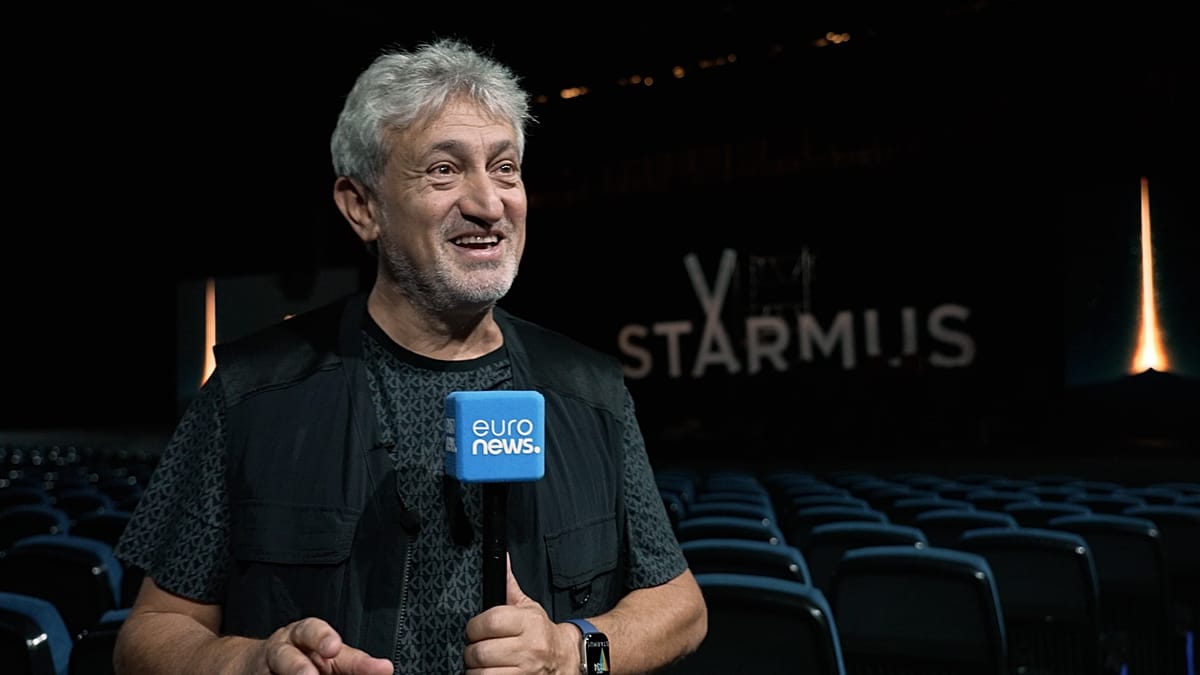
The Starmus Festival, a unique gathering that fuses science, music and art, is back on the Spanish island of Tenerife. For over a decade, the event has brought together Nobel Prize winners, astronauts, and celebrated artists under one roof, aiming to ignite creativity and a deeper understanding of the cosmos.
Co-founder Garik Israelian, an astrophysicist at the Instituto de Astrofísica de Canarias, emphasises that the festival's core mission is to inspire the next generation. "We want to show young people that science is not just about formulas and lab coats," he said. "It's about wonder, exploration, and the same creative impulse that drives musicians and painters."
A decade of cosmic collaboration
Since its inception in 2011, Starmus has grown into a landmark event on the European cultural calendar. Past editions have featured lectures from Stephen Hawking, performances by Brian May, and appearances by numerous Nobel laureates. This year's programme in Tenerife continues that tradition, with a lineup that spans astrophysics, biology, and the arts.
The festival's setting is no accident. Tenerife, home to the Teide Observatory and some of the world's clearest skies, offers a natural bridge between the scientific and the sublime. Attendees can attend talks under the stars, followed by concerts that blend classical and contemporary music.
Israelian, who founded the festival alongside the late physicist Stephen Hawking and musician Brian May, believes that the intersection of disciplines is where true innovation happens. "When you put a Nobel laureate next to a rock star, you get conversations that don't happen anywhere else," he said. "That's where new ideas are born."
The festival also serves as a platform for addressing pressing global issues. This year, sessions are dedicated to climate change, artificial intelligence, and the future of space exploration. These topics resonate beyond the scientific community, touching on policy and everyday life across Europe.
For many attendees, the highlight is the chance to interact with figures they have only read about in textbooks. "It's surreal to ask a question to someone who discovered a planet," said Marta, a university student from Madrid. "It makes science feel accessible."
The Starmus Festival is part of a broader trend of science communication in Europe, where events like the Lumière Festival in Lyon celebrate the arts, while Starmus focuses on the sciences. Both underscore the continent's commitment to cultural and intellectual exchange.
As the festival continues through the week, organisers hope that the spark ignited in Tenerife will travel far beyond the island. "We want every young person to leave here thinking, 'I can do that too,'" Israelian said. "Whether they become a scientist, an artist, or both."
With the support of institutions like the European Space Agency and the Canary Islands government, Starmus is poised to remain a fixture for years to come. For now, the stars above Tenerife are the perfect backdrop for a celebration of human curiosity.