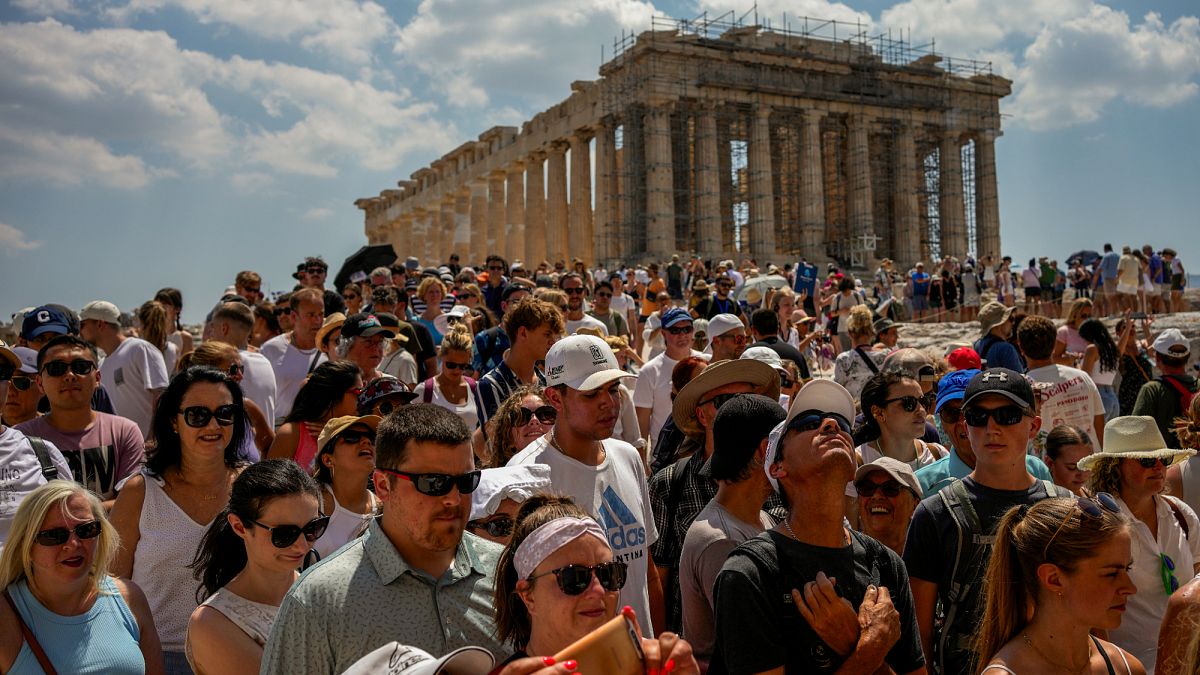
Athens is considering a significant shift in its tourism strategy, with Mayor Haris Doukas proposing a potential freeze on new hotel permits in parts of the city. The move aims to prevent the kind of overtourism pressures that have transformed other European capitals, with Doukas explicitly warning, "We must not become Barcelona."
The proposal follows the city's recent decision to halt new licenses for short-term rentals in three central neighbourhoods: Plaka, Koukaki, and the historic centre. This new discussion marks an escalation in efforts to manage the city's tourist footprint, moving beyond private rentals to the formal hotel sector.
A Capital at Capacity
Speaking at the "This is Athens - Agora" event, Mayor Doukas framed the issue as one of strategic capacity. "We really need to see if and how many more hotels we need and where," he told Euronews. "We need to see and think about how much extra tourist load we can lift and where. We have to understand that there are saturated areas that cannot afford new beds: whether short-term rentals or not."
Data from INSETE, the research body of the Greek Tourism Confederation, underscores the scale of the existing industry. Attica, the region encompassing Athens, currently hosts 68,934 hotel beds, with roughly 35,000 concentrated in the greater city centre area. Hotel industry figures acknowledge a dramatic increase in hotel numbers in recent years, raising questions about long-term sustainability for both the sector and the city's infrastructure.
Doukas pointed to a growing international trend, noting that in discussions at global events, "capping is not only being put on short-term rentals but also on hotels; in specific, 'saturated' areas." He cited the existing bans on new hotel licenses in Barcelona and Amsterdam as precedents Athens is now studying.
Industry Calls for a Master Plan
The hotel industry's response has been measured, with leaders stressing the need for a comprehensive, data-driven plan rather than outright opposition. Evgenios Vassilikos, President of the Athens - Attica & Argosaronic Hotel Association, addressed the same forum, arguing for holistic planning.
"There are practices abroad which have been implemented," Vassilikos explained. "We don't need to reinvent the wheel. The example I gave is that in Barcelona they have completely banned short-term rentals from 2028 and from 2017 onwards no new hotel licences are being issued." He suggested Athens must decide "where we want to be in 10 to 15 years."
Vassilikos highlighted the complexity of the accommodation ecosystem, noting a rapid increase not just in hotels and short-term rentals, but also in "non-main tourist accommodation" like rooms to let and furnished apartments, which have grown from 800 to 1,200 units. He used the planned conversion of the Olympic Tae Kwon Do Stadium into a convention centre as an example, stating, "We will definitely need hotel beds there. How many will these be? How many will be five-star, how many four-star, etc. There has to be a specific plan. And of course that drags in all kinds of beds."
This debate over managing economic growth and quality of life echoes similar tensions across Europe. For instance, as Hungary's new government scrutinises major Orbán-era projects, other nations are re-evaluating long-term development strategies. Furthermore, the economic pressures of regional conflicts, such as those highlighted by the EU Energy Chief's warning on prolonged price hikes, add another layer of complexity to urban planning decisions.
The Municipality of Athens has established an Observatory on the impact of tourism on the city, a body that will likely play a key role in informing any future policy decisions. The mayor's proposal signals a pivotal moment for Athens, a city that has seen tourism surge as a vital economic lifeline but now faces the challenge of balancing that success with the livability of its neighbourhoods and the preservation of its cultural identity.
"We must not become Barcelona. We have to understand that there are saturated areas that cannot afford new beds."
- Haris Doukas, Mayor of Athens
The outcome of this debate will set a precedent for other Mediterranean tourist destinations grappling with similar pressures. It reflects a broader European reckoning with the limits of tourism-led growth, positioning Athens at the forefront of a difficult but necessary conversation about sustainable urban development.