Australia has lifted the veil on three previously undisclosed payloads for its Ghost Shark autonomous underwater vehicle (AUV), a program that underscores the growing strategic importance of unmanned maritime systems. The new capabilities, announced in Sydney on Monday by Defence Industry Minister Pat Conroy, include sea mines, logistical caches, and aerial drones that can conduct strikes.
The Ghost Shark, developed by the Royal Australian Navy in partnership with Anduril Australia, is designed to operate autonomously for extended periods, providing a stealthy presence in contested waters. The newly revealed payloads are intended to broaden its operational flexibility, allowing it to support a wider range of missions, from intelligence gathering to direct action.
Expanding the undersea arsenal
Among the new payloads are sea mines, which can be deployed covertly to deny access to enemy vessels. The drone can also carry logistical caches—containers of equipment developed by Australia's Defence Science and Technology Group—that could be used to resupply special forces operating behind enemy lines. This capability mirrors similar concepts being explored by other navies, including those in Europe, where unmanned underwater vehicles are increasingly seen as a cost-effective way to project power in the maritime domain.
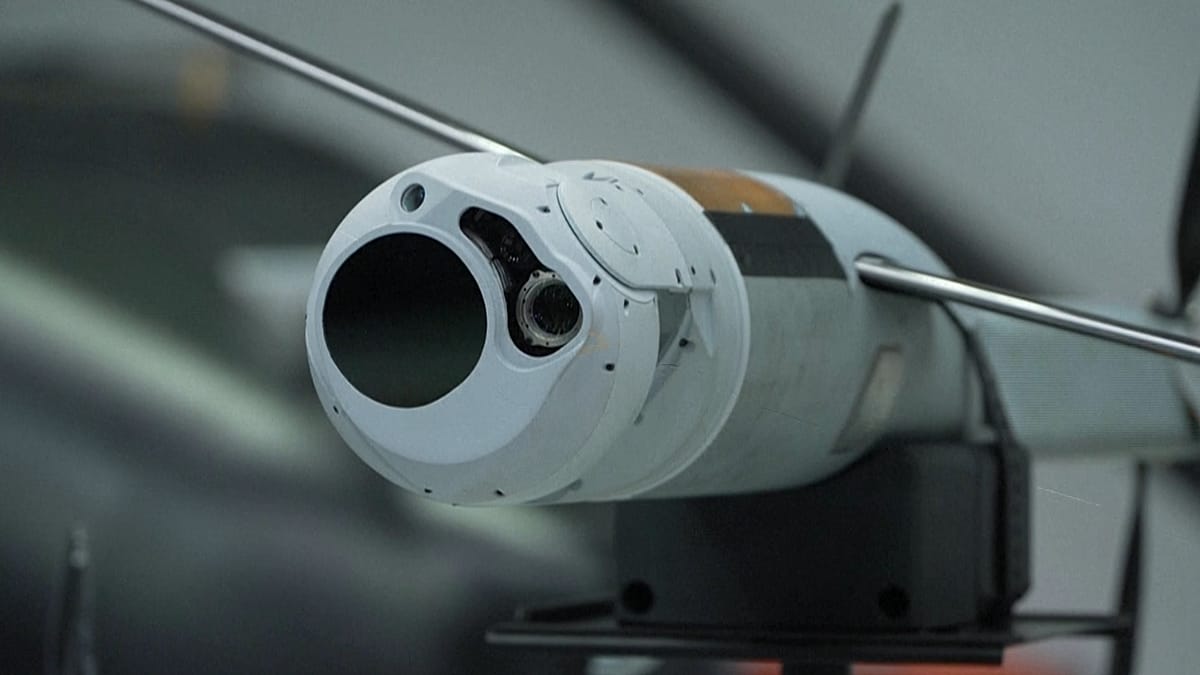
Perhaps most striking is the integration of Altius uncrewed aerial vehicles (UAVs). These small drones can be launched from the submerged Ghost Shark, providing intelligence, surveillance, and reconnaissance (ISR) capabilities, as well as the ability to conduct strikes. This hybrid underwater-aerial approach is a novel development in naval warfare, and it has drawn attention from defence analysts worldwide.
Minister Conroy emphasized that the new capabilities would "expand the drone's operational role and strengthen Australia's undersea warfare capabilities." He noted that the Ghost Shark program is part of a broader effort to modernise Australia's defence forces in response to shifting regional security dynamics.
European parallels and implications
While the Ghost Shark is an Australian program, its development resonates in Europe, where several nations are investing heavily in unmanned maritime systems. The UK, for instance, has been testing its own autonomous submarines, and NATO has been exploring ways to integrate such platforms into its naval operations. The Baltic Sea, a region of heightened tension following Russia's invasion of Ukraine, has become a testing ground for underwater drones, with recent incidents involving suspected drone activity near Lithuania's border and Romanian F-16s intercepting drones over the Black Sea.
The Ghost Shark's ability to deploy aerial drones from underwater could offer lessons for European navies, particularly in the context of the Black Sea, where Ukraine has been testing drone-based medical evacuations and where Starlink speed limits have disrupted Ukrainian drone operations. The integration of multiple unmanned systems into a single platform could provide a strategic advantage in such contested environments.
Australia's move also reflects a broader trend of nations seeking to diversify their defence supply chains and reduce reliance on traditional manned platforms. For European countries, the Ghost Shark's development may serve as a model for how to rapidly prototype and field new capabilities, a process that often takes decades in conventional procurement.
The announcement comes at a time when undersea infrastructure, such as pipelines and cables, has become a focal point of security concerns. In September 2022, the Nord Stream pipelines were sabotaged, and European nations have since been on alert for potential threats to their maritime assets. The Ghost Shark's ability to conduct covert operations could be seen as a response to such challenges, though Australia's primary focus remains the Indo-Pacific region.
As the Ghost Shark moves from testing to operational deployment, its success will be closely watched by defence planners in Europe and beyond. The program's emphasis on modular payloads and autonomous operations could influence the next generation of undersea warfare systems, making it a significant development in global military technology.