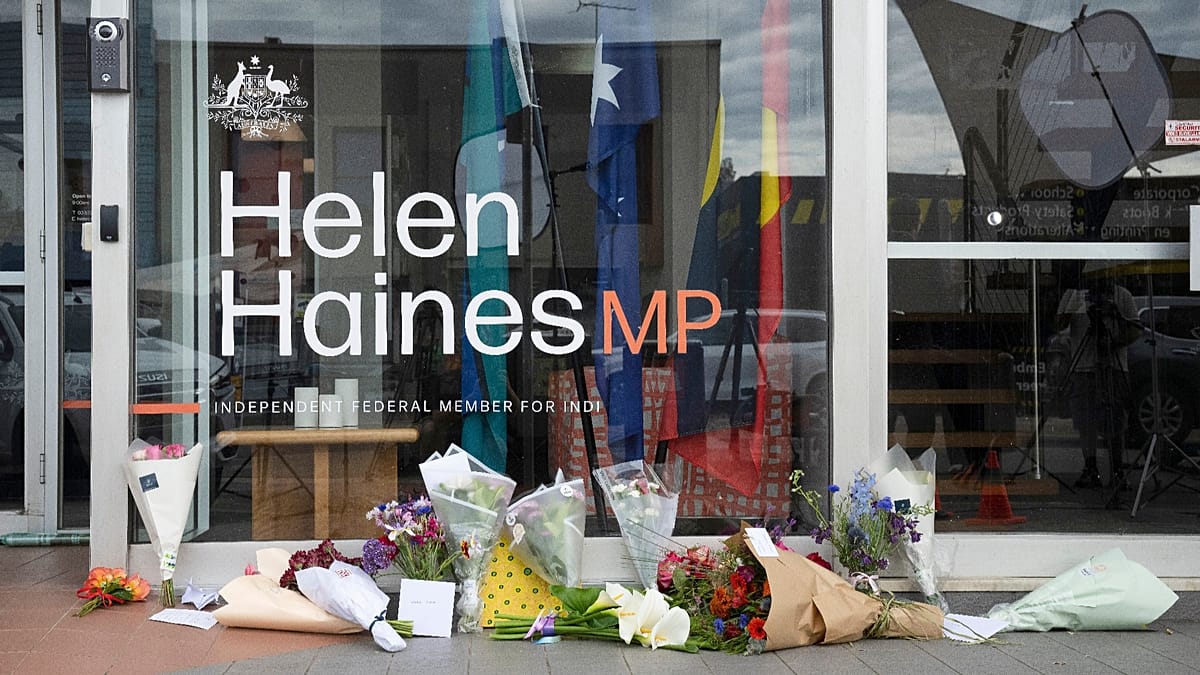
Australian independent MP Helen Haines has lost a leg after being deliberately struck by a car outside her office in the town of Wangaratta, about 200 kilometres northeast of Melbourne, according to local media reports on Tuesday. The attack has sent shockwaves through the country's political establishment, where violence against politicians is rare but threats have been rising.
Prime Minister Anthony Albanese described the incident as a deliberate act and a test of the nation's character. Speaking on national television, he said the driver had performed a U-turn to return and hit Haines as she was retrieving items from the boot of her car. The 65-year-old MP underwent surgery overnight at the Alfred hospital in Melbourne and remains in a critical condition.
Albanese told the Sunrise programme that he had spoken with Haines's husband Phil, and that all Australians' thoughts were with her family, friends, and community. The attack has prompted an outpouring of support for Haines, who is widely respected for her work on political transparency and anti-corruption measures.
Witnesses describe the scene
Witnesses told the national broadcaster ABC that they heard a loud bang and saw a woman pinned between two cars. A local barber, Ricky Jefferies, restrained the driver until police arrived and has been hailed as a hero. Jefferies, visibly shaken, told journalists that his first thought was that his wife would be disappointed if he were injured. He deflected praise, saying others at the scene had done more than he had.
The driver, identified by Australian media as Brendan Nugent, was arrested and a knife was found in his vehicle. He was known to police and remained in custody on Tuesday morning. The investigation is being conducted jointly by federal police, the counter-terrorism squad, and Victoria state law enforcement. Possible charges include causing harm to a government official, which carries a maximum penalty of ten years in prison.
The motive for the attack remains unknown, and Albanese has refused to speculate while the investigation continues. However, he lamented that political debate in Australia had become too heated and personal in recent years, pointing to a significant increase in threats against elected officials. "It's important in a democracy that people are allowed to have disagreements," he said.
The attack has drawn condemnation from across the political spectrum, with many noting the broader trend of rising hostility towards politicians. While Australia has not seen the levels of political violence seen elsewhere, law enforcement agencies have documented a steady increase in threats and abuse directed at elected officials.
Haines, who represents the rural electorate of Indi, has been a vocal advocate for integrity in politics. Her work on establishing a federal anti-corruption commission earned her bipartisan respect. The attack has raised questions about the security of MPs, particularly those in regional areas where offices are often open to the public.
As the investigation unfolds, the focus remains on Haines's recovery and the broader implications for political discourse in Australia. The incident echoes concerns raised in other democracies about the safety of public officials, a theme that resonates across Europe as well, where politicians have faced similar threats. In recent years, European leaders have also grappled with the challenge of maintaining civil debate while ensuring the security of those in public life.
For now, the community of Wangaratta has rallied around Haines, with flowers being laid at her electoral office. The barber who intervened has become a local hero, but he insists that the credit belongs to everyone who helped. The investigation continues, and Australians await answers about what drove the alleged attacker.