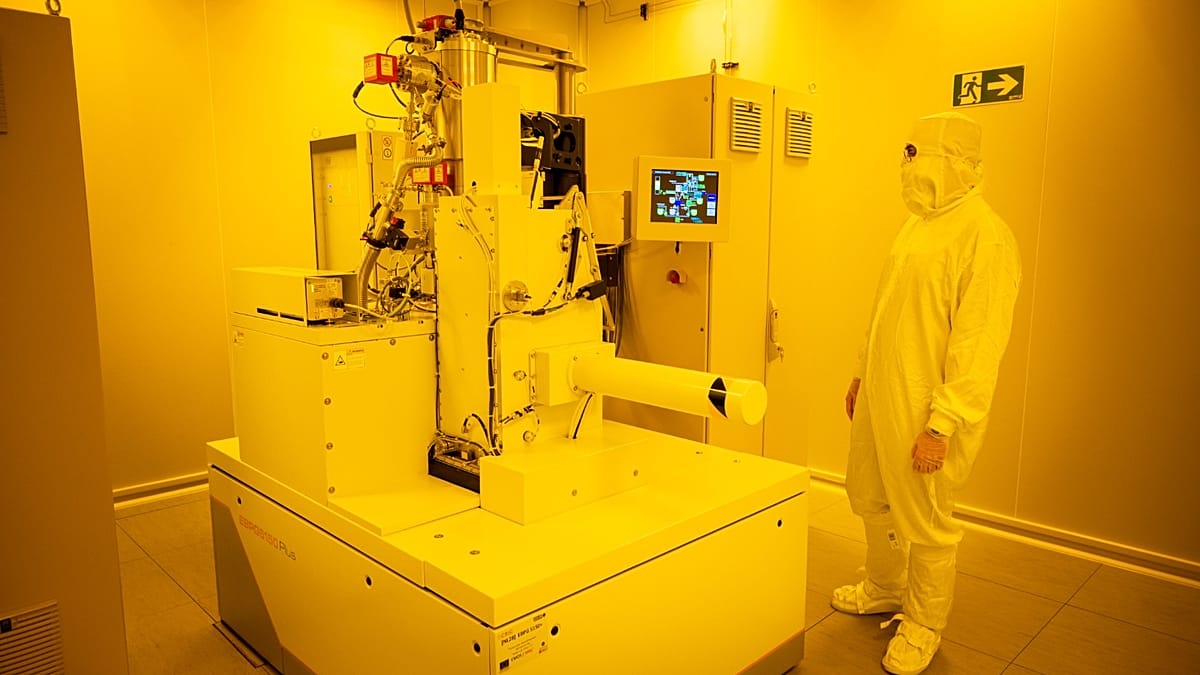
Spain is making a decisive push into quantum technology with the inauguration of a new nanofabrication facility in Barcelona. The Spanish National Research Council (CSIC) has opened the Quantum Nanofabrication Area within the Clean Room at the Institute of Microelectronics of Barcelona (IMB-CNM), marking the largest research infrastructure of its kind in Spain.
The facility is designed to manufacture and analyze devices and circuits at the nanometre scale, a critical step for developing quantum technologies and advanced microelectronics. With an investment exceeding six million euros, the project is funded through the PERTE Chip initiative and the Complementary Plan for Quantum Communications, with backing from the European Union's Next Generation funds.
Equipped with state-of-the-art tools, including Spain's most advanced electron-beam lithography system, the clean room also features high-resolution microscopes and metrology instruments capable of inspecting structures at nanometre dimensions. These systems will be accessible to both researchers and companies, supporting progress in fields such as quantum computing, communications, healthcare, energy, and security.
According to CSIC, the new infrastructure aims to strengthen Spain's capabilities in semiconductors and quantum technologies, easing the transition from laboratory research to industrial application. This move aligns with the broader European strategy to bolster technological sovereignty in critical areas like chip manufacturing.
A new hub for quantum research
Alongside the Barcelona facility, CSIC has announced the creation of the QuARC-CSIC Centre for Quantum Science and Technologies (Quantum Advanced Research Center). The centre will consolidate research groups from various CSIC institutes, fostering world-class research, attracting international talent, and opening new lines of investigation.
CSIC president Eloísa del Pino presented the Quantum Science and Technologies Strategy, the long-term plan underpinning the new centre. She noted that quantum science is advancing rapidly worldwide, with strategic investments in Europe, the United States, and China shaping an increasingly competitive ecosystem. Del Pino argued that a new organisational model is necessary to implement a long-term strategy and strengthen Spain's quantum ecosystem.
QuARC-CSIC represents an opportunity to establish a stable, nationwide reference structure dedicated exclusively to this field, at a time when the institution prepares for what del Pino calls the "third quantum revolution"—the shift from laboratory experimentation to the integration of quantum technologies into industry and society.
The centre will have its physical headquarters in Madrid, located in the former facilities of the Cajal Institute, now part of the Cajal Neuroscience Centre. This location was chosen due to the concentration of leading quantum groups CSIC already has in the Madrid region—13 research groups across ten institutes—which will facilitate collaboration and interaction among researchers.
New staff will be recruited through selection processes already underway, with several positions reserved for quantum specialities. The centre will operate as a hub for research, training, and collaboration with other institutions, both in Spain and abroad.
This development underscores Spain's commitment to becoming a key player in the European quantum landscape. As the EU pushes for greater digital autonomy, investments like these are crucial. For context, Spain has also been active in other tech areas, such as improving battery technology and advocating for EU-wide digital regulations.
With the new clean room and the QuARC-CSIC centre, Spain is positioning itself at the forefront of quantum research, ready to contribute to the next generation of computing and communication technologies.