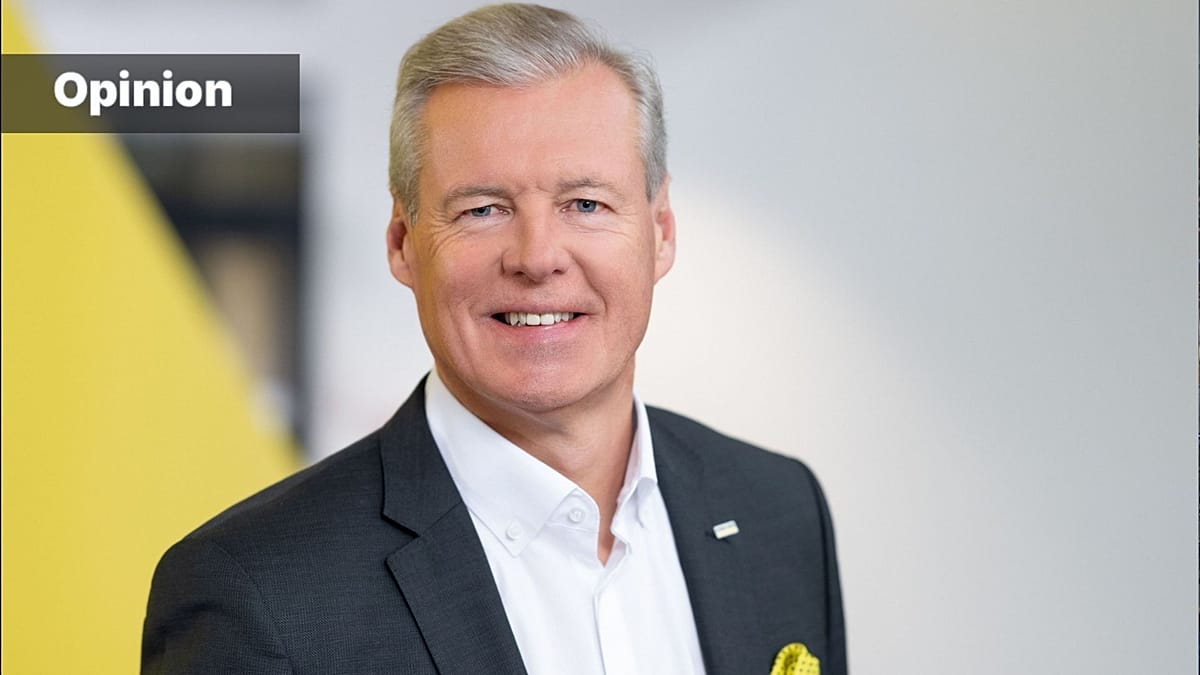
Hartmut Jenner, CEO of Kärcher, the German cleaning equipment giant known for its pressure washers, has issued a stark warning: Europe is in the grip of a 'perfect storm' that threatens its industrial base. Speaking as the company reported €3.5 billion in sales for 2025 and a global workforce of 17,000, Jenner called for a 'fitness program' for both Germany and the wider European Union.
Jenner, who leads the family-owned firm headquartered in Winnenden, Baden-Württemberg, points to a confluence of external pressures. The unpredictable trade policy of the United States, with its threat of sudden tariffs and trade barriers, is particularly damaging for export-oriented European companies. Meanwhile, China has evolved from a low-cost manufacturer into a formidable technological rival, advancing with a speed that risks leaving key European industries behind.
But Jenner argues that China's success is not purely a matter of innovation. 'What is often perceived as pure technological supremacy or even innovative strength is, however, largely the result of a well-targeted governmental industrial policy,' he writes. Massive subsidies in strategic sectors, coupled with a currency policy aimed at competitiveness, have created market distortions and overcapacity that make fair global competition nearly impossible for private, market-based companies.
Deindustrialisation is already here
The consequences for Europe's industrial heartland are already visible. Jenner cites the loss of tens of thousands of industrial jobs and declining production volumes as evidence that deindustrialisation is not a distant threat but a present reality. In Germany, key sectors such as automotive and manufacturing are negotiating plant closures and production relocations. 'It must be clear even to the most optimistic observer: We are at a critical turning point,' he says.
Kärcher itself has weathered the turbulence thanks to its balanced business model, which serves both corporate (B2B) and private (B2C) customers, and its focus on innovation. The company is investing heavily in research and development, including autonomous cleaning robots and battery technologies, and is driving digitalisation across its operations. Yet Jenner cautions that even innovation leaders cannot withstand deteriorating operating conditions and unfair competition indefinitely. Rising structural and employee costs in Germany make domestic expansion increasingly uneconomical.
The CEO is equally critical of domestic policy. While recent forecasts predict Germany's growth will return to 1.3 percent this year, Jenner dismisses this as 'borrowed growth,' artificially propped up by special government funds, defence contracts, and subsidies. 'A short-term boost fueled by debt is no substitute for a real, self-sustaining recovery in private investments,' he argues. The root causes of weakness are homegrown: a creeping reform fatigue and a regulatory frenzy from Brussels to Berlin that stifles entrepreneurship and investment.
This regulatory burden is a recurring theme in European business circles. The fiscal pressures in France and the broader debate over EU competitiveness have put the bloc's economic model under scrutiny. Jenner's call for less regulation echoes a growing sentiment among European business leaders who see bureaucracy as a drag on growth.
The social consequences are also troubling. Jenner links the rise of political extremism in Germany to public frustration over uncertainty and a lack of visible reforms. 'To regain confidence in our country's economic strength and future viability, we now need clear direction and bold action,' he writes.
Drawing on his upbringing on his parents' farm, Jenner emphasises the value of hard work: 'Success doesn't just fall from the sky; for me, it consists of 97 percent hard work and dedication, 2 percent talent, and 1 percent luck.' He insists that value creation is the precondition for prosperity, not the other way around. 'If you rest, you rust – that applies to people just as much as it does to economies.'
His proposed 'fitness program' for Germany includes cutting rigid rules, slashing excessive bureaucracy, reducing high energy costs, and addressing the steadily rising non-wage labour costs. With social security contributions consistently exceeding the historically critical threshold of 40 percent, Jenner warns that tax breaks and selective subsidies will amount to nothing. The message is clear: Europe must act decisively to secure its economic future, or risk being left behind.