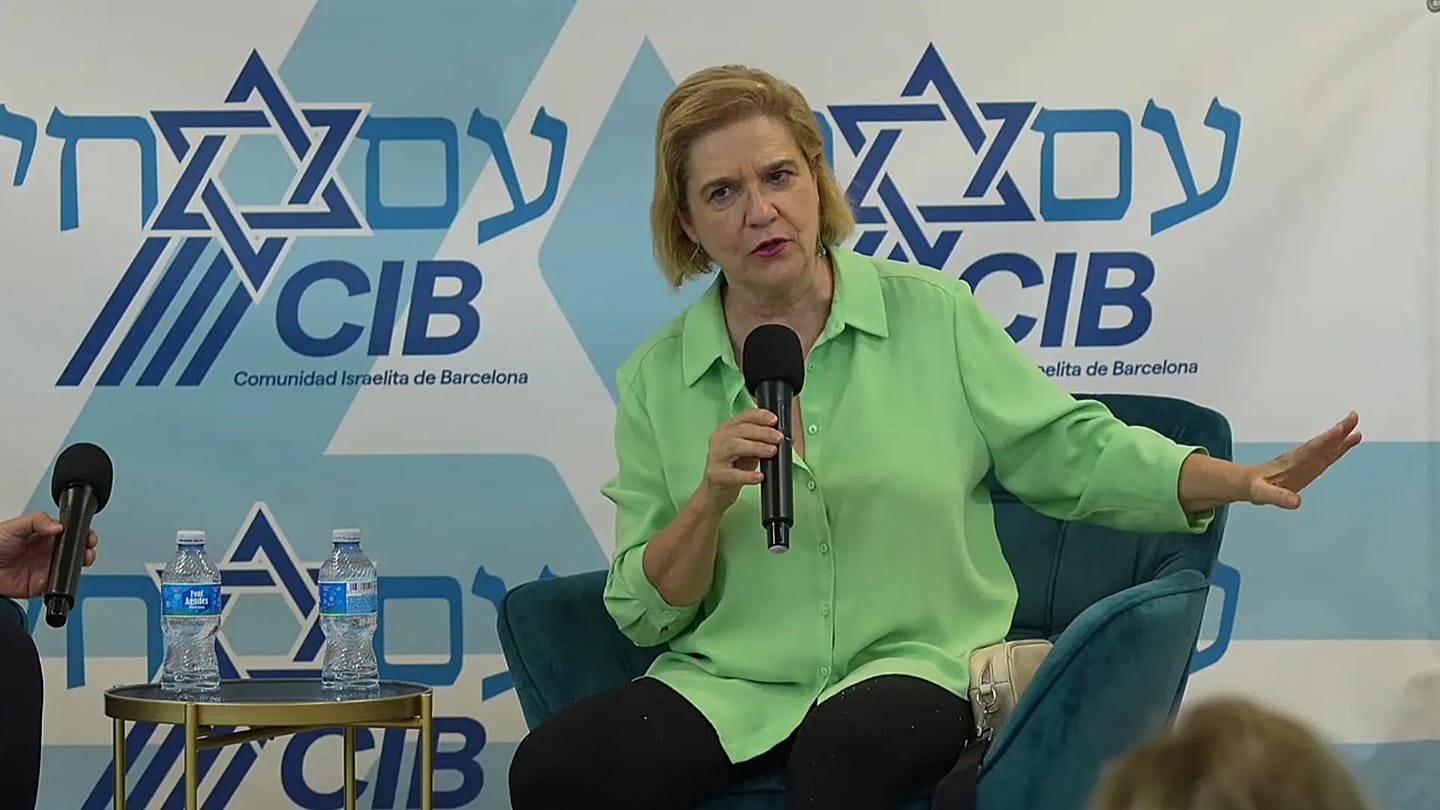
Barcelona's public prosecutor has initiated legal proceedings against prominent Spanish journalist and author Pilar Rahola, accusing her of incitement to hatred and complicity in genocide. The case, confirmed by judicial sources on Tuesday, marks a significant escalation in Spain's legal scrutiny of public figures' rhetoric surrounding the Israel-Gaza conflict.
Allegations and Legal Basis
The complaint, filed by a group of Palestinian solidarity activists, alleges that Rahola's repeated public statements and social media posts during the current Gaza war constitute incitement to hatred against Palestinians and complicity in what they describe as genocidal acts by Israel. The prosecutor's office in Barcelona has decided to open a preliminary investigation to determine whether there is sufficient evidence to proceed with formal charges.
Rahola, a former member of the Catalan Parliament and a well-known columnist for La Vanguardia, has been a vocal supporter of Israel's right to self-defense. She has frequently criticized what she calls the "demonization" of Israel and has accused pro-Palestinian activists of antisemitism. Her critics, however, argue that her language crosses the line into hate speech and that she has minimized civilian casualties in Gaza.
Under Spanish law, incitement to hatred (artículo 510 del Código Penal) carries penalties of up to four years in prison. The charge of complicity in genocide is far more serious, though legal experts note it would require proving a direct link between Rahola's words and specific acts of violence.
Broader European Context
The case comes amid a wider European debate over the limits of free speech in relation to the Israel-Palestine conflict. Several EU member states have seen a rise in both antisemitic and anti-Muslim incidents since October 2023. In Germany, authorities have banned pro-Palestinian demonstrations in some cities, while in France, the government has cracked down on what it calls "apology for terrorism."
Spain, under Prime Minister Pedro Sánchez, has taken a notably critical stance toward Israel's military operations in Gaza. Sánchez has repeatedly called for a ceasefire and has accused Israel of violating international law. This political backdrop may influence the trajectory of the Rahola case, though the judiciary is formally independent.
The case also highlights the growing polarization within Spanish society over the conflict. Catalonia, where Rahola is based, has a strong tradition of solidarity with Palestine, and several municipalities have passed motions condemning Israel's actions. Rahola's supporters, however, see the legal action as an attempt to silence dissenting voices.
Rahola's Response
Rahola has not yet issued a formal statement, but her lawyer told El País that the allegations are "baseless and an attack on freedom of expression." In previous interviews, Rahola has defended her right to criticize Palestinian leadership and Hamas, which she describes as a terrorist organization. She has also accused her detractors of engaging in a "witch hunt" against anyone who supports Israel.
The investigation is at an early stage, and no charges have been filed. The prosecutor will now gather evidence, including Rahola's published articles and social media posts, before deciding whether to proceed. A decision is expected within the next three months.
This case is part of a broader pattern of legal actions across Europe targeting both pro-Israel and pro-Palestinian activists. In the UK, the Crown Prosecution Service has faced criticism for its handling of hate speech complaints related to the conflict. In Belgium, a court recently dismissed a case against a pro-Palestinian activist, citing lack of evidence.
For now, the Rahola case serves as a test of how far European legal systems are willing to go in policing speech about one of the world's most intractable conflicts. The outcome will be closely watched in Madrid, Barcelona, and beyond.