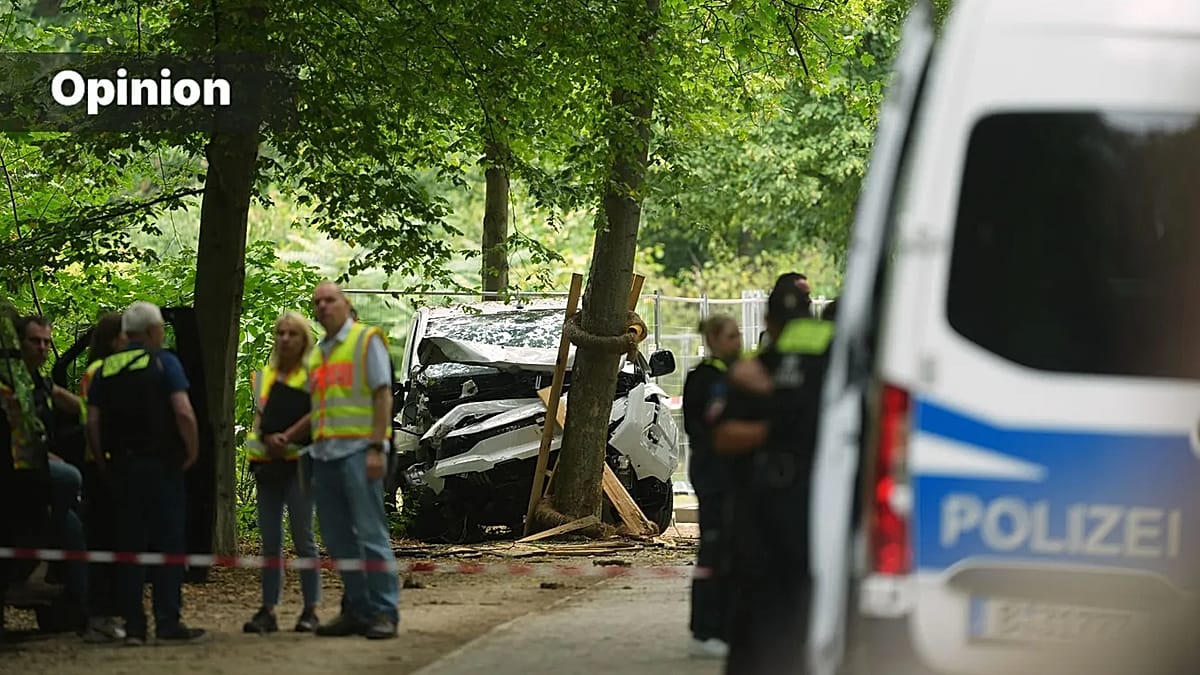
What began as a celebration of love and freedom in the heart of Berlin turned into tragedy on the evening of 25 July 2026. Hundreds of thousands had gathered for Christopher Street Day (CSD) when a delivery vehicle ploughed through the crowd in Tiergarten park, killing one woman and injuring many others, some seriously. The suspect is believed to have Islamist motives.
For Berlin's LGBTQ+ community, the attack shattered a fundamental sense of safety. Public space, long seen as a protective arena for queer expression, suddenly became a deadly threat. The incident marks a new and horrific dimension in the pressure that extremists and Islamists have exerted on queer life in the German capital for years.
Rene Powilleit, a CDU member who leads Berlin's 'Lesbians and Gays in the Union' group, wrote in a Euronews op-ed that the attack is an assault on free Western society. He argued that the queer community now faces a painful question: can one still stand up for rights and identity in this city without fear? The answer, he insists, must never be to give in, yet the fear is palpable and the sense of security deeply shaken. Our love is stronger than any hatred, he wrote.
Warning signs ignored
The attack did not come out of nowhere. In 2021, a gay couple was attacked in Dresden by an Islamist, leaving one person dead. For years, Europe has witnessed a creeping radicalisation and growing anti-queer incitement, fuelled not only by right-wing extremists but also by Islamist circles. Powilleit warned that closing one's eyes to these ideological hotspots is negligent and irresponsible. What we are dealing with here is not isolated lone attackers but a climate in which radical ideologies thrive and deliberately target open societies, he wrote.
Criticism of Islamism, he added, is far too often mistaken for Islamophobia. Germany and the wider European Union need honest debates about the threat posed by political Islam. Democracy is demanding, and a clear stance is required, including from within the queer community itself.
After the pain and sympathy for the victims, the full force of the law must be brought to bear. Powilleit argued that anyone who abuses the protection of a free and democratic constitutional order to spread fear and terror has forfeited that protection. The rule of law must use every instrument at its disposal, review integration and residence status, monitor dangerous individuals without gaps, and, where necessary, deport them.
This incident echoes broader concerns across Europe. In the UK, a man was recently sentenced to life for plotting an attack on a defence academy, highlighting the persistent threat of Islamist extremism. Meanwhile, the EU has been grappling with how to balance security with civil liberties, a tension that the Berlin attack brings into sharp focus.
Powilleit concluded that political Islam is one of the greatest threats to Western, liberal, and free coexistence. He called for an end to naivety and support for Islamist structures in Germany. The attack on Berlin Pride is a stark reminder that the open society cannot take its freedoms for granted; it must defend them with clarity and resolve.