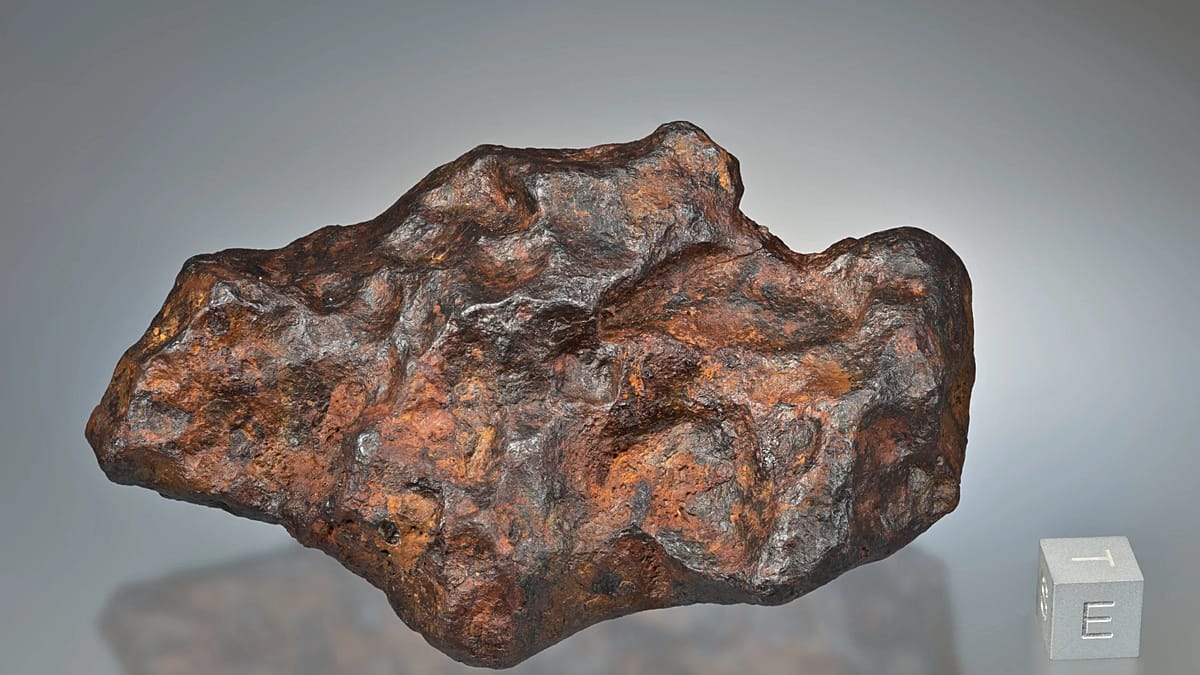
In the rolling hills of the Bernese Jura, above the shores of Lake Biel, lies one of Europe's most significant meteorite strewn fields. For decades, researchers and amateur hunters have combed the slopes of Twannberg and Mont Sujet, unearthing fragments of a celestial body that exploded upon entering Earth's atmosphere roughly 175,000 years ago.
The latest tally has now surpassed 2,200 known pieces, a dramatic increase from just 400 a decade ago. This surge, driven largely by systematic metal-detector surveys, has revealed that the original meteorite fall was far more extensive than previously assumed.
A rare cosmic visitor
The Twannberg meteorite belongs to the IIG group of iron meteorites, an extremely rare class characterized by unusually low nickel and high phosphorus content. It is the only IIG meteorite known in Europe, and only a handful exist worldwide. Each fragment provides valuable data on the composition and evolution of asteroids, offering a window into the early history of our solar system.
Geologist Beda Hofmann of the Natural History Museum in Bern told Swiss broadcaster SRF: "Ten years ago there were 400 fragments, now there are more than 2,200." The museum houses the official collection and coordinates research on the finds.
From space to Ice Age witness
The fragments are not just cosmic relics; they also tell a story about Earth's glacial past. Some of the newly discovered pieces were found at higher altitudes than earlier ones, indicating that glaciers transported them during the penultimate Ice Age, when ice sheets over the Swiss Plateau reached thicknesses of more than a kilometer. These finds thus serve as dual witnesses: born in space, then reshaped by terrestrial ice dynamics.
The first fragment was discovered on 9 May 1984 by a farmer who found a 15-kilogram iron block in a field. Initially mistaken for a mundane object, analysis confirmed its extraterrestrial origin. Since then, the strewn field has yielded pieces scattered over an area of about six kilometers, with the original body estimated to have measured between four and 20 meters across and weighed at least 250 tonnes.
The search continues, though it is not without challenges. The soil contains plenty of terrestrial metal debris—aluminum foil, nails, and other human detritus—that can trigger false positives. Moreover, anyone wishing to search must obtain a permit from the cantonal archaeological service, a measure designed to protect the scientific integrity of the site.
For scientists, every new fragment adds a piece to the puzzle of how our solar system formed and how the Swiss landscape evolved. The Twannberg field remains a unique natural laboratory, and its potential is far from exhausted.
As researchers push into unexplored corners of the Jura, they are also mindful of broader European trends. The region's rich geological heritage is part of a wider continental story, much like Zurich's record apartment prices reflect economic pressures across Switzerland. Meanwhile, the meticulous work of meteorite hunters echoes the precision seen in other European scientific endeavors, from Cologne's record-breaking gamescom to the heist of the Villena Treasure in Spain, which reminds us how fragile our material heritage can be.
The Twannberg meteorite, however, is a treasure that keeps giving. With each new fragment, researchers refine their models of asteroid impacts and glacial transport, deepening our understanding of both the cosmos and our own planet's history.