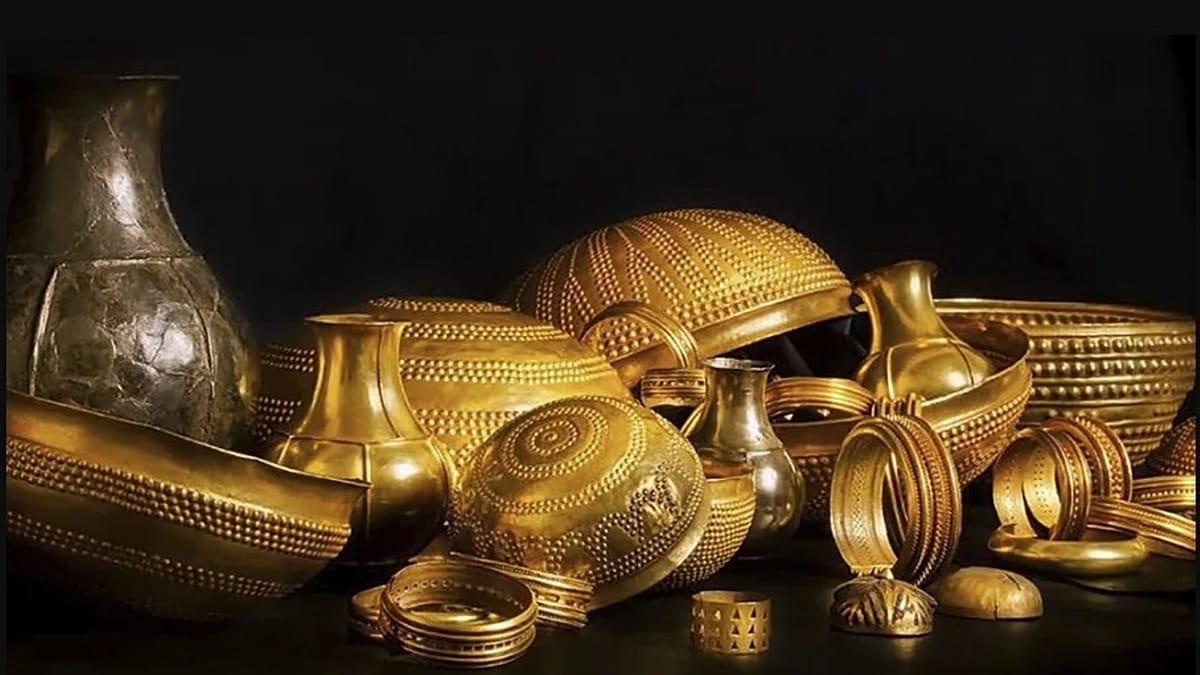
In a meticulously planned heist that lasted barely four minutes, thieves made off with a significant portion of the Villena Treasure, one of Europe's most important Bronze Age collections, from the Villena Museum (MUVI) in Alicante, Spain. The burglary, which occurred in the early hours of Tuesday, also netted three crowns of the Virgin and Child, leaving investigators convinced that a professional, highly organised gang was behind it.
The operation began with a diversion. At 5:16 AM, an alarm at the municipal sports centre on the outskirts of Villena drew law-enforcement officers away from the town centre. Four minutes later, at 5:20, the museum's own alarms were triggered. By the time officers arrived at 5:24, the perpetrators had already fled, according to Villena's mayor, Fulgencio Cerdán.
The thieves initially attempted to force the main entrance but, finding it impenetrable, turned to the side windows despite their reinforced glass and security systems. The speed and precision of the operation, coupled with the diversionary tactic, point to a level of planning that rules out an opportunistic break-in.
Mayor Cerdán, visibly shaken by the loss, confirmed that only three silver vessels, a bracelet, part of the staff decorations, and one of the four crowns—which apparently "fell" from the thieves' hands—remain in the museum's possession. The stolen artefacts are valued at more than €1.5 million.
A discovery that reshaped Bronze Age studies
The Villena Treasure was unearthed in December 1963 by archaeologist José María Soler and his team, who found it hidden inside a pot buried in the bed of a dry riverbed in the municipality. Villena, a town of roughly 35,000 inhabitants, sits in the Alt Vinalopó region in the northern interior of Alicante province.
The story of the discovery began months earlier, in October 1963, when a bracelet was found in the Morrón mountains. Initially mistaken for a component from a lorry engine, the piece was eventually identified as jewellery by a local jeweller, Carlos Miguel Esquembre, who alerted archaeologist Soler. That identification sparked excavations that culminated on 1 December with the recovery of 59 items of gold, silver, iron, and amber, weighing nearly ten kilogrammes.
The hoard, dated to around 1000 BC, has long been considered one of the great Bronze Age discoveries across Europe, offering invaluable insights into the metallurgy and trade networks of the Iberian Peninsula during that era. Its loss is a blow not only to Villena but to the continent's shared cultural heritage.
Local Police and the Civil Guard are now investigating the theft, with initial indications suggesting the gang may have had inside knowledge of the museum's security protocols. The diversion at the sports centre, timed to the minute, indicates a level of surveillance that has raised concerns about the vulnerability of regional museums housing treasures of global significance.
As the investigation continues, the mayor has appealed to the public for any information, while cultural officials across Spain have expressed solidarity with Villena. The theft also reignites debates about the security of smaller museums, which often hold artefacts of immense historical value but lack the resources of major national institutions.
For now, the remaining pieces—a few silver vessels, a bracelet, and a single crown—stand as a stark reminder of what has been lost. The hope is that the stolen items will be recovered, but the damage to Europe's archaeological record may be irreversible.