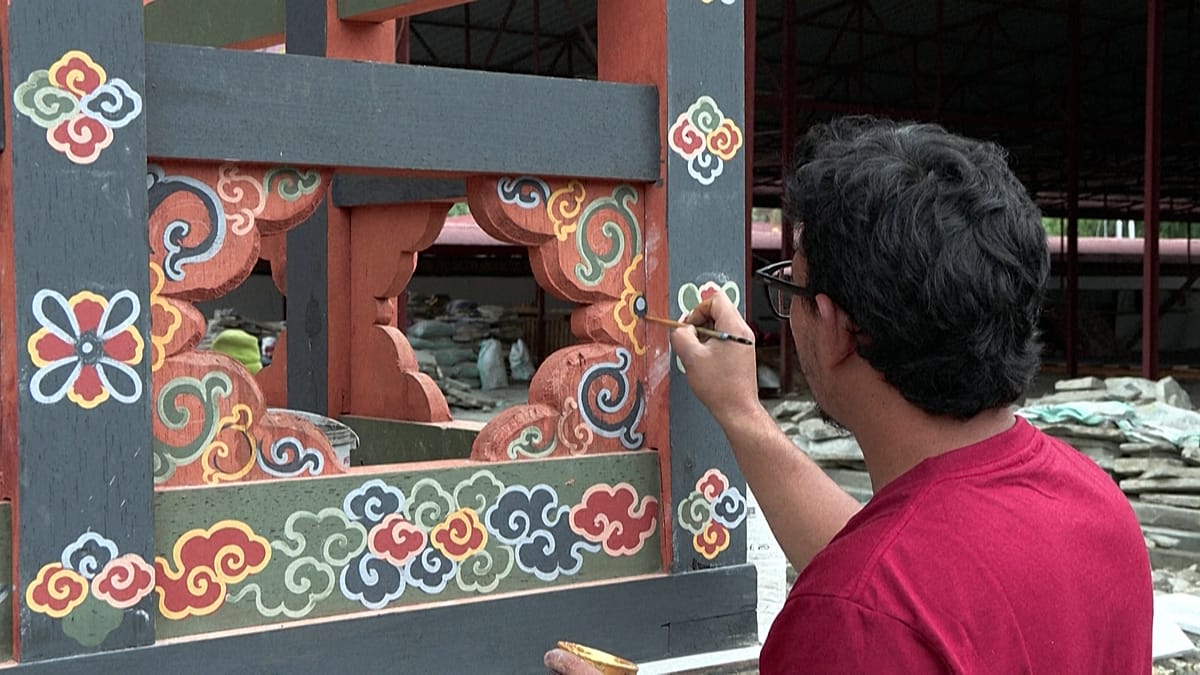
In the Himalayan kingdom of Bhutan, the art of hand-painting wooden structures is more than decoration—it is a living tradition that shapes the very identity of the nation's architecture. Known as Shing Tshon, this craft involves artisans meticulously applying intricate patterns and motifs to the facades, beams, and window frames of homes, monasteries, and public buildings.
The practice is deeply embedded in Bhutanese culture, with designs often drawing on Buddhist symbolism, floral patterns, and geometric forms that have been passed down through generations. For the artisans, many of whom learn the craft from family members, Shing Tshon is both a livelihood and a form of devotion.
A craft that defines a kingdom
Bhutan's architecture is distinctive for its ornate wooden details, and Shing Tshon is central to that aesthetic. The painted woodwork is not merely ornamental; it is believed to protect the building and its inhabitants, with certain motifs carrying spiritual significance. The colors and patterns are chosen with care, often reflecting the region and the building's purpose.
While modernization has brought new materials and techniques, the demand for traditional hand-painted woodwork remains strong. The Bhutanese government has actively supported the preservation of such crafts, recognizing them as vital to the country's cultural heritage and its appeal to visitors. This commitment mirrors broader efforts across Asia to safeguard intangible cultural heritage, a topic that resonates with European audiences familiar with similar initiatives within the EU.
The craft also plays a role in Bhutan's tourism industry, which is carefully managed to balance economic benefits with cultural preservation. Travelers to the capital, Thimphu, or the ancient dzongs (fortresses) in places like Paro and Punakha can observe artisans at work, their brushes bringing to life the vibrant patterns that adorn these historic structures.
For Europe, where traditional crafts are also being revitalized in countries like Italy, France, and Germany, Bhutan's example offers a compelling case study in how to maintain cultural practices in a rapidly changing world. The European Union has long supported cultural heritage projects, and the parallels between Bhutan's approach and European efforts are striking.
As Bhutan continues to navigate the pressures of globalization, the preservation of Shing Tshon is a testament to the kingdom's resilience and its commitment to maintaining a distinct identity. The craft is not just about aesthetics; it is a symbol of continuity and a bridge between the past and the future.
In a world where digital technology often dominates, the slow, deliberate work of Bhutan's wood painters is a reminder of the value of handmade artistry. It is a tradition that not only shapes the kingdom's architecture but also its soul.