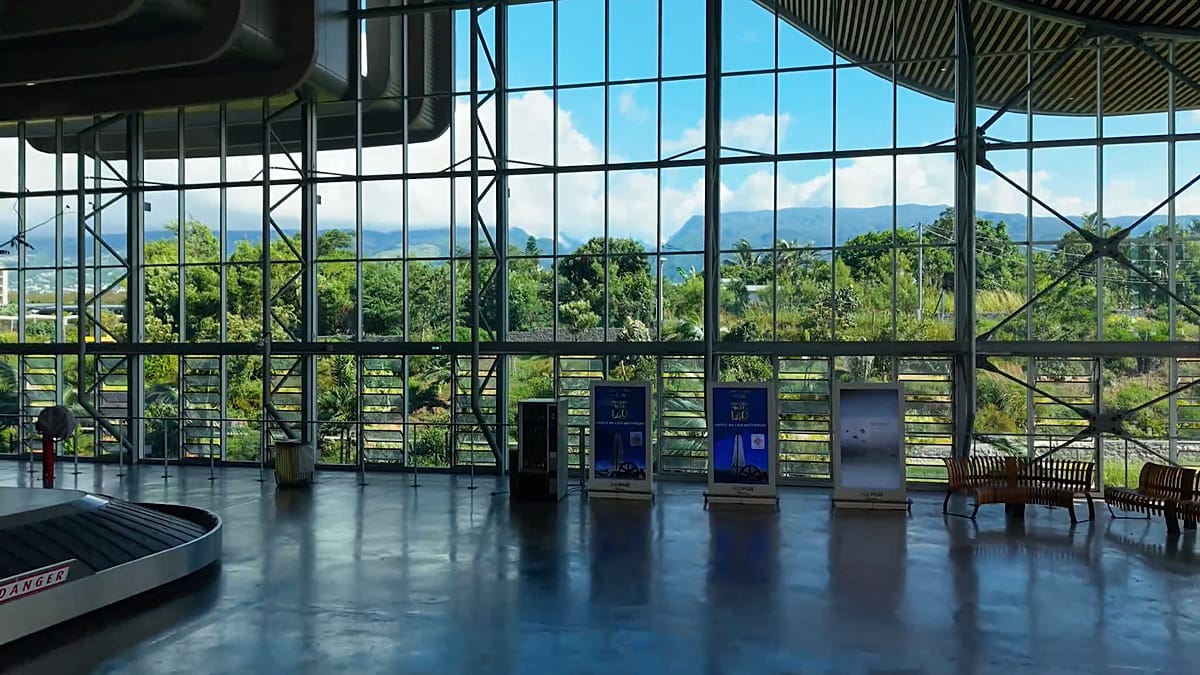
On the French overseas island of Réunion, in the Tropic of Capricorn, a new airport terminal is proving that air conditioning is not inevitable. The arrivals building at Roland Garros Airport, inaugurated two years ago, relies entirely on natural ventilation, a design choice its architect describes as 'a militant act' against the energy-hungry norms of modern construction.
Éric Bussolino, director of engineering and environment at AIA Life Designers, explains that the project's success hinges on a deep understanding of local climate, geography, and geology. 'In a tropical climate, we avoid heat and implement solutions such as natural ventilation,' he says. The building is oriented perpendicular to the existing departures terminal, deliberately positioned to capture the full force of the easterly trade winds that sweep across the Indian Ocean island.
Smart Windows and Aerodynamic Canopies
The terminal's louvred windows are the centrepiece of its passive cooling system. They have three positions—half-closed, half-open, and fully open—allowing precise control of airflow based on wind intensity. A weather station monitors wind speed and rain, automatically adjusting the windows to maintain comfort while protecting the interior. 'The system is connected to a weather station that measures both wind intensity and the possible occurrence of rain, which may involve closing the windows,' Bussolino notes.
Above the terminal, a canopy shaped like an aeroplane wing accelerates the wind as it passes over the building. 'We have worked on the aerodynamic shape of the canopy, like the wing of an aeroplane, which allows us to accelerate the wind speed in order to obtain optimal speed at the top,' he adds. This design ensures that even on still days, a steady breeze flows through the terminal.
In colder European climates, bioclimatic architecture would instead aim to trap solar heat. But in Réunion, the challenge is the opposite. The glass windows are treated with special coatings, and every shadow cast on the building has been studied to minimise direct sun exposure. 'All the shadows cast on the building have been studied to prevent the glass from being too exposed to the sun,' Bussolino says.
The approach is not limited to tropical islands. Bussolino argues that bioclimatic principles can be adapted anywhere. 'The challenge of bioclimatic architecture is to observe climatic conditions and make the best use of them to meet the user's comfort requirements. And there are different architectural solutions that can be adapted and applied in all countries of the world and to all types of projects,' he says.
As Europe grapples with rising energy costs and the need to decarbonise its building stock—which accounts for roughly 40% of EU energy consumption—projects like Réunion's terminal offer a tangible alternative. The European Commission's Renovation Wave strategy aims to double renovation rates by 2030, and bioclimatic design could play a key role in reducing reliance on mechanical cooling and heating. For a continent facing more frequent heatwaves, the lessons from a small Indian Ocean island may prove increasingly relevant.