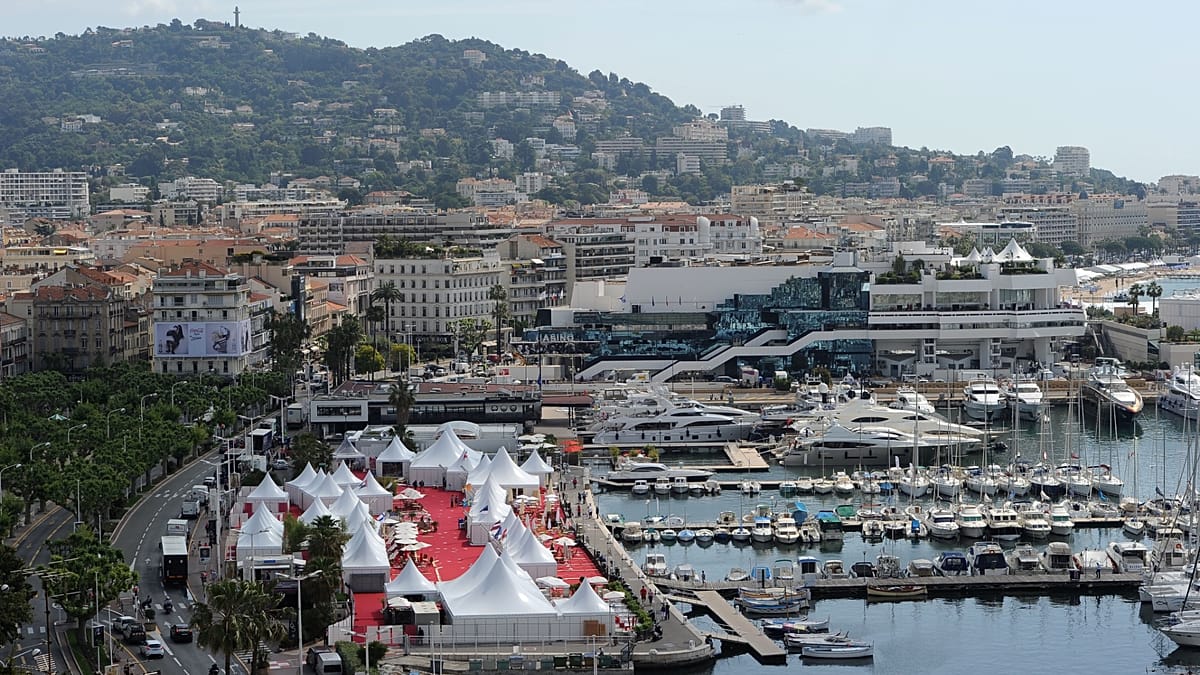
As the Cannes Film Festival prepares for its 2025 edition, a growing chorus of former pilots, climate activists, and even millionaires is condemning the event's reliance on private jets. New data from the NGO Transport and Environment (T&E) reveals that last year's festival generated more than 700 private flights, consuming roughly two million litres of kerosene—equivalent to a car driving 30 million kilometres, or 750 times around the equator. That same amount of fuel releases emissions comparable to 14,000 passengers on commercial return flights from Paris to Athens.
The timing could hardly be worse. Iran's tightening grip on the Strait of Hormuz has triggered a global fuel crisis, with experts warning that food shortages and famine are now a 'likely outcome' in many regions. Already, around 13,000 flights scheduled for May have been cancelled by airlines worldwide, and European holidaymakers face major disruption this summer. The crisis is also straining disaster relief and humanitarian aid operations, making the conspicuous consumption at Cannes particularly jarring.
A 'Tone-Deaf' Display Amid Scarcity
Katie Thompson, a former private jet pilot, did not mince words. 'With climate change accelerating, this reckless excess is outrageous—especially now when limited available fuel is desperately needed elsewhere for basic food production, disaster relief efforts and other humanitarian emergencies,' she said. 'There is absolutely no excuse to be flying around on a private jet with multiple crises unfolding in front of our eyes.'
Thompson pointed to actor Pedro Pascal, who flew economy to Cannes last year, as a model for others. 'There's no reason why the rest of them can't do the same, or take the train where possible. After all, we are all in this together.'
Anthony Viaux, a former Air France pilot with over 20 years of experience, described his flying career as a 'front-row seat' to climate change. 'The rich and famous burning through scarce fuel to get to a film festival isn't just tone-deaf, it's obscene,' he said. Viaux also urged the EU to tighten carbon tax rules, arguing that policymakers should not let the Trump administration 'dictate the rules.'
EU Carbon Loopholes Under Scrutiny
The European Union's emissions trading system (ETS) currently exempts two-thirds of private jets and all international flights from the carbon tax that every commercial passenger flying within the EU must pay. This year, the EU is set to review the ETS, which aims to reduce greenhouse gas emissions from aviation and other sectors through a cap-and-trade mechanism.
Julia Davies, a member of Patriotic Millionaires UK, called for immediate action. 'Private jets are a luxury only the very wealthiest few can afford, yet most of these flights are still not subject to fuel or carbon taxes—taxes that the majority of people pay every day as they travel to work,' she said. 'Right now, amidst a fuel and accelerating climate crisis, fixing this means two things: grounding private jets to protect fuel for vital services including ambulances and making sure that private jets pay at least the same taxes as a care worker pays travelling to vulnerable clients.'
The broader context of the fuel crisis is already reshaping European travel. Jet fuel shortages have forced airlines to cancel 13,000 flights in May, and some UK carriers are merging same-day flights to conserve fuel. Meanwhile, the EU is considering suspending methane penalties to protect energy supplies, a move that underscores the severity of the situation.
As the Cannes Film Festival approaches, the debate over private jets highlights a deeper tension: the privileges of the ultra-wealthy versus the urgent need for collective action in a time of scarcity. Whether celebrities will heed the call to fly economy or take the train remains to be seen, but the pressure is mounting—both from activists and from the harsh realities of a planet in crisis.