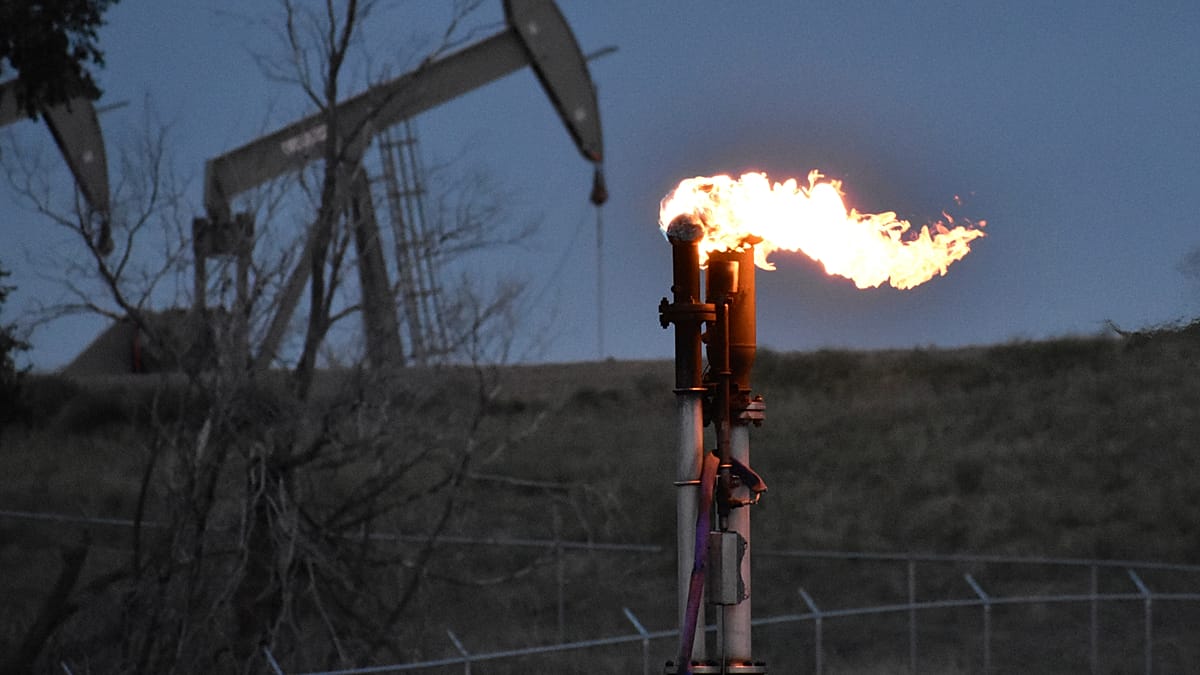
The European Commission is considering a temporary suspension of methane fines for oil and gas producers during periods of gas shortages, emergency storage situations, or major oil supply disruptions, according to a leaked draft document circulated to EU member states and seen by European Pulse.
The draft text argues that financial penalties should not jeopardise energy supplies during market stress or crises, a position likely to be interpreted as a concession to mounting pressure from industry and international partners, including the United States. The proposal would allow regulators to weigh factors such as LNG availability and storage obligations before imposing fines, effectively embedding flexibility into enforcement.
Industry and US Pressure Mounts
Oil and gas producers, alongside US Energy Secretary Chris Wright, have previously called on Brussels to soften or scrap the methane rules, warning they could disrupt trade and investment flows. Wright told an audience at the International Energy Agency in February that the US methane performance was "outstanding" and driven by social forces rather than regulation. "Methane emissions went down in the US over the past years, not because of regulators but investment concerns. We’re about innovation, not regulation," he said.
With Europe increasingly reliant on imported liquefied natural gas (LNG), much of it from the United States, Brussels is concerned that strict enforcement could strain relations with suppliers, deter investment, or divert cargoes to more lucrative Asian markets. A March study by industry groups and consultancy Wood Mackenzie found that the methane rules could render 43% of EU gas imports and 87% of oil imports non-compliant from 2027 onwards, intensifying pressure on the Commission.
The EU adopted its first methane regulation in May 2025, introducing a framework for measuring, reporting, and verifying emissions in the energy sector. Methane, which arises from fossil fuel production and livestock digestion, is a potent greenhouse gas with a global warming potential over 80 times greater than carbon dioxide over a 20-year period. The International Energy Agency says it is responsible for about 30% of the rise in global temperature since the Industrial Revolution.
Critics argue that the latest proposal goes further than previous delays, which had already pushed parts of the regulation from 2025 to 2027. By weakening financial incentives for compliance, the Commission risks undermining the credibility of the legislation itself. The draft encourages regulators to consider everything from LNG availability to storage obligations before imposing fines, stressing that penalties should not endanger continuity of supply, worsen gas crises, or undermine storage obligations.
If confirmed, the measure would allow major energy suppliers to claim that punishing them too harshly could disrupt Europe’s energy market, even though the suspension is intended to be temporary. The rules require operators to detect and repair methane leaks, measure emissions at source, and implement mitigation measures across infrastructure, including for imports. Operators must also compile inventories of inactive and abandoned assets, such as wells and mines, to monitor residual emissions.
In February, several US Democratic lawmakers called on the EU to uphold its methane rules and avoid exempting American operators if US domestic standards lack sufficient accuracy or enforcement. The Commission has previously said it is finalising guidance to ensure "uniform and coordinated implementation" of penalties without threatening security of supply.
The debate comes as Europe grapples with an energy crisis that has already forced airlines to cut thousands of flights due to jet fuel shortages, as reported by European Pulse. Meanwhile, the IMF has urged the EU to sharpen energy relief for vulnerable households, highlighting the delicate balance between climate goals and energy security.