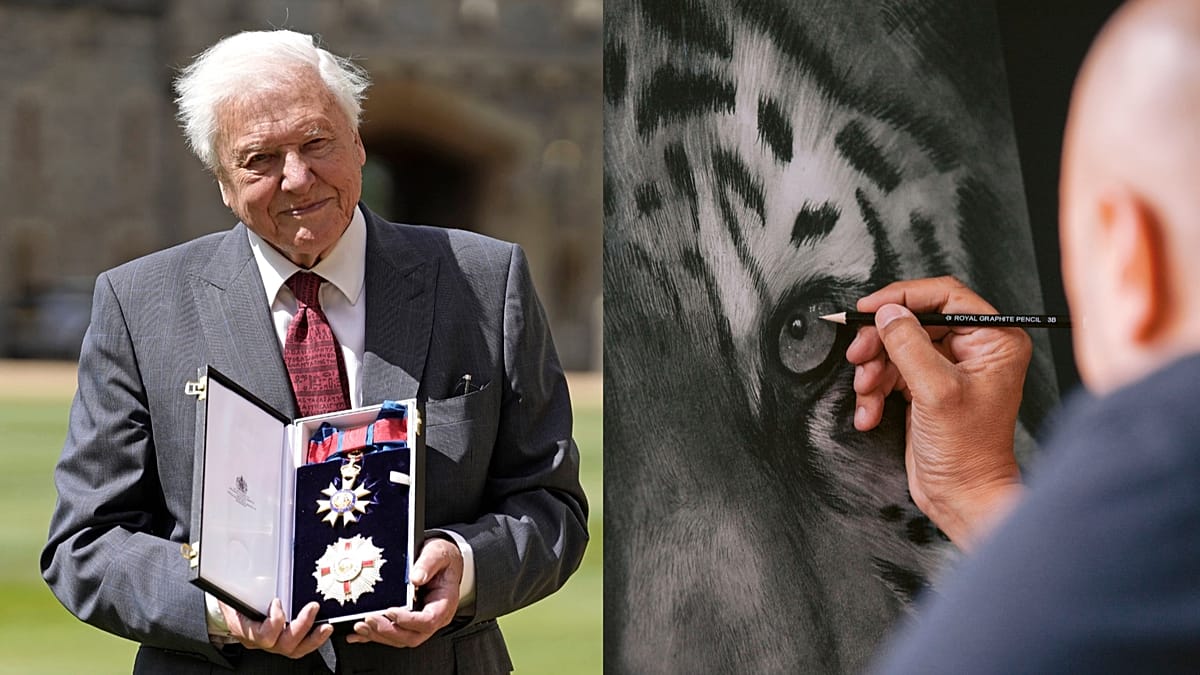
Sir David Attenborough, who turns 100 on 8 May, is widely regarded as the most influential wildlife broadcaster in history. Starting at the BBC in 1952, he oversaw Europe's first colour television broadcast and became the voice of landmark series such as the 'Life' collection. His work has not only educated millions but also spurred tangible environmental action—a phenomenon fans call the 'David Attenborough Effect'.
This effect is measurable. A 2019 GlobalWebIndex survey of 3,833 people in the US and UK found that after Attenborough highlighted plastic waste in the second series of Planet Earth, searches for “plastic recycling” in the UK jumped by 55 percent, and participants reported a 53 percent reduction in single-use plastic consumption. In a more direct policy win, footage of bottom trawling in the documentary Ocean helped persuade the EU's General Court to uphold a ban on deep-sea fishing in parts of the Atlantic rich with marine life.
Artists Inspired by Attenborough
Among those transformed by Attenborough's work are Skip and Katherine Khangurra, a couple based in Windsor, England. They founded Libra Fine Arts after watching his programmes. “We both grew up watching Attenborough’s programmes on TV, captured by his remarkable voiceovers,” Katherine, 42, told European Pulse. “Skip, 57, is often inspired to draw after watching a series—whether it’s penguins from Frozen Planet or gorillas from Gorillas Revisited. The filmmaking in these programmes is extraordinary, revealing incredible detail in every scene, sometimes even down to the individual hairs of each animal.”
The couple once sent Attenborough some of their wildlife cards and received a handwritten note in return. “The time and care he put into writing to us personally really touched us,” Katherine said. They now use their art as a learning resource for families, helping parents teach children species names and traits. “It’s wonderful to watch those moments of curiosity and connection, and especially lovely to see the next generation learning about animals and building that connection for the future,” she added.
Their experience aligns with a 2022 study published in Global Ecology and Conservation, which surveyed 842 primary school students. The research found that children's willingness to conserve wild animals was positively linked to both direct (time outdoors) and indirect (watching nature programmes or reading nature books) contact with nature, as well as their knowledge and likeability of species. The study concluded that “wildlife conservation would benefit from environmental education and child care policies that enable children to spend time outdoors and learn about nature in multiple ways.”
Attenborough's influence extends beyond individual artists and into broader European conservation efforts. For instance, the Chernobyl Exclusion Zone has become an unexpected haven for wildlife, a testament to how human absence can allow nature to recover—a theme Attenborough often explores. Meanwhile, initiatives like the Paris Wildlife Hospital, which treats thousands of animals injured by human activity, reflect the growing public engagement with conservation that his documentaries have helped foster.
As Attenborough reaches his centenary, his legacy is clear: he has not only documented the natural world but also inspired a generation of Europeans—from artists in Windsor to policymakers in Brussels—to protect it.