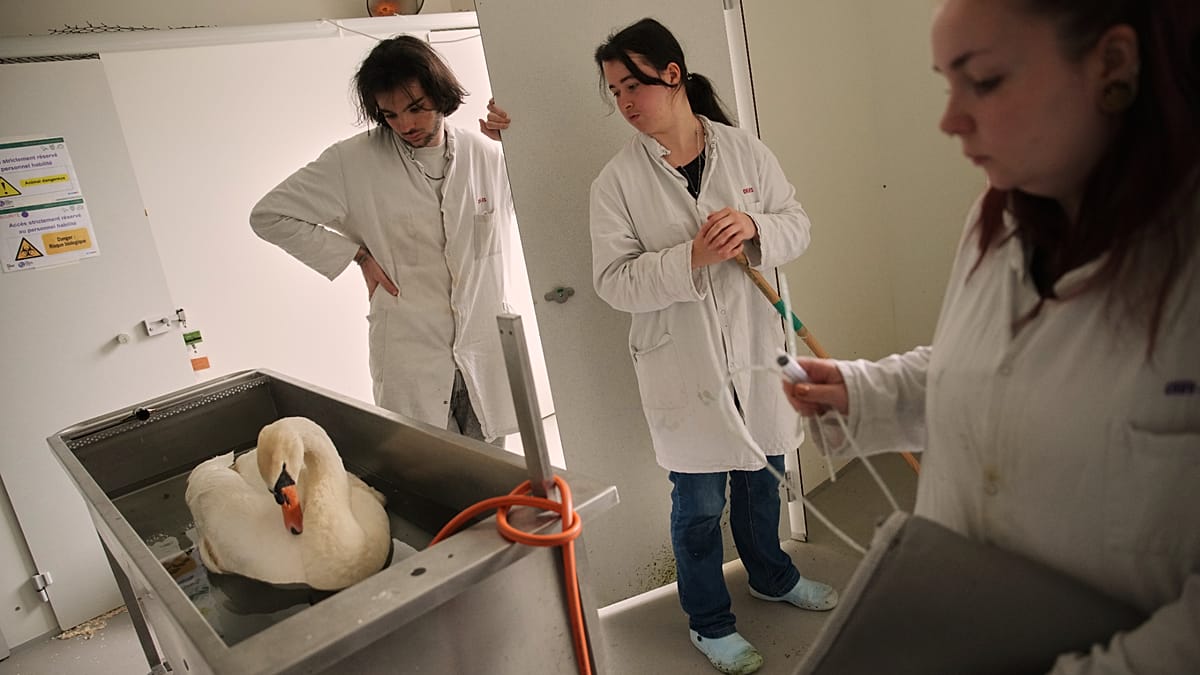
Just outside Paris, in the suburb of Maisons-Alfort, a specialized veterinary hospital is giving injured wildlife a second chance. Over the past year, the Wildlife Veterinary Hospital has admitted more than 10,400 animals, from swans with broken wings to fox cubs and hedgehogs, many of them victims of human activity.
Last week, a female fox cub was discovered alone in a garden on the outskirts of the French capital, with no mother in sight. Local residents found her with hunting dogs. Estimated to be around two weeks old, she was far too young to survive on her own. At the hospital, veterinarian Julie Piazza examined her and found a minor injury, possibly from a wild animal or dog bite, but otherwise good health. The cub was fed artificial milk, which caused a swollen abdomen—a common issue in young animals after a diet disruption, Piazza explained.
Animal caretaker Valentin Delon oversees the cub's round-the-clock care. “We’ll make sure she’s eating well,” Delon said. “If that’s not the case, we might provide supplemental bottles to ensure she gains enough weight.”
Gradual Reintroduction to the Wild
The hospital’s goal is always to return animals to their natural habitat. Once healed, they are moved to outdoor enclosures or aviaries to prepare for release. Delon emphasized that avoiding human bonding is critical. “Any kind of imprinting must be avoided,” she said. “So we don’t cuddle them, we don’t talk to them. There’s really a distance to maintain for their own good in the end, so they can be released later.”
For the fox cub, the process will be gradual. After she grows sufficiently, she will be transferred to a rehabilitation centre and placed with other foxes in an enclosure. “We can’t just release her into the wild like that,” Delon said. “She really needs to go into an enclosure first, and then gradually we’ll open the door so she can come and go while still being fed. Then we’ll gradually reduce the food, and that’s how we achieve a truly gradual release.”
The hospital, run by the nonprofit Faune Alfort, is the only facility in the greater Paris area that treats a wide range of wild species. About 86 per cent of its patients are birds. Recent cases include a swan with a broken wing, injured hedgehogs, dozens of ducklings found on balconies without parents, and numerous pigeons, all treated with equal care. Elisa Mora, head of communications for Faune Alfort, noted that a record 200 admissions were recorded in a single day last summer.
April to September is the peak period, as it coincides with the juvenile season when wild animals reproduce. “Wild animals are already vulnerable, but juveniles even more so,” Mora said. Those too badly injured or unable to return to the wild must be euthanised. The vast majority of admissions—between 60 and 80 per cent—are victims of road collisions, animals caught in barbed wire, or injuries from gardening tools and agricultural machinery.
Veterinarian Jean-François Courreau founded Faune Alfort in 1987, inspired by students eager to better treat wild animals. Six years later, the idea became a proper hospital, hosted by the National Veterinary School of Alfort, which dates back to the 18th century. “It’s hard to stand by helplessly in front of an animal in distress without being able to do anything,” Courreau said, adding that it’s his duty as a vet to help. When people find a wild animal in distress, he explained, they often think, “I can’t do anything, and the animal is going to die. So when they know a care centre exists and that they can bring the animal there, it’s a huge relief.”
The hospital relies heavily on donations from individuals and charities, and on volunteers to feed and care for the animals. For more on how urban environments impact wildlife, see A Suburban Refuge: Inside the Parisian Garden Saving Urban Hedgehogs.