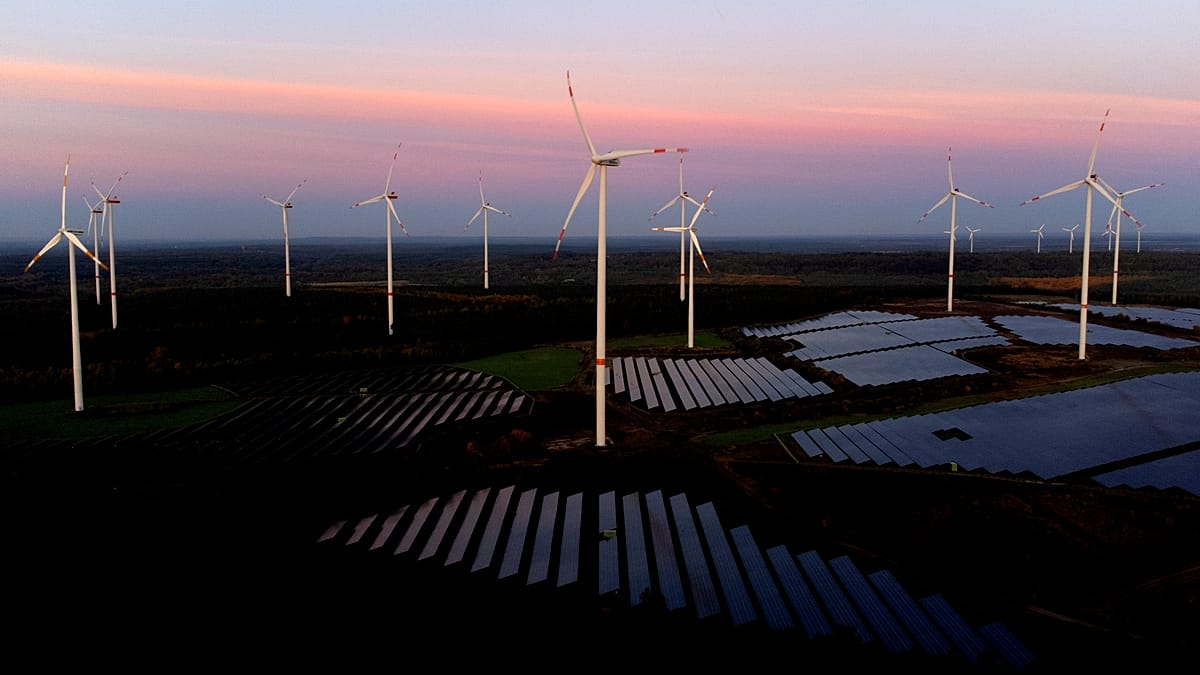
Europe’s accelerating shift to wind and solar power is delivering tangible economic relief. A new report from the advocacy group Positive Money reveals that renewable energy expansion cut wholesale electricity prices by an average of 24.2 percent across 19 European countries between 2023 and 2025. The findings underscore how renewables are helping decouple electricity costs from the volatile fossil fuel markets that have repeatedly jolted the continent.
“A growing literature shows the role that renewable energy plays in displacing high-cost fossil fuel generation out of the electricity mix, and, in that way, exerting downward pressure on wholesale electricity prices,” the report states. The analysis covers a diverse set of member states, including Spain, Germany, France, Italy, and the Netherlands, as well as the United Kingdom and Norway.
Spain and the UK Lead the Charge
Spain has been a standout performer. Since 2019, the country has doubled its combined wind and solar capacity, adding over 40 gigawatts (GW)—more than any other EU nation except Germany, whose power market is twice the size. This buildout has significantly reduced the influence of gas prices on Spanish electricity bills. Gas costs surged 55 percent the day after the Iran war began and have continued to fluctuate, but Spain’s renewable-heavy grid has buffered consumers.
In the United Kingdom, wind power set a new record on 26 March, generating 23,880 megawatts—enough to cover 23 million homes. That milestone highlights the growing role of offshore and onshore wind in Britain’s energy mix, even as the country grapples with broader inflationary pressures linked to energy costs.
The savings from solar are equally striking. According to an analysis by SolarPower Europe, harnessing sunlight has saved Europe more than €100 million per day since 1 March, totaling over €3 billion. If gas prices remain elevated, experts project total savings could reach €67.5 billion by 2026.
Decoupling Still in Early Stages
Despite these gains, the report cautions that the decoupling of electricity prices from gas remains incomplete in many European power systems. “Our findings therefore underline the importance of wind and solar deployment, which, together with flexibility resources, can largely reduce Europe’s electricity markets’ exposure to fossil fuel shocks,” the group writes. “By doing so, this process makes the electrification of the economy more attractive, further reducing Europe’s vulnerability to fossil fuels.”
The data also show that price impacts grow stronger as more renewables come online. Countries with higher shares of wind and solar see a more pronounced downward effect on wholesale prices, creating a virtuous cycle that encourages further investment.
Positive Money identifies two key policy implications. For nations with limited renewable capacity—such as several in Central and Eastern Europe—accelerating deployment is “low-hanging fruit” for lowering electricity costs. For those already rich in wind and solar, like Denmark and Germany, scaling up flexibility resources—batteries, home solar, variable tariffs—will be critical to fully disconnect prices from fossil fuel drivers.
The urgency is underscored by ongoing geopolitical instability. “Continued fossil fuel shocks compromise Europe’s energy security, price stability, and competitiveness,” the report warns. “In the absence of sufficiently rapid progress, Europe will remain subject to the multifaceted risks that fossil fuel dependency poses.”
These findings align with broader trends: renewables have surpassed global electricity demand growth, and fossil fuel generation declined for the first time last year. Meanwhile, the Middle East conflict continues to test the EU’s green ambitions, with energy prices spiking repeatedly. The report’s authors argue that accelerating the transition is not just an environmental imperative but an economic one, as prolonged price hikes from the conflict threaten to undermine the electrification of transport, heating, and industry.
“The exposure of electricity prices to fossil fuel shocks complicates the electrification of the economy, which is a key pillar of the energy transition,” the group concludes. “However, accelerating these system-wide changes leads to the decoupling of electricity prices from fossil fuel shocks, which in turn supports further electrification.”