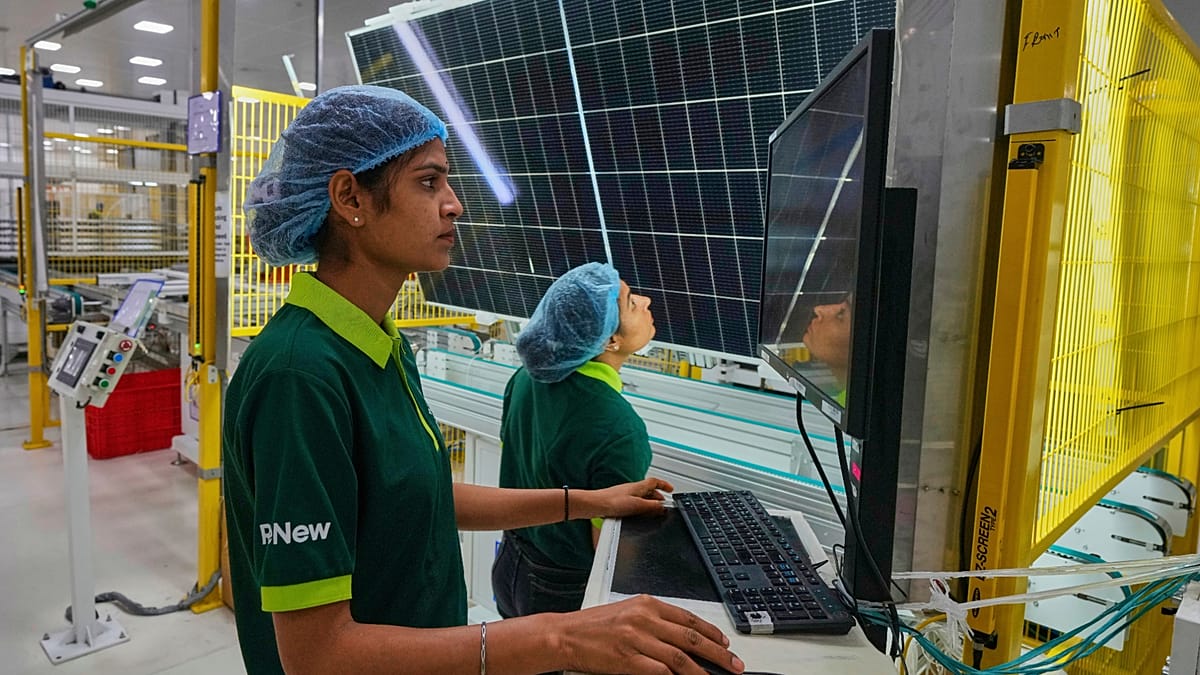
For the first time in modern history, the growth of clean energy generation has outpaced the global rise in electricity demand, pushing fossil fuel power into decline. According to a new report from the energy think tank Ember, released Tuesday, renewable sources including solar, wind, and hydropower now supply more than a third of the world's electricity — a milestone that marks a structural shift in the global power sector.
Ember's analysis, which covers 91 countries representing 93 percent of global demand, found that clean power generation grew by 887 terawatt hours in 2025, while overall electricity demand rose by 849 terawatt hours. The result: fossil fuel generation fell by about 0.2 percent, or 38 terawatt hours, making last year one of only a handful this century without an increase in fossil-fired power.
“We’re coming from a period over the last few decades where new electricity demand growth meant growth in fossil generation,” said Nicolas Fulghum, Ember senior data analyst and lead author of the report. “We’re now moving into a world where that’s no longer the case.”
Solar and Wind Lead the Charge
Solar power alone met three-quarters of the net rise in electricity demand in 2025, with generation growing 30 percent year-on-year. Combined with wind, the two sources accounted for 99 percent of the increase. Solar overtook wind globally for the first time last year and is now closing in on nuclear power; Ember expects solar and wind to surpass nuclear in 2026.
Battery storage played a critical role in enabling this growth. As battery costs fell 45 percent in 2025, global storage capacity expanded by 46 percent. Ember estimates that enough batteries were added to shift 14 percent of the solar generation produced at midday to other hours of the day, helping to smooth the intermittency that has long been a challenge for solar power.
“Despite the accelerated growth and electricity demand that comes with added electric vehicle build out, of heat pumps, industrial sector electrification, clean power will be able to structurally meet that increase in demand going into the next few years,” Fulghum said. “And that is a stark departure from the last few decades.”
China and India Drive the Transition
Two of the world's largest emitters — China and India — both saw fossil fuel generation decline for the first time this century. In China, the drop was 0.9 percent (56 terawatt hours), while India recorded a 3.3 percent fall (56 terawatt hours). Both countries are now aggressively diversifying their energy mixes through renewables, according to Fulghum.
China accounted for more than half of global solar capacity and generation growth last year, and also led the world in wind additions with 138 terawatt hours. India posted record increases in solar and wind generation, supported by strong hydropower output, while demand growth remained below average — a reversal from the post-pandemic rebound that had previously driven fossil fuel increases.
In Europe, the trend is similarly encouraging. The European Union added 60 terawatt hours of solar capacity in 2025, and fossil generation across the continent is generally declining. The United States added 85 terawatt hours of solar, though fossil fuel generation there saw small increases.
Geopolitical Headwinds Fail to Halt Progress
The report's findings come amid a global energy crisis exacerbated by the US war in Iran and ongoing volatility in oil prices. Yet the transition to clean energy continues to gain momentum, even as the Trump administration pressures industry to boost coal, oil, and gas production and rolls back support for renewables.
“As we’re seeing the cost of oil be incredibly volatile right now because of the war, I think more and more people are looking to that national security argument as a reason to think about how we electrify more and how we’re able to take advantage of additional solar and wind, which does not rely on other countries,” said Alexis Abramson, dean of the Columbia University Climate School, who was not involved in the report.
For Europe, the implications are significant. The continent's push for energy diversification — including through projects like the TRIPP Corridor and the QatarEnergy LNG project — is now being complemented by a rapid build-out of renewables that reduces dependence on imported fossil fuels. The EU Energy Chief has warned of years-long recovery from the current crisis, but the Ember data suggests that clean power can structurally meet rising demand in the near term.
“Milestones like renewables overtaking coal mark an occasion, but they don’t tell us everything about the story in the power sector,” Fulghum said. “The big difference to 10, 15 years ago, where governments were pledging a build out of renewables, is that now those pledges are much more believable.”