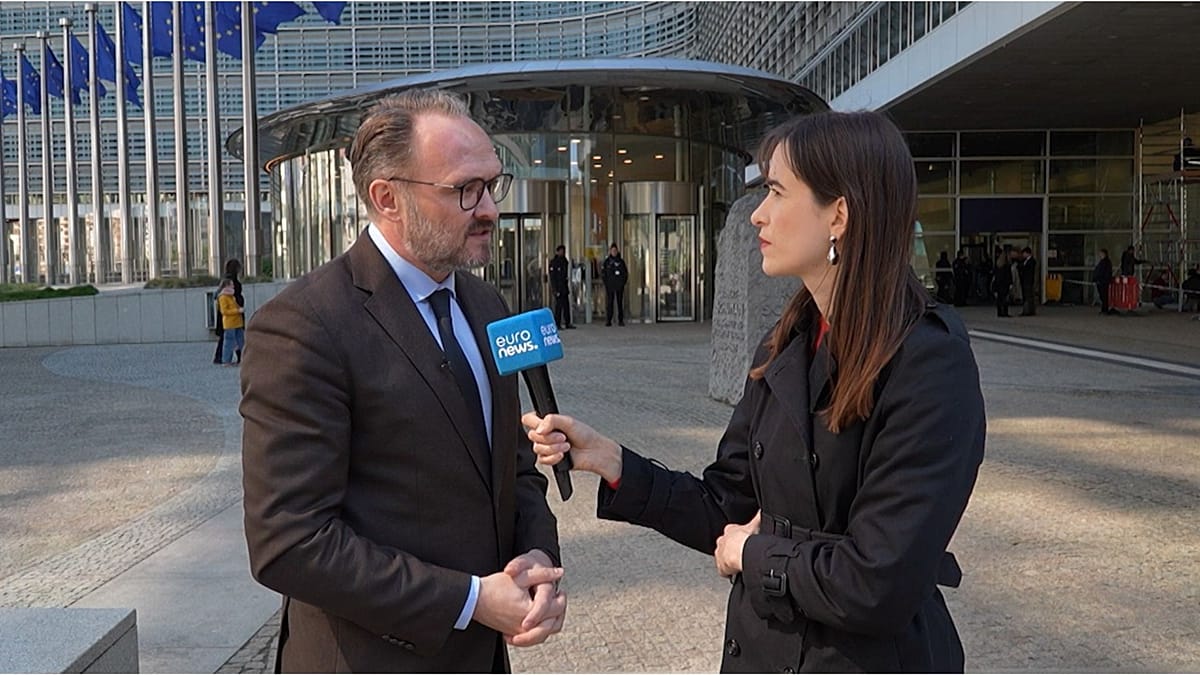
European Energy Commissioner Dan Jørgensen has delivered a stark assessment of the continent's energy outlook, warning that prices will remain elevated for years even if the conflict in the Middle East is resolved. Speaking exclusively to Euronews after presenting a long-awaited package of measures to mitigate the economic fallout, Jørgensen said the crisis would have lasting consequences.
“We are in the middle of a very bad crisis right now,” Jørgensen told Euronews on the sidelines of the presentation, which he announced alongside Executive Vice-President for a Clean, Just and Competitive Transition, Teresa Ribera. “I do have to be quite blunt and say that we are looking into some very difficult months and even years, because even if there's a peace tomorrow, to rebuild the gas infrastructure, for instance, in Qatar will take maybe years. Prices will not stabilise at the level they were before this crisis.”
€24 Billion in Additional Costs
According to European Commission data, two months of turmoil in the Middle East have already cost the European Union an extra €24 billion in energy costs, equivalent to roughly €5 million per day. The crisis, described by some officials as the world's worst energy crisis since the 1970s, has hit households and businesses across the bloc hard.
To cushion the blow, the European Commission unveiled a package of initiatives on Wednesday aimed at supporting European citizens, businesses, and sectors. The Commission is urging EU governments to provide energy vouchers, income support, and social tariffs to protect vulnerable Europeans. However, the proposal did not include mandatory measures such as a one-day work-from-home policy or taxes on windfall profits—extraordinary profits earned by companies due to unexpected circumstances.
“The windfall tax is certainly something that member states can choose to introduce at a national level, and if they choose that, we will also help facilitate and advise, drawing on some of the experiences, both the good ones and the bad ones, from 2022,” Jørgensen said, referring to the energy price spike following Russia's invasion of Ukraine.
Ukraine's Energy Infrastructure Under Fire
Meanwhile, Ukrainian President Volodymyr Zelenskyy announced on Tuesday that the Druzhba oil pipeline, which runs through war-torn Ukraine, has been repaired and could resume operations imminently. The announcement ended months of back-and-forth between now-outgoing Hungarian Prime Minister Viktor Orbán and EU leaders over Kyiv's €90 billion lifeline. Orbán had repeatedly blocked the flow of cash, citing damage to energy infrastructure and claiming that Russian oil distribution via Ukraine was being prevented for “political” reasons.
Commissioner Jørgensen expressed hope that the situation could be resolved “as soon as possible” so that Ukraine can continue defending itself against Russian aggression, now in its fifth year. “In my own portfolio, I can say that working with Ukraine on helping to rebuild the energy sector is quite heartbreaking work because the Russians are brutally bombing the energy infrastructure of Ukraine,” he said. “They've done so through the very cold winter. People have been freezing, people have been without electricity, and obviously, it's an expensive endeavour to rebuild.”
The EU's efforts to diversify energy sources have included initiatives such as the TRIPP Corridor talks with Azerbaijan, which aim to boost Europe's energy security. However, the scale of the challenge remains immense, with the German business outlook plummeting to its lowest level since the 2022 energy crisis, reflecting broader economic strain across the continent.
As European leaders grapple with the immediate crisis, the long-term outlook remains uncertain. Jørgensen's warning underscores the need for sustained investment in renewable energy and infrastructure resilience, even as the bloc faces pressure to address rising costs and geopolitical instability.