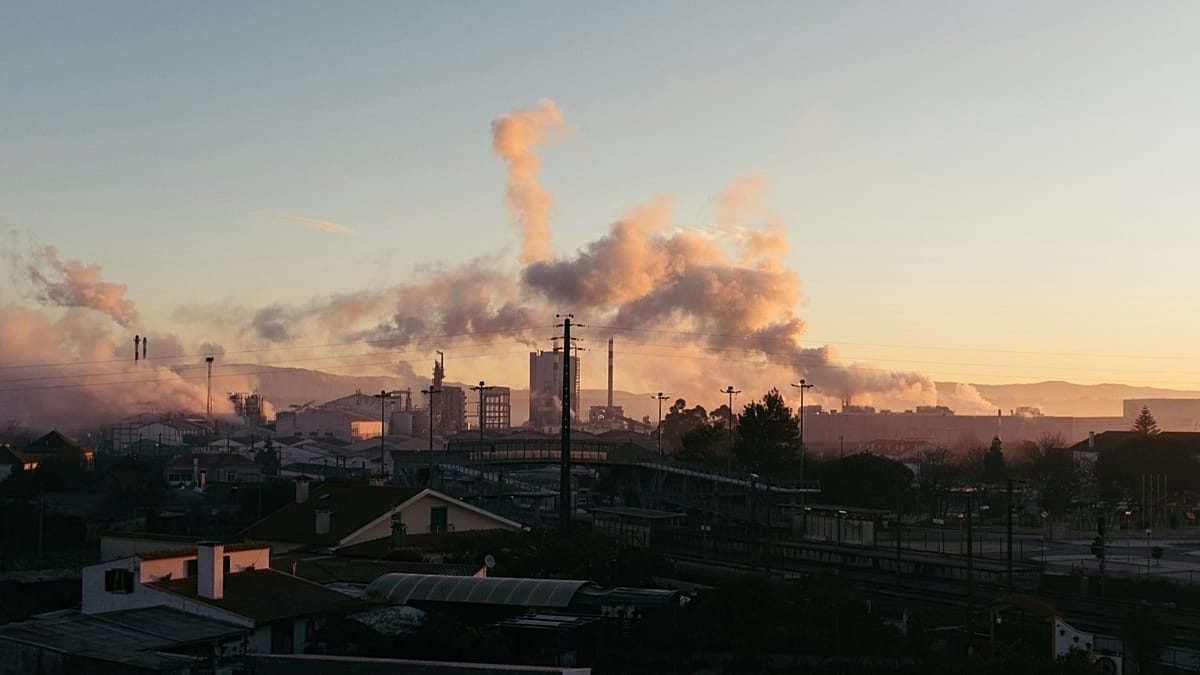
Portugal has officially exhausted the natural resources it can sustainably use for the entire year of 2026, reaching its national Overshoot Day on 7 May. According to the Portuguese environmental NGO ZERO, in partnership with the Global Footprint Network, the country will now draw on resources that should only be consumed from 1 January 2027. If every person on Earth lived like the average Portuguese citizen, humanity would require 2.9 planets to sustain itself.
This marks a slight improvement over 2025, when Portugal's Overshoot Day fell on 5 May. Yet the underlying trend remains troubling: for years, the country has been unable to meet its own resource needs from within its borders. ZERO attributes this imbalance to the production and consumption patterns embedded in the Portuguese lifestyle, with food and transport identified as the primary drivers.
What drives Portugal's ecological deficit?
Transport is the single largest source of CO₂ emissions in Portugal, accounting for 52 percent of the total in 2023, according to the International Energy Agency. That far exceeds electricity and heat (16.2 percent) and industry (15.2 percent). ZERO recommends reducing commuting through teleworking and holding more events online, as well as investing in sustainable transport options such as cycling and public transit. For those interested in exploring Portugal by bike, the country features prominently in Europe's Best Cycling Routes for 2026.
Food production also carries a heavy environmental cost. Within the EU, animal-sourced foods generate between 81 and 86 percent of total greenhouse gas emissions from food production, yet they supply only around 21 percent of calories and 64 percent of protein. According to the carbon footprint calculator CO₂ Everything, a single 100-gram serving of beef is equivalent to driving 78.7 kilometres, releasing 15.5 kg of CO₂ equivalent. ZERO calls for more sustainable agriculture that uses less water, produces quality food, and increases the share of plant-based options.
Other measures include creating rules to ensure products last longer, can be reused, and are easier to recycle. These steps, the NGO argues, are essential to reducing Portugal's environmental debt.
How does Portugal compare to the rest of Europe?
Portugal's Overshoot Day of 7 May places it close to the EU average of 3 May. However, the spread across member states is wide. Luxembourg exhausted its resources earliest, on 17 February, while Hungary is expected to be the last, on 24 June. Among countries consuming more than Portugal are Canada, the United States, and Denmark, all of which reached Overshoot Day in March. Austria, France, and Croatia followed in April. Germany, Cyprus, the United Kingdom, Greece, and Spain are not projected to hit their Overshoot Days until 4 June.
Globally, Qatar depleted its natural resources fastest, on 4 February, while Honduras is estimated to be the last, on 27 November. The Global Footprint Network will announce Planet Overshoot Day for 2026 on 5 June, World Environment Day. In 2025, humanity used up that year's resources on 24 July, a week earlier than in 2024, which fell on 1 August.
Portugal's position underscores the broader challenge facing Europe: even as some nations improve, the continent as a whole continues to consume beyond its ecological means. The data from ZERO and the Global Footprint Network serve as a reminder that sustainable transitions in transport, agriculture, and consumption are not optional but urgent.